
How to Garnish a Cocktail
A garnish is not decoration. It is the first thing a drinker smells, and aroma is most of what we call flavour, so the twist on a Martini does more work per gram than anything else in the glass. The test for any garnish is simple: does it add aroma, taste, or useful information? If not, leave it off.
The short answer
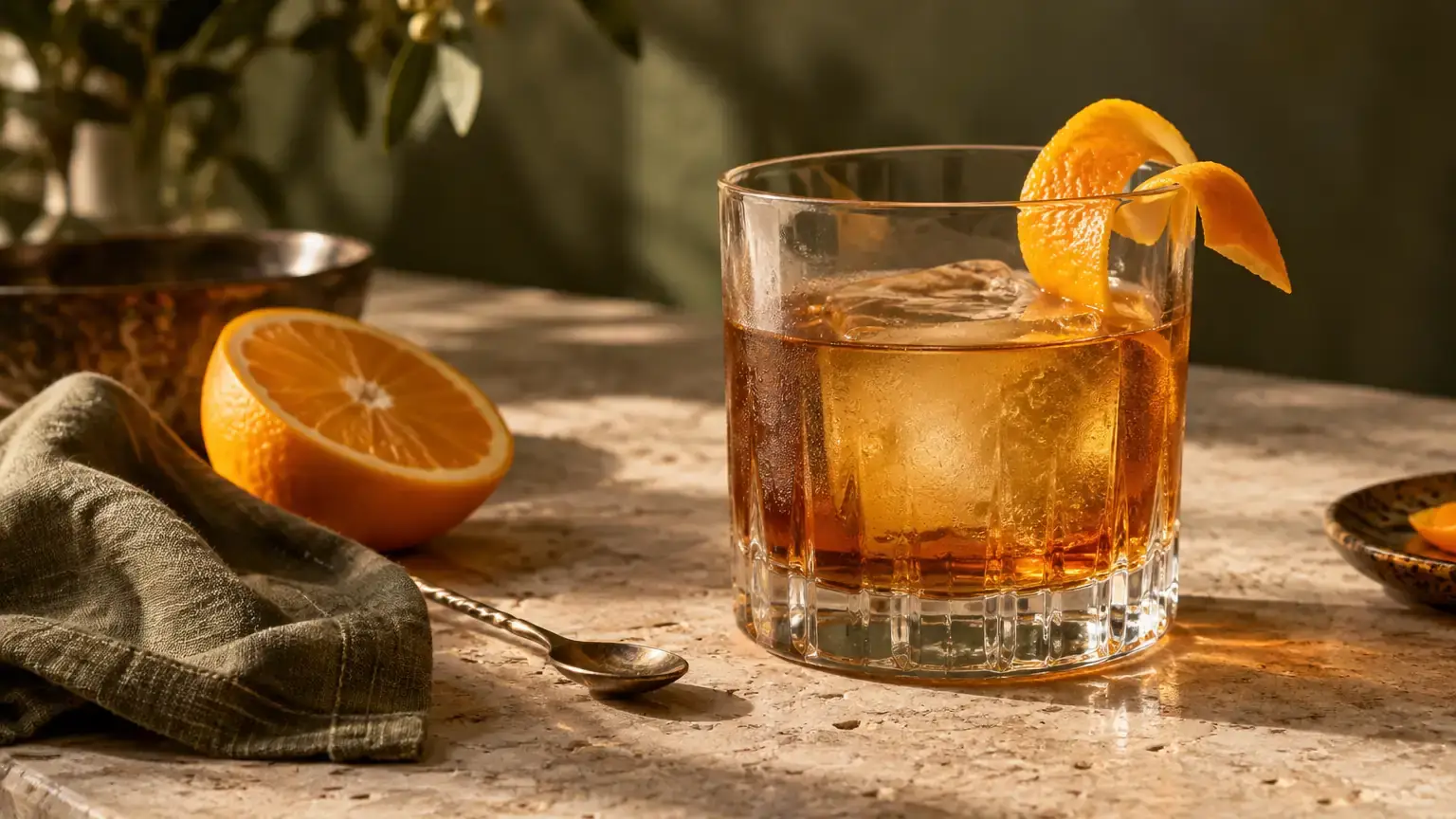
Cut a wide strip of peel with a Y-peeler, hold it skin-down an inch above the drink, and pinch it sharply so the oil sprays across the surface. Rub the rim, then drop it in or perch it. Slap herbs once between your palms. Use a wedge when the drinker should squeeze, a wheel when they should not, and a twist when you want aroma.
Citrus oil is the point
The skin of a citrus fruit holds its aromatic oil in tiny sacs just under the surface. Bending the peel bursts them, and a fine mist of oil lands on the drink and sits on top, where it meets the nose before the liquid meets the tongue. That is why a Martini with a fresh lemon twist smells like a different drink from the same Martini without one.
Three rules follow. Cut the peel thin, with as little white pith as possible, because pith is bitter and carries no oil. Express it over the drink, not beside it. And do it at the last moment: a twist cut five minutes ago has already lost most of what you wanted.
Match the fruit to the drink. Lemon is sharp and clean and suits gin, vodka and most stirred drinks; orange is sweeter and rounder and suits whiskey, Campari and Old Fashioneds; grapefruit is bigger and more bitter and flatters mezcal and Palomas. For the toasted version, see flamed orange peel.
Twist, wheel, wedge
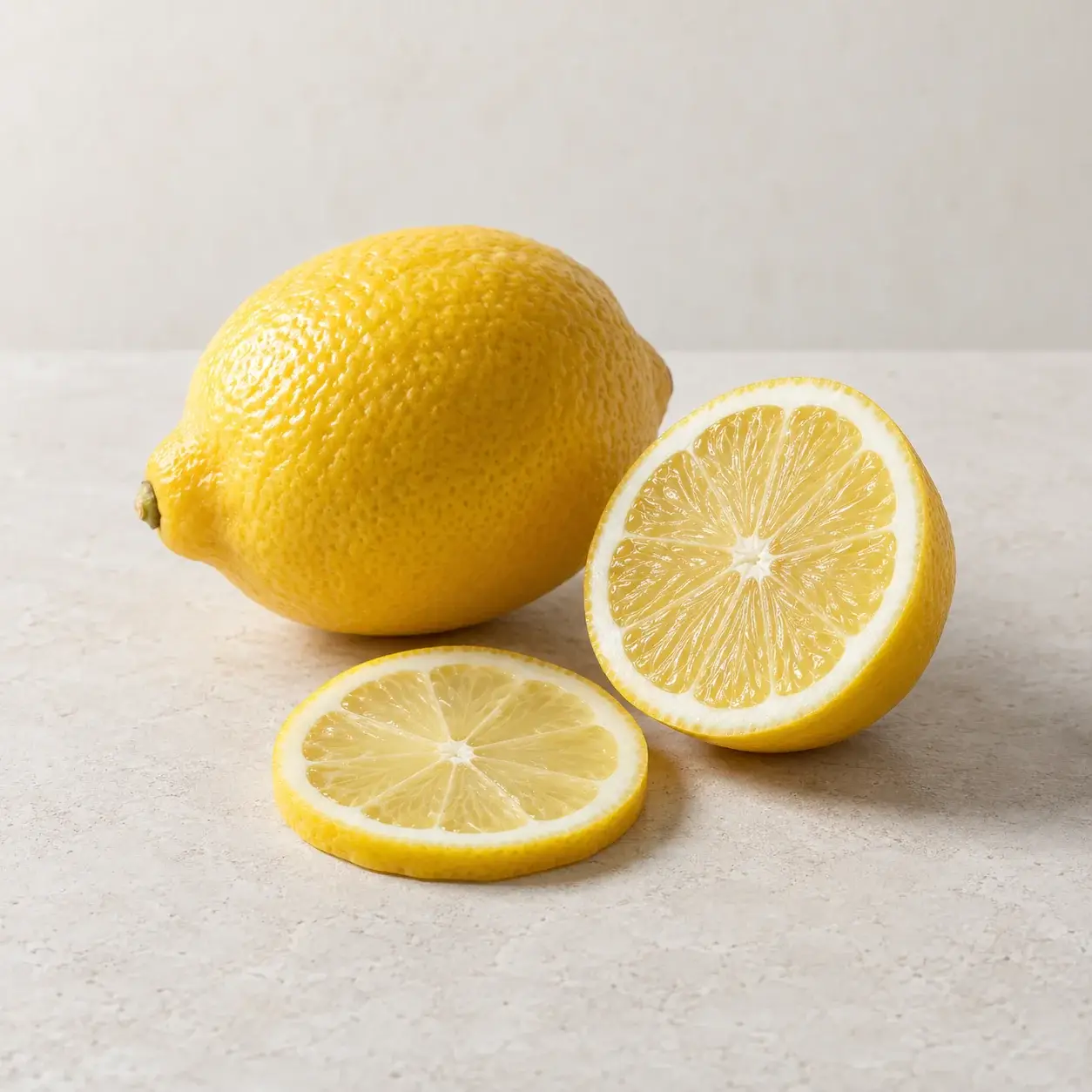
A twist is a strip of zest, expressed for its oil, then twisted and dropped in or hung on the rim. Aroma only. The default for stirred drinks.
A wheel is a thin cross-section of the fruit, floated or pressed to the inside of the glass. It is there to be looked at and to say what is in the drink. It adds nothing to the taste, which is fine as long as it is not standing in for something that would.
A wedge is for squeezing: it hands the last adjustment to the drinker, which is right on a highball, a Bloody Mary or a Gin and Tonic and wrong on a measured sour, where the balance is already set. See lemon wedge and orange wedge.
Herbs: slap, do not clap
A mint sprig is an aroma garnish like a twist. Lay it on one palm and slap it once with the other: that bruises the leaves enough to release the oils without tearing them, which is what turns them black and bitter. Then set it in the drink close to the rim, where the drinker’s nose actually is, not buried in the ice.
The same goes for rosemary, basil and thyme. Mint on a Mojito or a Mint Julep should stand proud of the glass in a bouquet, because half the drink is the smell of it.
Rims, and how to do them well
Salt or sugar belongs on the outside of the rim only. Run a wedge of citrus around the outer edge, then roll that edge through a plate of salt, tilting the glass so nothing falls inside; salt that drops into a Margarita seasons the whole drink rather than each sip, which is not the same thing.
Rim half the glass and leave the rest clean, so the drinker can choose. Use kosher salt for a Margarita or a Paloma, caster sugar for a Sidecar, and a chilli-lime salt where the drink wants heat.
When to leave it off
A garnish that adds nothing costs you something: it gets in the way, it looks like an apology, and in a drink with a foam it breaks the surface. Nothing needs a plastic sword. A Daiquiri needs no garnish at all, and the three coffee beans on an Espresso Martini are the exception that proves the rule: they are traditional, they smell of coffee, and they are three.
Make it edible or aromatic, use odd numbers when you are using several, cut it to order, and keep cut fruit covered and cold. Tired garnish is worse than none.
Questions
How do I cut a twist? A Y-peeler, pressed lightly, to take a wide strip of zest with almost no white pith. Trim the edges straight if you want it neat.
Do I drop the twist in or discard it? Usually drop it in; it keeps giving aroma. Discard it when the recipe says so.
Why slap mint instead of muddling it? Slapping releases oil without shredding the leaf. Muddled mint in the glass turns dark and tastes grassy.
Should the whole rim be salted? No. Half, on the outside only.
Can I prepare garnishes in advance? Fruit wheels and wedges, a few hours, covered and chilled. Twists and herbs, to order.
Make a better
Old Fashioned.
Find the full ingredients, measurements and method in the recipe.
Small details. Better drinks.
Your next great drink
could already be on your shelf.
Choose your bottles and mixers. Find your next pour.