
Hand Citrus Press
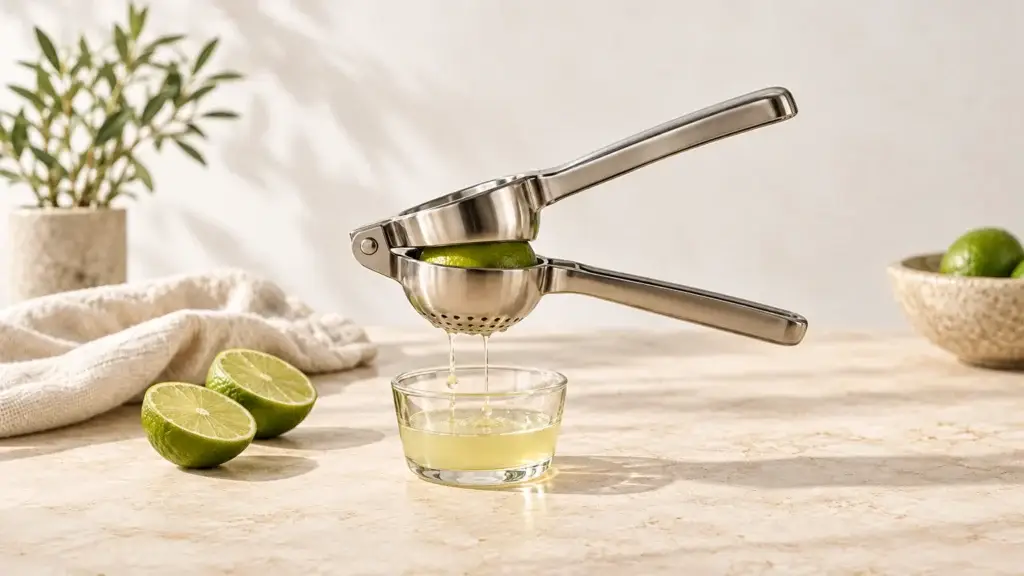 AI sample photography
Bottled citrus juice is pasteurised, usually preserved, and tastes of neither lemon nor lime. Fresh juice is the single largest quality difference in any sour, which makes a press that takes five seconds per fruit one of the more consequential cheap tools you can own.
Our picks
Buy a two-handled enamelled or stainless hand press — the hinged design where the fruit half goes cut-side down into a perforated bowl. Buy the size that matches the fruit: a lime-sized press is the most useful single purchase, because it also handles small lemons, while a lemon press crushes limes inefficiently.
If you make a lot of both, two presses is a genuine convenience. If you buy one, buy the smaller.
A wooden citrus reamer is a legitimate alternative, costs almost nothing, and extracts well — it is just messier, since it has no bowl and everything needs straining.
How to choose
Check the hinge and the handles, which is where cheap presses fail. The hinge takes real force and a thin pin will bend or snap. Metal throughout, with no plastic in the pivot.
Check the coating if it is enamelled. Citrus is acidic and chipped enamel over aluminium is both unpleasant and a sign the press will not last. Uncoated stainless avoids the question.
Check the size against your fruit, honestly. An oversized press on a lime leaves juice in the fruit because the bowl does not meet it properly. Nothing on the box tells you this; look at the bowl and picture the lime in it.
How to use it
Roll the fruit firmly on the worktop under your palm first, which ruptures the juice sacs and noticeably increases yield. Room-temperature fruit gives more juice than cold, so take it out of the fridge beforehand.
Cut in half across the equator, not pole to pole. Place the half cut-side down in the bowl — this is counter-intuitive and correct. The press inverts the peel, which forces juice out through the perforations and leaves the pith behind, and it also squeezes a little oil from the skin into the juice, which is a small bonus of flavour.
Squeeze firmly once rather than pumping repeatedly, which starts extracting bitterness from the pith.
Juice to order where you can. Lime juice in particular changes character within hours and is noticeably different the next day; lemon holds up better. For a party, juice no more than a few hours ahead and keep it cold and covered — see batching for a party.
What to skip
Skip bottled juice for anything where the citrus is a main ingredient. In a Daiquiri or a Margarita it is the difference between a good drink and a disappointing one.
Skip electric juicers for cocktail quantities — more to clean than they save. Skip plastic presses, which crack under the force needed for a lime.
Skip glass reamer dishes, which work but leave you with pulp and pips to strain. And skip squeezing by hand, which gets perhaps half the juice and all of the pips.
Questions
Cut-side up or down? Down. The press inverts the peel and pushes the juice through, leaving pith behind.
What size press should I buy? A lime-sized one. It handles small lemons too; a lemon press is poor on limes.
How do I get more juice? Roll the fruit under your palm first and use it at room temperature.
Can I juice ahead? A few hours, kept cold and covered. Lime fades fastest.
Is bottled juice ever acceptable? In a long drink with strong flavours you may get away with it. In a sour, no.
Read the full bar tools guide — which seven tools to buy, in what order, and what to ignore.