
Y-Peeler
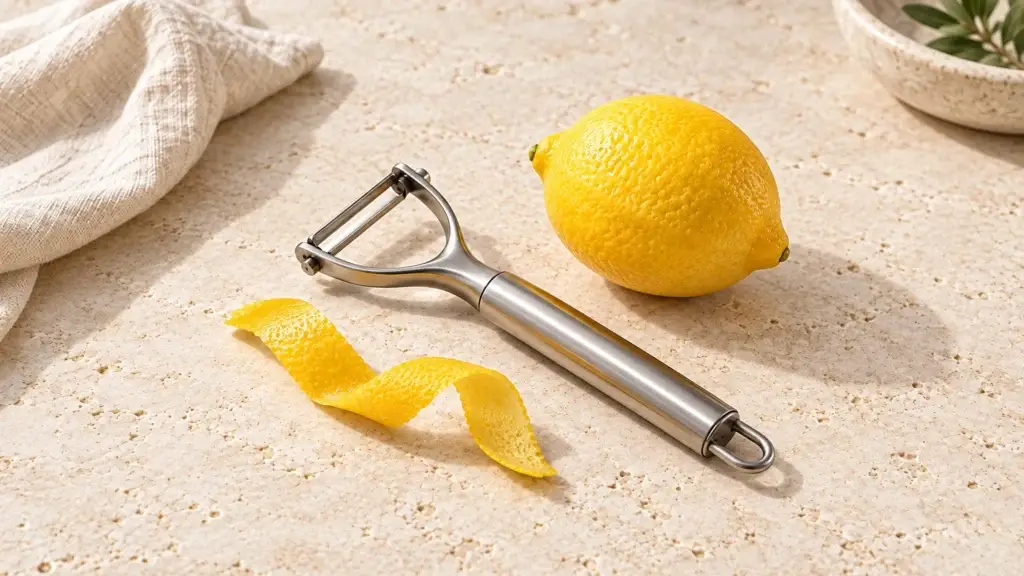 AI sample photography
A twist is not decoration. The oil sprayed from a strip of citrus peel is the first thing you smell and a real part of what you taste, and a Y-peeler is the tool that gets that strip off the fruit cleanly, wide, and without the bitter white pith behind it.
Our picks
Buy a stainless Y-peeler with a straight, sharp blade — the horizontal crossbar type, not the inline swivel design. The Y shape lets you pull the blade towards you across the curve of a lemon with your whole hand, which gives control a swivel peeler does not.
A carbon steel or well-made stainless blade that is genuinely sharp is the whole purchase. These are cheap kitchen tools; the common failure is bluntness, not design. Replace rather than sharpen when it stops cutting cleanly.
A serrated-blade Y-peeler is excellent on soft or waxy fruit and is worth having if you often work with ripe citrus that slips under a straight blade.
How to choose
Sharpness first. A blunt peeler digs rather than slices, which is what takes the pith with it and gives you a thick, bitter, curling strip.
Check the blade gap — the space between blade and frame. Too narrow and it clogs with peel; too wide and it bites deep. A gap of a couple of millimetres is about right.
Check the handle for grip when wet, since citrus is slippery, and check the pivot if it has one: a swinging blade that wobbles will not cut a straight swathe.
These wear out. Buy an inexpensive one and replace it when it stops cutting, rather than buying an expensive one and persisting with it.
How to use it
Hold the fruit in your weak hand, place the blade at the top, and pull towards you in one firm stroke down the curve. One stroke, not sawing. You want a strip about 4cm long and 2cm wide — wide swathes carry more oil than thin ribbons.
Angle the blade shallowly so it takes the coloured zest and stops. If the strip is white on the underside you have gone too deep; the pith is bitter and contributes nothing but that.
To express, hold the strip coloured-side down a few inches above the drink and pinch it sharply — you will see the oil spray if the light is right. Then rub it around the rim if you like, and drop it in or discard it. More on this in how to garnish a cocktail.
Wash and dry the fruit first. Supermarket citrus is usually waxed, and the wax comes off into the drink along with the oil. Unwaxed fruit is worth buying if you garnish often.
What to skip
Skip the channel knife as a first purchase. It cuts the thin spiral twist seen in photographs, which looks elegant and carries very little oil — it is a worse tool for the actual job.
Skip microplanes and zesters for twists; they are for grated zest, which is a different ingredient. Skip paring knives unless you are good with one, since the whole difficulty is controlling depth.
Skip blunt peelers, which is to say the one in your drawer that has been there for six years.
Questions
Why a Y-peeler and not a channel knife? A wide swathe carries far more oil than a thin spiral. The spiral is for looks.
How wide should a twist be? About 2cm wide and 4cm long, taken in one stroke.
How do I avoid pith? Keep the blade shallow and the peeler sharp. White on the underside means too deep.
Do I rub the rim with it? Optional. Express the oils over the surface first — that is the part that matters.
Should I wash the fruit? Yes. Most citrus is waxed and the wax ends up in the drink.
Read the full bar tools guide — which seven tools to buy, in what order, and what to ignore.