
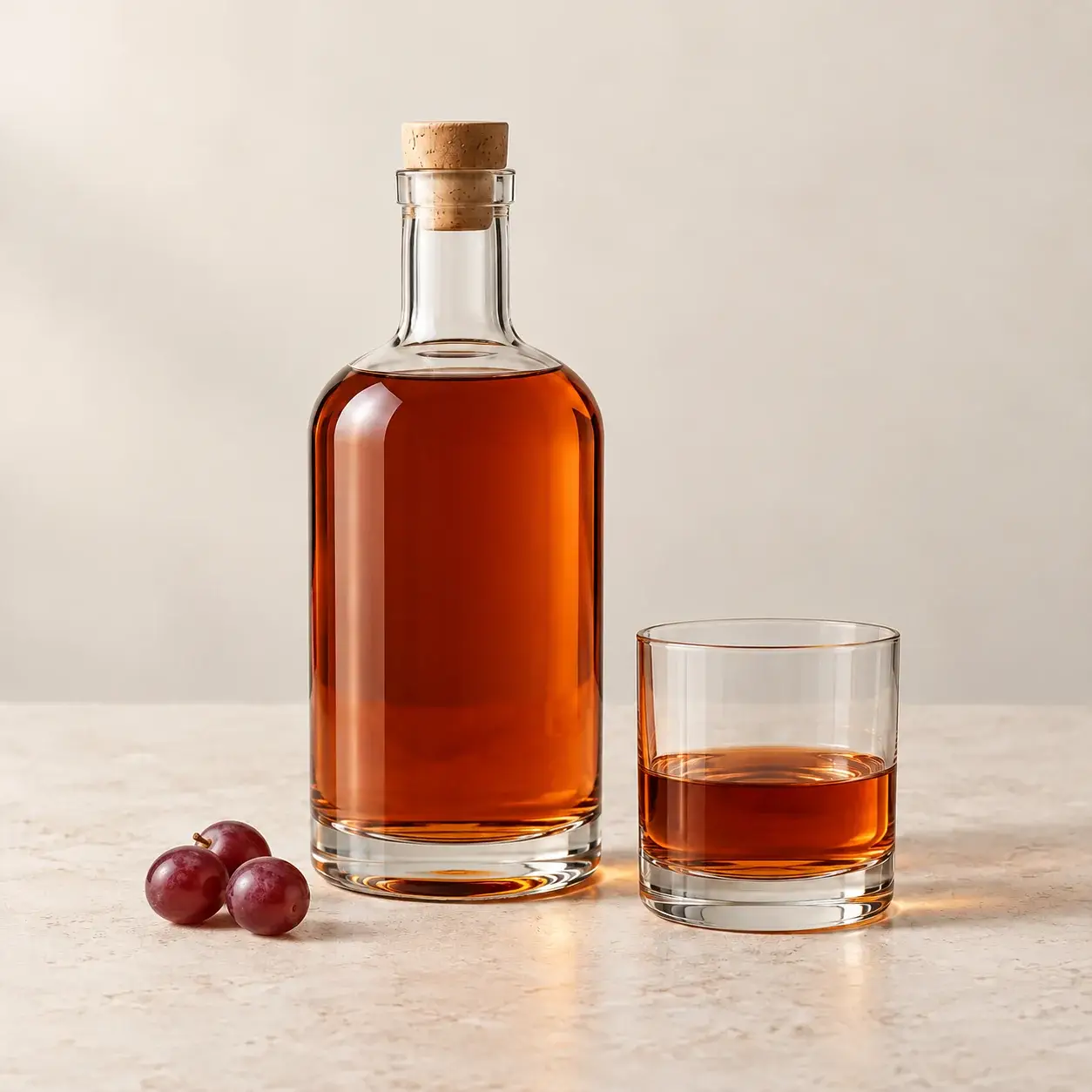
Applejack is America's own apple brandy — older than bourbon, older than the republic — and the base of a small, excellent family of cocktails that nothing else makes properly. The catch is that the word on the label can mean two quite different things, and only one of them is what a recipe wants.
What is applejack?
Historically, applejack was hard cider concentrated by freezing it through a New England winter and discarding the ice — "jacking" — which left a rough, strong, faintly toxic spirit that colonial farmers drank anyway. Modern applejack is a proper distilled apple brandy, and the name is almost synonymous with one producer: Laird & Company of New Jersey, licensed in 1780 and the oldest licensed distillery in the United States.
The complication is the label. Under US rules a bottle marked simply "Applejack" may be a blended applejack — a minimum of 20% apple brandy cut with neutral grain spirit and aged at least two years. Laird's standard Applejack is 35% apple brandy and 65% neutral spirit. It is pleasant and inexpensive, and it is not what the Jack Rose was written for.
A bottle marked "Straight Apple Brandy" is 100% distilled from apples. Laird's Bottled-in-Bond, at 100 proof, is the one bartenders mean when they say applejack, and it is the one this site assumes.
How it's made
Whole apples — Laird's uses a blend of several varieties, roughly 7 kilograms of fruit per bottle — are pressed, and the juice is fermented into a dry cider of around 6 to 7% alcohol. The cider is distilled, traditionally in a column still, then aged in used bourbon barrels. The bonded expression spends at least four years in wood under government supervision and is bottled at exactly 50% ABV, with nothing added.
Older expressions exist — a 7½-year and a 12-year — and drink much more like a fine calvados. The 2-year blend is made by marrying a small share of that apple brandy with grain neutral spirit before bottling.
What it tastes like
Straight apple brandy is drier and rougher than people expect: baked apple, cider vinegar brightness, a woody, slightly funky note from the bourbon barrels, and real heat at 100 proof. It is closer to a young rye in attitude than to a liqueur. The blended version is lighter and sweeter, with the apple character sitting on top of a neutral base.
Next to calvados, applejack is less floral and less refined, more direct, and far better at standing up to citrus and shaking.
Styles worth knowing
| Label | What it is | In a drink |
|---|---|---|
| Bottled-in-Bond Straight Apple Brandy | 100% apple, 4+ years, 50% ABV | The cocktail standard — Jack Rose, Diamondback |
| Blended Applejack | 35% apple brandy, 65% neutral spirit, 2+ years | Highballs, hot cider; too thin for sours |
| 7½-year / 12-year Old Apple Brandy | Fully aged, 40% ABV | Sip neat; a luxurious Widow's Kiss |
| Craft apple brandies (NY, VT, OR) | Usually pot-distilled, often unblended | Any applejack recipe; check the proof |
Which bottle to buy
Buy the bonded straight apple brandy. It costs little more than the blend and it is the difference between a Jack Rose that tastes of apples and one that tastes of grenadine. If your shop only has "Applejack" in the blended sense, a good craft apple brandy at 40 to 45% is a better substitute than the blend.
Ignore anything flavoured — "apple pie" whiskeys and apple-flavoured vodkas are sweetened spirits and will wreck any recipe on this page.
Using it in drinks
The Jack Rose — applejack, lemon or lime, grenadine — is the flagship, and the Apple Jack Rabbit is its maple-syrup cousin. The Diamondback splits it with rye and yellow Chartreuse; the Widow's Kiss stirs it with Bénédictine and Chartreuse; the Pink Lady uses a measure under gin; the Honeymoon pairs it with Bénédictine and orange.
It also makes a fine Old Fashioned base, a sharper Sidecar, and the best Hot Toddy you will make all winter. In any whiskey sour template, swap half the whiskey for applejack and see what happens.
Substitutes
Calvados is the obvious swap — softer and more fragrant, so use a touch more lemon. Any unflavoured apple brandy works. Rye whiskey carries a Jack Rose surprisingly well, if differently. A dry pear brandy is a cousin. Do not reach for apple liqueur or schnapps: the sugar will unbalance everything.
Storage
Upright, cool, out of light. At 50% ABV with no added sugar it keeps indefinitely once opened, though a bottle with an inch left will slowly lose its fruit over a year or two. Nothing to refrigerate.
Questions
Is applejack the same as apple brandy? Straight applejack is apple brandy. "Blended applejack" is mostly neutral spirit with some apple brandy in it. Read the label.
Is applejack a whiskey? No. It is distilled from apples, not grain, which makes it a brandy. It is aged in whiskey barrels, which is where the confusion comes from.
Is it really the oldest spirit in America? Apple brandy was being distilled in the colonies by the late 1600s, before rye or bourbon, and Laird's has the oldest licence. So, by most reasonable measures, yes.
Can I use it in place of calvados? Yes, in every cocktail. It is a little coarser and a little stronger, which in a shaken drink is usually a virtue.
Applejack cocktails.
5 recipes
Autumn Leaves
Autumn Leaves combines applejack, rye, sweet vermouth and Strega with aromatic bitters over ice, chilled for serving.
Kicker
Kicker is made with white rum, applejack and sweet vermouth in a stirred split-base cocktail, chilled for serving.
Honeymoon
Honeymoon is made with applejack, Bénédictine, lemon and orange curaçao in a shaken cocktail, chilled for serving.
Apple Jack Rabbit
Apple Jack Rabbit is made with applejack with orange, lemon and maple syrup in a shaken apple brandy sour, served cold.
Star Cocktail
Star Cocktail is made with applejack, sweet vermouth, gum syrup and Peychaud’s bitters, stirred cold, served cold.