
Benedictine cocktails.
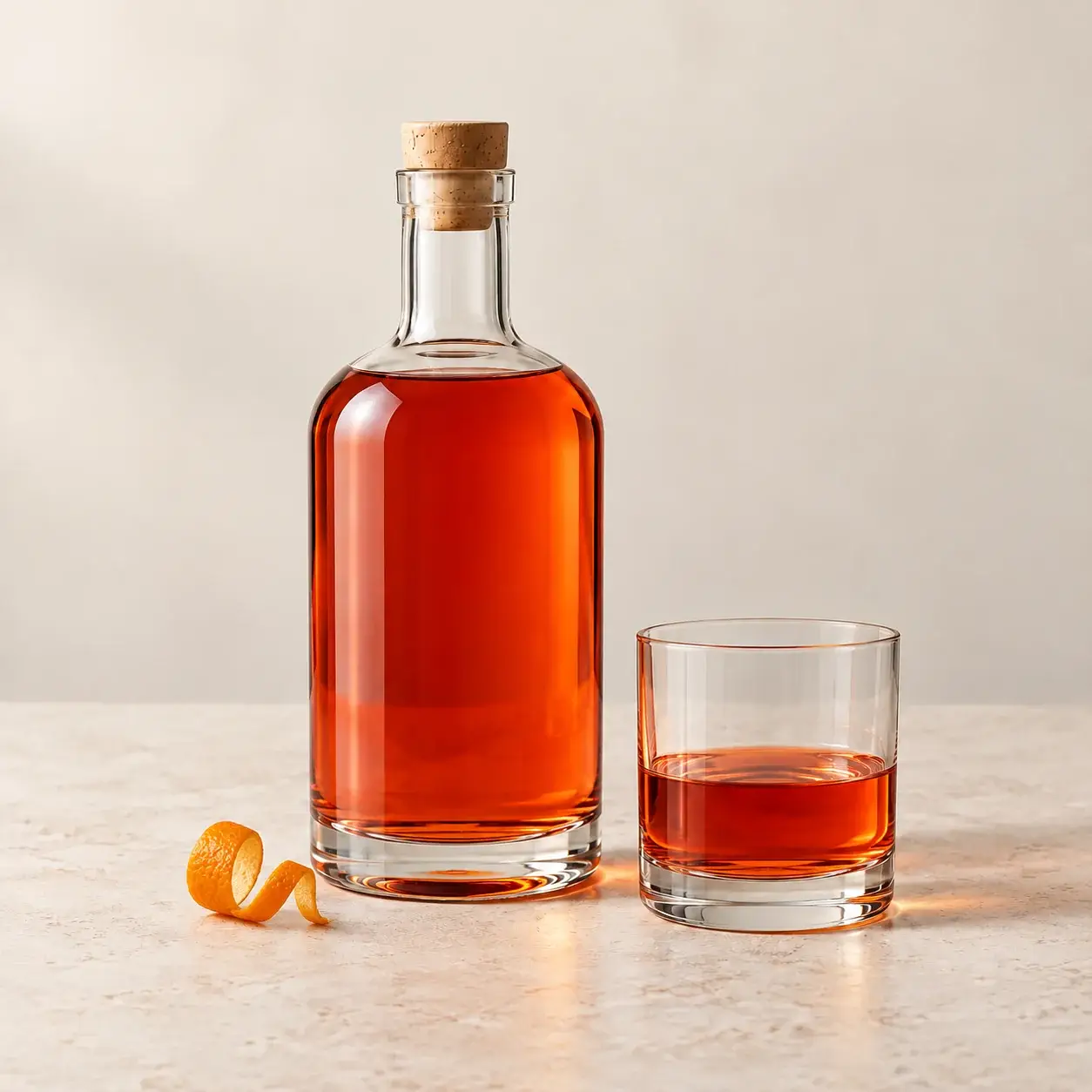
Bénédictine is a French herbal liqueur — honeyed, warm with saffron and spice, and made to a recipe its owners have never disclosed. It is one of the handful of bottles that a surprising number of great stirred drinks depend on, usually in a quarter-ounce, and it is the B in B&B.
What is Bénédictine?
A liqueur of 27 plants and spices on a neutral spirit base, sweetened with honey and sugar, aged in oak and bottled at 40% ABV in Fécamp, on the Normandy coast. The initials D.O.M. on every bottle stand for Deo Optimo Maximo — "to God, most good, most great" — the Benedictine order's motto.
The story on the label is that a monk named Dom Bernardo Vincelli devised the recipe at Fécamp Abbey in 1510 and that a wine merchant, Alexandre Le Grand, rediscovered the manuscript in 1863. The second half is true: Le Grand launched the liqueur in 1863, built an extraordinary neo-Gothic palace in Fécamp to make it in, and was one of the great marketers of his age. The 1510 manuscript has never been produced, and most historians treat the monastic origin as Le Grand's invention. The liqueur is excellent either way.
How it's made
The botanicals — the company names angelica, hyssop, juniper, myrrh, saffron, lemon balm, cinnamon, nutmeg, cloves, mace and a few others, and keeps the rest secret — are grouped into four separate preparations, each macerated and distilled on its own. The four distillates are blended, sweetened with honey and sugar, and aged in oak for several months before bottling. Only three people are said to know the full recipe at any one time, which is marketing, but the four-distillate method is real and is why the flavour is layered rather than muddy.
What it tastes like
Honey first, then saffron, angelica and a warm baking-spice note — cinnamon, clove, nutmeg — with a faint medicinal, herbal bitterness underneath and a long, sweet, slightly resinous finish. It is sweeter than Chartreuse and less aggressive, and rounder than Drambuie. On its own it is an after-dinner sip; in a drink it supplies honeyed depth and spice without reading as sugar.
Styles worth knowing
| Bottle | What it is | In a drink |
|---|---|---|
| Bénédictine D.O.M. | The liqueur, 40% | Vieux Carré, Widow's Kiss, Singapore Sling, Bobby Burns |
| B&B | Bénédictine pre-blended with brandy, drier | A sipper; stands in for Bénédictine plus cognac in a stirred drink |
| Single Cask | Longer oak ageing, limited | Neat |
| Other "monastery" liqueurs | Chartreuse, Strega, Galliano — related in spirit, not substitutes | Different drinks |
Which bottle to buy
There is one Bénédictine, so buy it. A standard bottle lasts a very long time at the quarter-ounce doses most recipes use. B&B is worth having only if you drink it neat; for cocktails it is easier to add your own brandy.
Using it in drinks
Bénédictine is a modifier, and the dose is small. The Vieux Carré stirs a bar-spoon of it with rye, cognac and sweet vermouth; the De La Louisiane uses more; the Preakness and the Bobby Burns add it to a Manhattan or a Rob Roy. The Widow's Kiss and the Honeymoon pair it with apple brandy; the Poet's Dream and the Rolls-Royce use it to round a gin Martini. In the Singapore Sling it sits behind cherry liqueur and pineapple.
A quarter-ounce in an Old Fashioned in place of sugar, or in a Hot Toddy in place of honey, are the two easiest ways to find out what it does.
Substitutes
Yellow Chartreuse is the nearest — honeyed and herbal, drier, with a sharper edge. Drambuie gives the honey and spice on a Scotch base. Strega brings saffron and sweetness. In a drink that only needs its sweetness and body, a rich honey syrup with a dash of Angostura gets you partway. Green Chartreuse is too bitter and too strong to swap one for one.
Storage
Cool, dark, upright; indefinitely stable once open, though a bottle kept for many years loses a little of its top-note spice. No refrigeration.
Questions
Is Bénédictine made by monks? No. It has been made by a private company in Fécamp since 1863. The Benedictine order has nothing to do with it beyond the name and the initials on the label.
What does D.O.M. mean? Deo Optimo Maximo — "to God, most good, most great." It is the Benedictine motto and appears on the label, not the liqueur's name.
Is it the same as Chartreuse? No. Both are French herbal liqueurs with monastic stories, but Chartreuse is genuinely made by Carthusian monks, is more bitter and less sweet, and the green is far stronger.
What is B&B? Bénédictine and brandy, blended and bottled together — originally a bar order at New York's 21 Club in the 1930s, then a product from 1937.
Nothing here yet.
Recipes are being added continuously. Try the full directory while this one fills out.
Browse all recipes ↗