
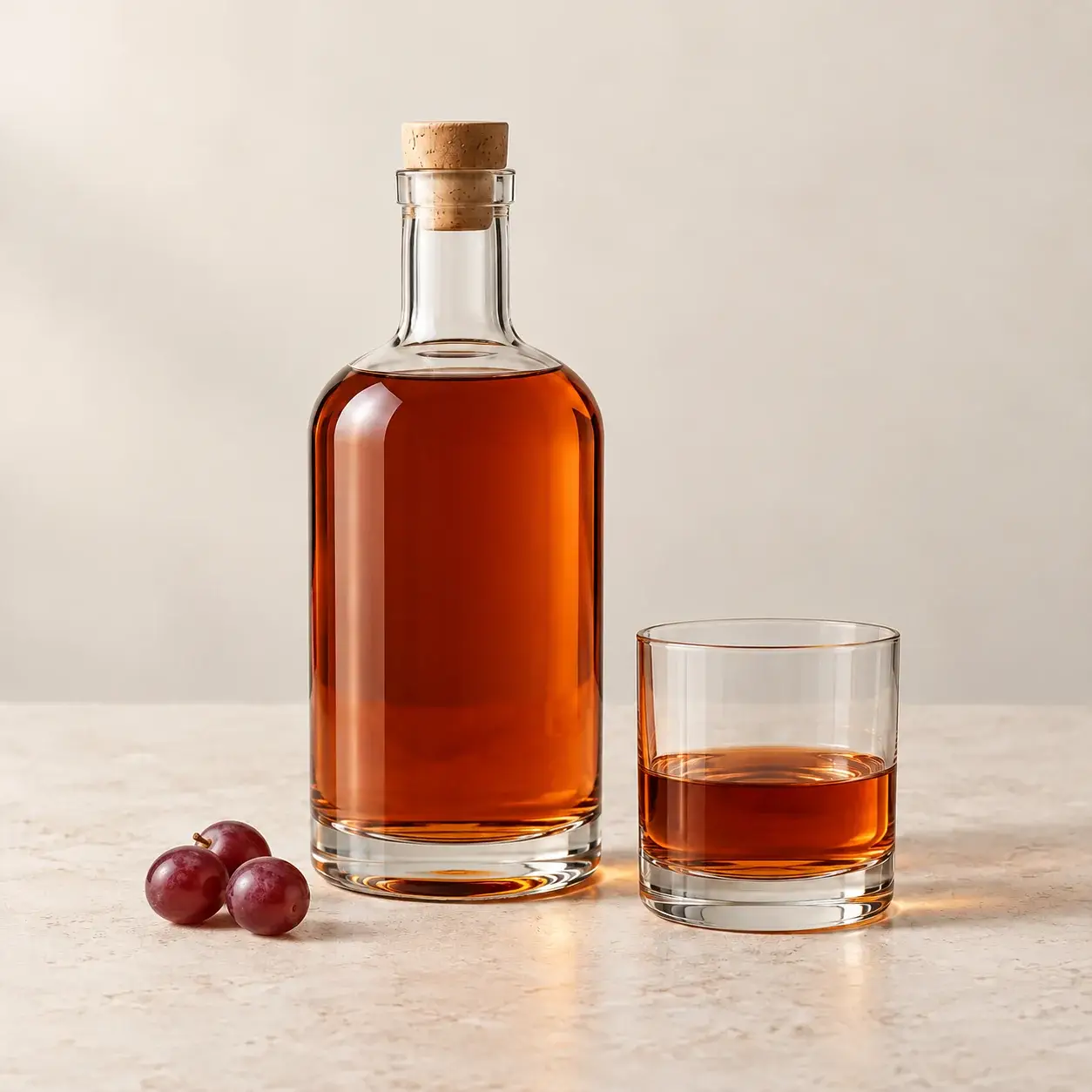
Cognac is grape brandy from a defined region of western France, double-distilled in copper pot stills and aged in French oak. It was the default base spirit of the nineteenth-century cocktail — the original Mint Julep and the original Sazerac were both made with it — and it remains one of the most useful bottles on a well-built back bar.
What is Cognac?
Cognac is brandy, but brandy under a tightly controlled French appellation. To carry the name a spirit must satisfy all of the following:
- Made in the delimited Cognac region around the town of Cognac, in Charente and Charente-Maritime
- Distilled from white wine, predominantly Ugni Blanc (also Folle Blanche and Colombard)
- Double-distilled in a copper Charentais pot still
- Distillation completed by 31 March following the harvest
- Aged a minimum of two years in French oak
- Bottled at no less than 40% ABV
Age is counted by the compte system, which starts on 1 April after the harvest. The familiar grades are legal minimums for the youngest spirit in the blend:
| Grade | Minimum age | Use |
|---|---|---|
| VS (Very Special) | 2 years | Mixing — this is the cocktail grade |
| VSOP | 4 years | Mixing or sipping; the versatile choice |
| Napoléon | 6 years | Sipping |
| XO (Extra Old) | 10 years | Sipping only |
| XXO | 14 years | Sipping only |
The XO minimum was raised from six years to ten in 2018, so older references disagree with current labels.
How it's made
Pick deliberately underripe, high-acid, low-sugar grapes — the resulting base wine is thin and sharp and would be unpleasant to drink, which is exactly what you want to distil. Ferment with no added sugar, then distil twice in the pot still: a first pass to brouillis at around 28–32% ABV, a second pass that yields the bonne chauffe, cut to roughly 70%.
Fill into French oak from the Limousin or Tronçais forests, first into new wood for a burst of tannin and vanilla, then usually transferred to older, more neutral casks so the spirit rounds out without being overwhelmed. Almost every Cognac on the market is a blend of many vintages and often several crus, assembled by a cellar master to a house style.
What it tastes like
Young Cognac: grape, apricot, vanilla, a floral lift, a little oak spice. With age it moves to dried fig, orange peel, walnut, leather, tobacco and the much-discussed rancio — a savoury, slightly mushroomy, almost cheese-rind note that is the mark of real maturity and is considered a virtue.
It is drier than its aroma suggests. The fruit reads sweet, but a Cognac at 40% with no added sugar finishes clean, which is precisely why it mixes so well against citrus.
Crus worth knowing
The region divides into six growing areas, ranked historically by soil chalk content:
| Cru | Character |
|---|---|
| Grande Champagne | Most chalk; the most floral and the longest-ageing |
| Petite Champagne | Similar, slightly quicker to mature |
| Borderies | Smallest cru; nutty, violet-scented, rounder |
| Fins Bois | Fruity, matures fast; the backbone of many blends |
| Bons Bois | Earthier, quicker still |
| Bois Ordinaires | Coastal, maritime note |
Fine Champagne on a label means a blend of Grande and Petite Champagne only, with at least half from Grande.
Which bottle to buy
For cocktails, buy VS or VSOP and stop there. An XO in a Sidecar is a waste of both the money and the Cognac — the oak and the delicate aged notes you paid for get buried under lemon and orange liqueur. VS is designed for mixing and is often the house's most honest value.
Look for bottles that mention the cru, and prefer houses that bottle at 40% with no caramel or boisé (oak extract) adjustment, which is permitted and common. Smaller grower-producers frequently offer more character per pound than the big four houses.
If you want one bottle to both mix and sip, make it a VSOP from a single cru.
Using it in drinks
Cognac is a sour spirit par excellence. The Sidecar — Cognac, orange liqueur, lemon — is one of the great three-ingredient drinks. The Brandy Crusta and the Vieux Carré both depend on it, and the Sazerac was a Cognac drink before phylloxera destroyed the French vineyards and American rye took its place.
It is also the right spirit for anything warm or creamy: Brandy Alexander, hot punches, egg nog, Champagne cocktails. Its dried-fruit register meets cream and nutmeg better than whiskey does.
Try it in split bases. Half Cognac, half rye in a Manhattan is excellent, and half Cognac in a Mint Julep is how the drink was originally made.
Substitutes
Armagnac is the closest substitute — same country, different region, usually column-distilled once and more rustic and powerful. Spanish brandy de Jerez is sherry-cask aged, sweeter and raisined; reduce the syrup. American brandy varies widely but mixes fine. Pisco is unaged grape spirit and will give a brighter, sharper drink. Aged rum swaps in well where the recipe leans sweet; bourbon works but makes the drink distinctly American.
Storage
Upright, cool, away from light. Cognac stops developing the moment it leaves the cask, so a 1970s bottle is a 1970s bottle, not an older one. Once opened, the top third of the bottle oxidises slowly and the spirit will soften over a year or two — some people prefer it. Decant to a smaller bottle if you are working through a special one slowly.
Questions
Is all Cognac brandy, and is all brandy Cognac? The first, yes. The second, no — Cognac is brandy from one specific French region made to one specific set of rules. Brandy is the broad category of fruit-distilled spirit.
Can I mix with XO? You can, and it will taste good, but you will not taste what makes it XO. Mix with VS or VSOP and drink the XO neat.
What does VSOP stand for? Very Superior Old Pale — English trade shorthand from the era when Britain was the dominant export market, which is also why the grades are all in English.
Why do old cocktail books call for brandy where we now use whiskey? Phylloxera. The louse devastated French vineyards from the 1860s, Cognac supply collapsed, and American rye and bourbon filled the gap in bars worldwide. Several "whiskey" classics are brandy drinks in their original form.
Cognac cocktails.
8 recipes
Brandy Alexander
Cognac, dark crème de cacao and cream, shaken, with nutmeg on top. The dessert cocktail that earned the right to be one.
Vanderbilt
Vanderbilt is made with cognac, cherry liqueur, gum syrup and aromatic bitters in a stirred drink, served cold.
Sidecar Royale
Sidecar Royale is made with cognac, triple sec, lemon and a little syrup finished with Champagne, served cold.
Ritz Cocktail
Ritz Cocktail is made with cognac, orange and maraschino liqueurs and lemon topped with Champagne, served cold.
Brandy Milk Punch
Brandy Milk Punch is made with cognac, milk and vanilla syrup shaken over ice for a chilled milk punch, served cold.
Baltimore Eggnog
Baltimore Eggnog is made with cognac, dark rum, Madeira, a whole egg, milk and cream, shaken cold, served cold.
Brandy Crusta
Cognac, maraschino, orange liqueur and lemon in a glass crusted with sugar and lined with a lemon peel. The drink that invented…
Sidecar
Cognac, orange liqueur and lemon. The brandy sour that every other brandy sour is measured against.