
Dry Vermouth cocktails.
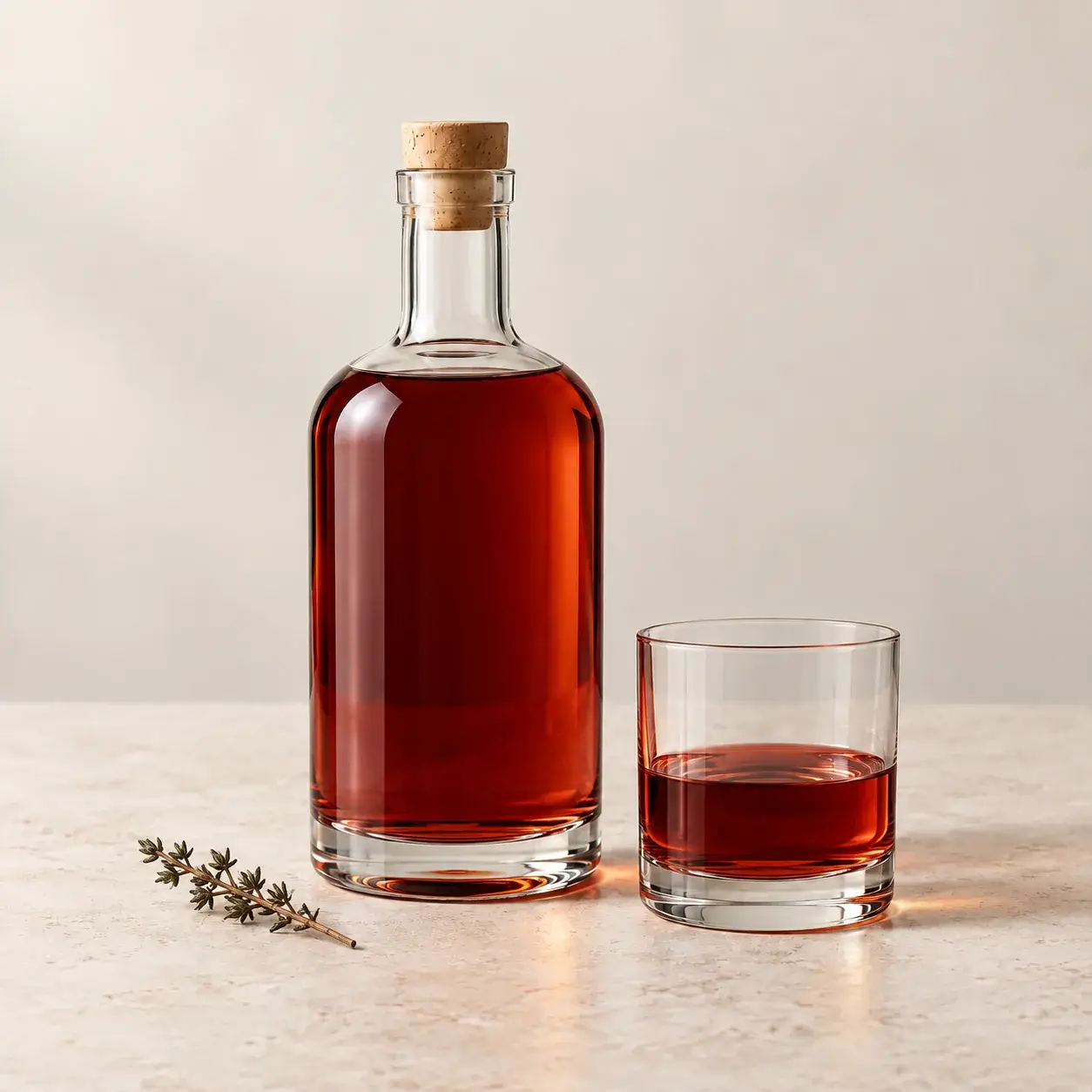
Dry vermouth is pale, crisp, aromatised fortified wine — the other half of a Martini and the ingredient most likely to be ruining yours. Like sweet vermouth, it is wine at around 17% ABV, which means an open bottle has a shelf life measured in weeks, not years.
What is dry vermouth?
The same legal category as sweet vermouth, at the dry end of the sugar scale. Under EU rules vermouth must be:
- At least 75% wine
- Flavoured with Artemisia — wormwood — which is compulsory
- Fortified to between 14.5% and 22% ABV; most dry vermouth sits at 15–18%
The sweetness terms on the label are defined, and they are worth knowing because the gap between them is real:
| Label term | Sugar per litre |
|---|---|
| Extra dry | under 30 g |
| Dry | under 50 g |
| Semi-dry | under 90 g |
| Semi-sweet | 90–130 g |
| Sweet | 130 g and above |
Dry vermouth is also called French vermouth, after Marseille and Chambéry where the style was established — though plenty of excellent dry vermouth is now Italian, Spanish and American.
How it's made
Begin with a crisp, neutral white wine. Infuse botanicals — wormwood, plus some combination of chamomile, coriander, elderflower, orris root, angelica, cardamom, lemon peel and alpine herbs; dry styles lean floral and herbal where sweet styles lean towards spice and cocoa. Fortify with grape spirit, sweeten only lightly, chill-filter and bottle.
Some producers deliberately oxidise or age the base wine slightly for depth, which is why a few dry vermouths taste faintly sherry-like by design. That is distinct from a bottle that has oxidised in your kitchen by accident.
The fortification stabilises the wine but does not make it a spirit. At 17% ABV it is closer to sherry than to gin in how it behaves once air gets in.
What it tastes like
Dry, crisp, saline, herbal. Green apple, white flowers, chamomile, lemon pith, a faint bitterness from the wormwood, and in the better bottles a distinct mineral or briny edge. It should taste alive and appetising on its own.
Oxidised dry vermouth tastes dull, flat and slightly sour, with a stewed-apple note and the herbal lift gone. In a Martini this reads as the drink being "harsh" — people usually blame the gin, and it is almost always the vermouth.
Styles worth knowing
| Style | Character | In a drink |
|---|---|---|
| Classic French dry | Crisp, floral, mildly bitter | The default Martini vermouth |
| Extra dry | Barely any sugar, leaner | Very dry Martinis; can taste thin at high ratios |
| Chambéry style | Lighter, more alpine and floral | Delicate; good in a wetter Martini |
| Spanish / Catalan dry | Often more saline and savoury | Superb in a Martini with a lemon twist |
| Blanc / bianco | Pale but sweet — a different thing | Not a dry substitute |
| Dealcoholised aperitif wine | Lower strength, often sweeter | Workable; expect less structure |
Which bottle to buy
Buy small and buy recent. A 375ml bottle finished in a month will make better Martinis than a litre of a more prestigious label that has been open since spring. Check the date on the shelf, too — vermouth that sat in a warm shop for two years is already tired.
For a Martini, a good French or Spanish dry vermouth is the right call. If you drink Martinis very dry, note that an extra-dry vermouth plus a tiny pour can taste hollow; many people are happier with a standard dry vermouth and a slightly more generous measure.
Own one dry and one sweet and you cover an enormous amount of the classic canon — Martini, Manhattan, Negroni, Martinez, Vesper, Bamboo.
Using it in drinks
Dry vermouth's job is to dilute and season a spirit-forward drink — it adds wine acidity, herbal aromatics and a little salinity, and it lowers the strength. The Martini is the defining use, and the ratio is entirely a matter of taste: anywhere from 5:1 gin-to-vermouth for a dry Martini down to 2:1 or even 1:1 for a "wet" one, which is how the drink was originally made and which a lot of bartenders now prefer.
It is also central to the Dirty Martini, the Bamboo (dry vermouth and sherry, one of the great low-strength drinks), and the 50/50 Martini.
Drunk chilled on its own with a twist and soda it is an excellent low-alcohol aperitif, and it is the best way to judge a bottle.
A note on ratios: if your Martini tastes thin, try more vermouth rather than less. The modern habit of an almost vermouth-free Martini is a twentieth-century drift, not a rule.
Substitutes
Another dry vermouth first. Beyond that, dry sherry — fino or manzanilla — is the closest substitute, similar strength and similarly saline, though without the wormwood bitterness; it makes a genuinely good Martini. Dry white wine plus a dash of orange bitters is a passable emergency version. Blanc vermouth is pale but sweet and will change the drink. Lillet Blanc is sweeter and rounder but works in some applications. Nothing non-wine-based substitutes well, because the wine acidity is half the point.
Storage
Refrigerate it as soon as it is open. Dry vermouth is the most perishable bottle in most home bars, and the lower sugar gives it even less protection than sweet vermouth.
- Open, refrigerated: about three to four weeks at its best
- Open, at room temperature: days, not weeks
- Unopened: a year or two, upright, cool, out of light
Decant into a smaller bottle as the level falls — the air in the bottle does the damage, not the time as such. A vacuum stopper helps. The bottle on the back bar at room temperature with a dusty shoulder is the single most common cause of a disappointing Martini anywhere in the world.
Questions
How long does dry vermouth last once opened? Three to four weeks refrigerated. At room temperature it declines within days. It will not hurt you when it is past it, but it will flatten any drink you use it in.
Should dry vermouth be kept in the fridge? Yes, always, once opened. It is wine.
What is the difference between dry and extra dry? Sugar. Extra dry is under 30 grams per litre, dry is under 50. Extra dry is leaner and can taste austere in a very dry Martini.
What is the right Martini ratio? There is no single answer. Modern dry Martinis run around 5:1 or 6:1; a 2:1 or 50/50 Martini is historically closer to the original and is a more flavourful drink. Try both before deciding.
Can I use dry vermouth instead of sweet? Not interchangeably. A Manhattan made with dry vermouth is a different drink — it has a name, the Dry Manhattan, and it is much leaner. Half of each gives you a Perfect Manhattan.
Nothing here yet.
Recipes are being added continuously. Try the full directory while this one fills out.
Browse all recipes ↗