
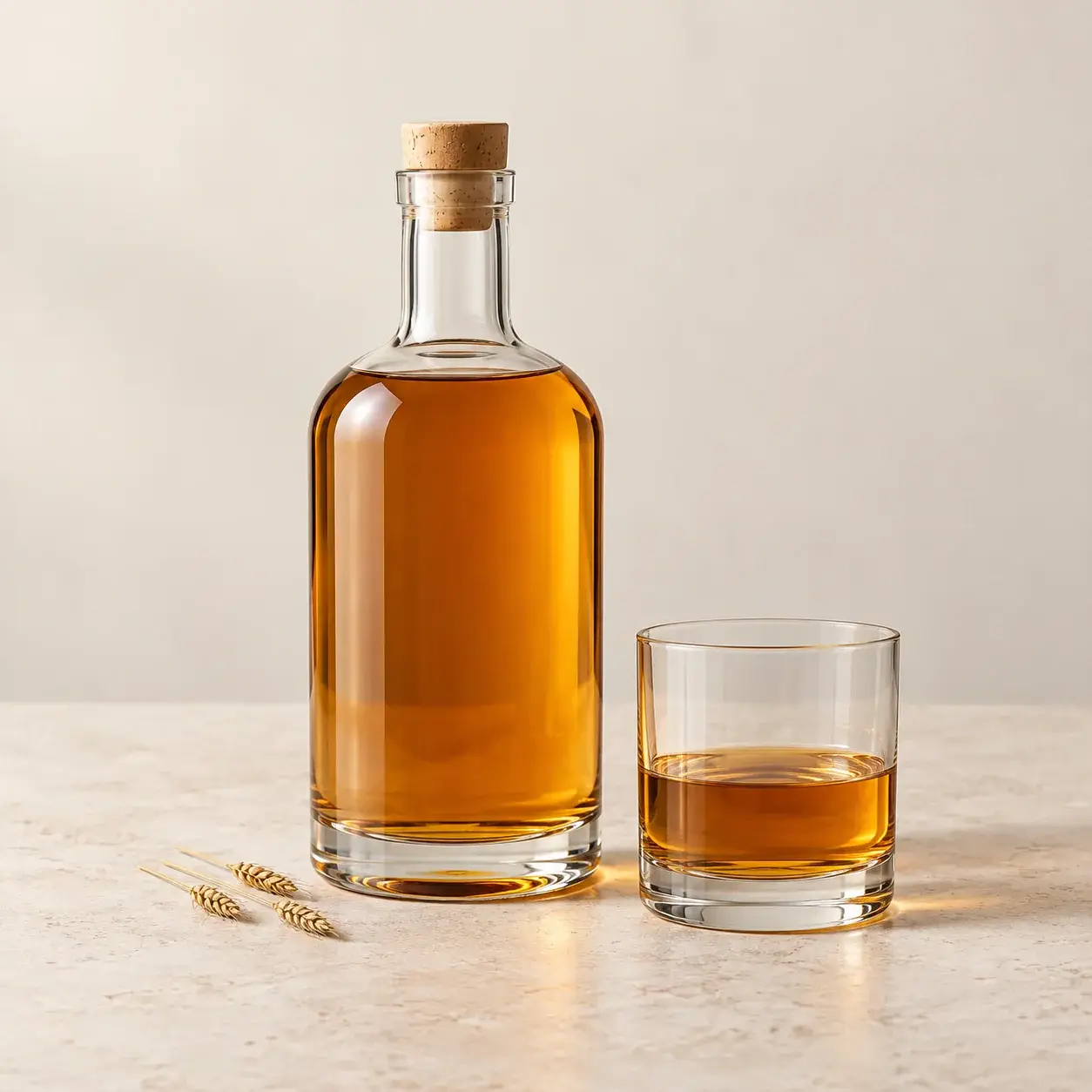
Japanese whisky began as an imitation of Scotch and became something of its own: precise, clean, built for balance and, in the last fifteen years, so fashionable that the good bottles disappeared from the shelves. It is the whisky behind the Japanese highball, the best-made simple drink in the world, and in a stirred cocktail it is as good as the Scotch it was modelled on.
What is Japanese whisky?
Whisky made in Japan in the Scottish manner — malted barley in pot stills, grain in columns, blended, aged in oak. The industry dates to 1923, when Shinjiro Torii built the Yamazaki distillery outside Kyoto and hired Masataka Taketsuru, who had studied distilling in Scotland and married a Scotswoman; Taketsuru later founded his own distillery, Yoichi, in Hokkaido in 1934. Those two companies — Suntory and Nikka — still dominate.
For most of its history "Japanese whisky" had no legal definition, and some bottles labelled as such were Scotch or Canadian whisky imported in bulk and bottled in Japan. In 2021 the industry association adopted standards, binding on members from 2024: to be labelled Japanese whisky, the spirit must be mashed, fermented, distilled and aged for at least three years in Japan, using some malted grain and Japanese water. Bottles that do not meet the standard may still exist from non-members, so the label is worth reading.
How it's made
As Scotch is, with two Japanese habits. First, because the big companies historically did not trade whisky with each other as Scottish distillers do, each built enormous variety in-house — different still shapes, yeasts, peat levels and casks under one roof — so a single distillery could supply everything a blender needs. Second, mizunara: Japanese oak, rare, porous and difficult to cooper, which after long ageing gives a distinctive sandalwood, incense and coconut note found nowhere else. Most Japanese whisky is aged in ex-bourbon and sherry casks like Scotch; mizunara is the signature.
What it tastes like
Clean, balanced and precise: honey, orchard fruit, light oak, a floral note, sometimes gentle smoke. Compared with Scotch it is usually softer and less assertive, with an emphasis on texture and harmony over any single flavour. Mizunara-aged whiskies add incense and spice. The big-name blends are made to be drunk with soda and are light, dry and exactly suited to it.
Styles worth knowing
| Style | What it is | In a drink |
|---|---|---|
| Entry blends | Built for the highball; light and dry | Whisky Highball, Mizuwari |
| Premium blends, no age | Richer, balanced, widely available | Old Fashioned, Manhattan, Rob Roy |
| Single malts, no age | The distillery's character; scarce | Neat; a luxurious highball |
| Aged single malts (12+) | Allocated, expensive, collected | Neat, if at all |
| Bulk-import "Japanese" whisky | Foreign whisky bottled in Japan | Avoid, or at least know what it is |
Which bottle to buy
A premium no-age-statement blend from one of the two big houses. It is what the good bars use, it is still obtainable at a fair price, and it makes an excellent highball and a very good stirred drink. The aged single malts are now collectors' items; paying collector prices to mix is a mistake, and most of them are better neat anyway. Check for the 2021 standard's language on the label if provenance matters to you.
Using it in drinks
The Whisky Highball is the drink: whisky and very cold soda over hard clear ice, built with care and not stirred, which Suntory's 2008 campaign made the national serve. The Mizuwari is the same idea with still water. Beyond those, Japanese whisky swaps straight into any Scotch cocktail — a Rob Roy, a Manhattan-style stirred drink, an Old Fashioned — where its softness is an asset. A Japanese Old Fashioned with a little sugar and bitters is a modern bar standard.
Substitutes
Blended Scotch is the direct swap — Japanese whisky was built on it. A gentle single malt or an Irish whiskey works in stirred drinks. For the highball, any light blended whisky serves; the technique matters more than the origin.
Storage
Upright, cool, dark, indefinitely. If you own an allocated bottle, drink it rather than storing it; whisky does not improve in glass, and the market's enthusiasm will not make it taste better.
Questions
Is Japanese whisky Scotch? No, but it is made the same way. The founders learned in Scotland and copied the method; the 2021 standards now define it as its own category.
Why is it so expensive? Demand. Awards and fashion in the 2010s outstripped stocks laid down in the lean 2000s, age statements vanished, and the aged bottles became collectables. Prices have eased a little; availability has not fully recovered.
What is mizunara? Japanese oak, used for a minority of casks. It is leaky and hard to work but gives incense, sandalwood and coconut notes after long ageing.
Is all whisky bottled in Japan Japanese? Not necessarily. Before 2021 some was imported in bulk and bottled locally. The new standard requires it to be made in Japan, and members' labels now say so.
Japanese Whisky cocktails.
1 recipe