
London Dry Gin cocktails.
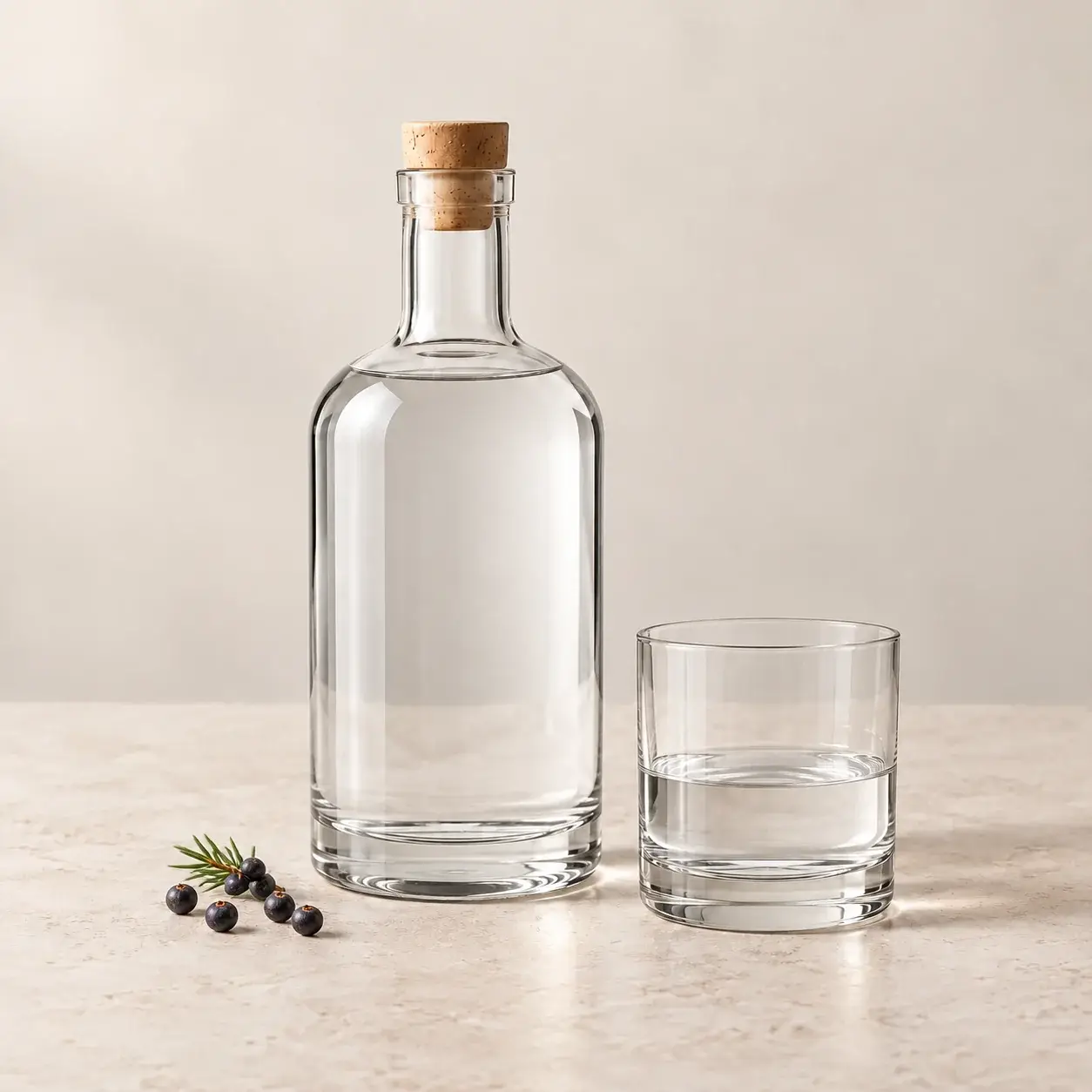
London dry is the gin that most cocktail recipes mean when they say "gin" — juniper-forward, bone dry, and made to a strict rule about how the flavour gets in. The name is the most misunderstood thing about it: it is a production method, not a place. London dry gin is made in Scotland, Spain, the United States and, occasionally, London.
What is London dry gin?
Under the European definition that most of the world follows, London dry is the strictest category of gin:
- Made by re-distilling neutral spirit in the presence of all its botanicals — every flavour must come through the still
- Nothing may be added after distillation except water and a tiny amount of sugar — no flavourings, no colour, no essences
- Maximum 0.1 grams of sugar per litre, which is effectively none
- Juniper must be the predominant flavour
- Minimum 37.5% ABV in the EU
Compare the two looser categories. Distilled gin is also re-distilled with botanicals but may have flavours added afterwards. Gin (sometimes "compound gin") need not be re-distilled at all — flavourings can simply be mixed into neutral spirit. Many of the flavoured and pink gins on the shelf are the second or third kind and could not legally call themselves London dry.
And again: no geographic requirement. A London dry made in Scotland is exactly as legitimate as one made in Clerkenwell.
How it's made
Take high-strength neutral grain spirit. Add juniper and the house botanicals — coriander seed, angelica root, citrus peel, orris root and a dozen possible others — either directly into the still or in a basket in the vapour path. Re-distil. Cut to strength with water. Bottle.
That is the whole method, and its simplicity is the point. Because nothing can be added afterwards, a London dry distiller has to get the balance right in the still. Botanical choice, the ratio of juniper to everything else, and the cut are where the differences between brands live.
The lack of sugar is also why London dry tastes so clean and dry on the finish, and why it holds a Martini together where a sweeter gin would not.
What it tastes like
Juniper first — piney, resinous, slightly peppery — then coriander's citrus-and-spice, the earthy dryness of angelica, and whatever citrus peel the house favours. Dry finish, no sweetness, a clean burn at the swallow.
Within that frame the range is wide. Classic London drys are juniper-dominant and assertive. Many modern gins made to the London dry method lean on citrus, florals or spice and keep juniper as a frame rather than the headline; they are still London dry if the rules are met, but they behave differently in a Martini.
Styles worth knowing
| Style | What changes | In a drink |
|---|---|---|
| Classic juniper-forward London dry | The benchmark | Martini, Negroni, Gin and Tonic, Tom Collins |
| Citrus-led London dry | Peel pushed forward | Sours, fizzes, Collins drinks |
| Navy strength London dry | 57%+ ABV, same method | Survives dilution; Gimlet, Negroni |
| Plymouth | Softer, earthier; a town, not a method | Historic naval drinks, a gentler Martini |
| Old Tom | Lightly sweetened — not London dry | Tom Collins, Martinez, pre-dry classics |
| Distilled / compound gin | Flavour added after the still | Varies wildly; read the label |
Which bottle to buy
Buy a classic juniper-forward London dry at 40% or above as your working gin. It is the gin the canon was written for, and it is the one that behaves predictably in every recipe on this site. A good one is not expensive.
If you drink a lot of Martinis or Negronis, a second bottle at navy strength is worth having — the extra proof stays present through the stir and the vermouth.
Be careful with gins that call themselves "London dry" but taste mostly of grapefruit or cucumber. They may be perfectly good, but they will make a different Negroni from the one the recipe expects.
Using it in drinks
London dry is the default gin for the stirred classics — the Martini, the Negroni — and for the long ones: the Gin and Tonic, the Tom Collins. Its dryness is structural in all of them; a sweeter gin changes the balance of each.
In sours it meets lemon and sugar cleanly — the Gimlet, the Bee's Knees, the Aviation. Where a recipe calls simply for "gin", London dry is almost always what was meant.
One practical note: because it carries no sugar, a London dry recipe that tastes thin usually wants slightly more vermouth or syrup, not more gin.
Substitutes
Plymouth is the gentlest swap — softer and a touch earthier, excellent in a Martini. Navy strength is the same gin, stronger; use a little less. Old Tom substitutes in Collins and Martinez builds but adds sweetness, so trim the syrup. Genever is a different spirit — maltier, heavier — and changes the drink. Vodka covers the structure of a Martini or a Collins and removes the botanicals entirely.
Storage
Upright, cool, out of direct sunlight, which degrades the more delicate botanicals over time. Gin does not improve in the bottle. Once opened it keeps well for a year or two, though the brightest citrus and floral notes fade first; a half-empty bottle of a delicate gin will taste noticeably flatter after a long time on the shelf. The freezer is fine for a Martini gin and keeps the aromatics intact.
Questions
Does London dry gin have to be made in London? No. It is a method — re-distilled with all its botanicals, nothing added after. It can be made anywhere, and most of it is not made in London.
What is the difference between London dry and distilled gin? Distilled gin may have flavourings added after distillation; London dry may not. Both are re-distilled with botanicals.
Is London dry the best gin for a Martini? It is the classic choice and the one most recipes assume. Plymouth is the main alternative, and many people prefer its softness. Sweeter or heavily flavoured gins make a different drink.
Why does my gin taste sweet if it is London dry? It probably is not — check the label for the exact words. Many "pink", "flavoured" or "infused" gins are compound gins and may contain sugar and added flavouring.
Nothing here yet.
Recipes are being added continuously. Try the full directory while this one fills out.
Browse all recipes ↗