
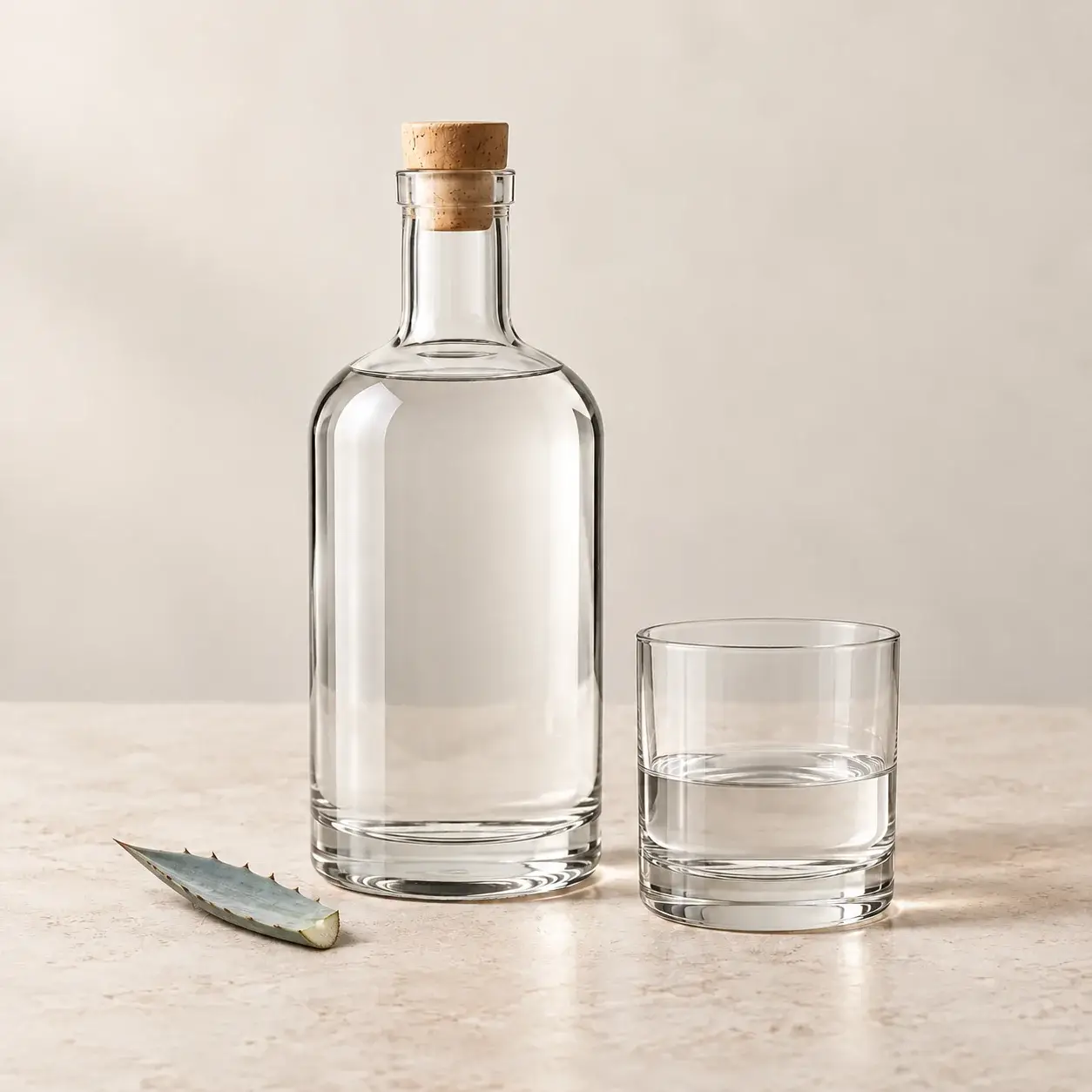
Mezcal is Mexican agave spirit, and the smoke everyone associates with it is not a flavouring — it comes from roasting the agave hearts in a wood-fired pit in the ground. It is the broader category that tequila is a subset of, and it is the most varied spirit on any back bar.
What is mezcal?
Mezcal is spirit distilled from agave, protected by a Mexican denomination of origin and governed by its own standard, NOM-070. The rules are looser than tequila's in one respect and stricter in another — many more agave species are allowed, but the production must stay traditional to keep the name:
- Produced in one of the states covered by the denomination — Oaxaca accounts for the large majority, alongside Durango, Guerrero, Guanajuato, San Luis Potosí, Tamaulipas, Zacatecas, Michoacán and Puebla
- Made from any permitted agave species, of which there are dozens — not just one
- 100% agave: unlike tequila, there is no mixto category. All mezcal is pure agave spirit.
- Bottled between 35% and 55% ABV
The standard also defines three production categories, and this is the single most useful thing to read on a label:
| Category | What it permits |
|---|---|
| Mezcal | Industrial methods allowed — autoclaves, column stills, diffusers |
| Mezcal Artesanal | Pit-roasted, milled by tahona or mallet, fermented in wood or stone, distilled in copper or clay |
| Mezcal Ancestral | The strictest — clay pot stills only, no copper, everything by hand |
If the label says only "Mezcal" with no second word, it may have been made in a column still and will taste much closer to a neutral agave spirit.
How it's made
Harvest the agave after anywhere from six to thirty years in the ground, depending on species, and trim it to the piña — the heart, which looks like a giant pineapple. Dig a conical pit, line it with hot volcanic rocks over a wood fire, pack the piñas in, cover with agave fibre and earth, and leave them to roast for three to five days.
That pit is the entire source of the smoke. Tequila, by contrast, steams its agave in brick ovens or autoclaves, which is why tequila is not smoky. Nothing is added to mezcal to make it taste the way it does.
The roasted hearts are then crushed — traditionally under a tahona, a stone wheel dragged by a horse or mule, or by hand with wooden mallets — fermented in open wooden vats with wild airborne yeast, and distilled twice, often in small copper or clay pots. Most traditional mezcal is bottled straight off the still at whatever strength it came out, which is why so many sit at 45–48% rather than a tidy 40%.
What it tastes like
Smoke, but underneath it: roasted agave, green pepper, wet stone, citrus pith, sometimes tropical fruit or a note like struck flint. The best mezcal is not primarily smoky at all — the smoke is a frame around a cooked-vegetal sweetness that is unlike anything else distilled.
Species changes it enormously. Espadín, the workhorse, is the most approachable and the most citrus-and-agave forward. Tobalá is floral and delicate. Tepeztate is intensely herbal and vegetal. Arroqueño is rich and earthy. These differences are larger than the differences between most whiskies.
Styles worth knowing
| Style | What changes | In a drink |
|---|---|---|
| Espadín joven | Cultivated agave, unaged | The default cocktail mezcal; buy this first |
| Ensamble | A blend of several agave species | Complex; good in spirit-forward stirred drinks |
| Wild agave (tobalá, tepeztate, madrecuishe) | Foraged, slow-growing, scarce | Sip these; they are wasted under citrus |
| Pechuga | Redistilled with fruit and a raw chicken or turkey breast in the vapour path | Ceremonial; extraordinary neat |
| Reposado / añejo | Rested in oak 2-9 months / 12+ months | Oak fights the smoke; uncommon and divisive |
| Destilado en barro | Clay pot stills | Softer, earthier, more mineral |
Which bottle to buy
Buy an espadín labelled Artesanal, at 45% or above, that names the village and the maestro mezcalero on the label. That combination is the reliable signal of a real product: it tells you the pit, the tahona and the copper pot were used, and that someone is putting their name to it.
Avoid bottles that lean on smoke as a marketing hook with no production information, and be sceptical of anything very cheap — traditional mezcal is made in tiny batches from agave that took eight years to grow, and the economics do not allow for a bargain.
Do not buy a wild-agave bottling as your first mezcal. Tobalá and tepeztate are remarkable and they disappear completely in a cocktail. Start with espadín, keep something wild for sipping later.
Using it in drinks
Mezcal wants lime, grapefruit, agave syrup, chilli, and bitter partners. A Mezcal Paloma and a Mezcal Negroni are both better than their originals to a lot of drinkers. The Mezcal Last Word works because green Chartreuse's herbal intensity meets the smoke head-on.
The most useful technique is the split base: three-quarters blanco tequila to a quarter mezcal in a Margarita gives you smoke as a seasoning rather than the main event, and it is how most bars introduce mezcal to people who think they dislike it.
A quarter-ounce float, or a rinse of the glass, does the same job in a whiskey drink.
Substitutes
Blanco tequila is the obvious swap and loses the smoke entirely — the agave character remains, so the drink still works. Islay Scotch gives smoke of a completely different kind, peat rather than wood, and is a genuine option in stirred drinks. Sotol is a related Mexican spirit made from a different plant and is much closer in spirit than tequila. Raicilla, from Jalisco, is agave-based and similarly rustic. There is no non-agave substitute that gets you both the smoke and the vegetal sweetness.
Storage
Upright, cool, away from light. Unaged mezcal is very stable and an open bottle keeps for years. The one real caution is that mezcal's aromatics are more volatile than most spirits, so a bottle left with two fingers in the bottom for a year will lose some of its top notes. If you have something special and you are drinking it slowly, decant it into a smaller bottle.
Questions
Is tequila a mezcal? Technically yes — mezcal means agave spirit, and tequila is agave spirit. Legally they are separate denominations with different regions, different permitted agave and different rules, so a bottle is labelled one or the other, never both.
Why is mezcal smoky and tequila is not? The cooking method. Mezcal roasts its agave in wood-fired earthen pits; tequila steams it in ovens or autoclaves. Same plant family, completely different heat.
What is the worm, and should it be there? It is a moth larva, it is not traditional, and its presence is generally a sign of a bottle made for export novelty rather than for drinking. No serious mezcal has one.
Why is good mezcal expensive? Agave takes six to thirty years to mature depending on species, it is harvested by hand, roasted for days, crushed by stone and distilled in batches of a few hundred litres. There is no way to make it quickly.
Should I drink it neat or in cocktails? Both. Espadín makes excellent cocktails. Wild-agave bottlings are better neat, at room temperature, in a small clay copita — not chilled, and not with ice, which shuts down the aromatics.
Mezcal cocktails.
6 recipes
Mezcal Sour
Mezcal Sour is made with mezcal, lime, agave syrup and egg white in a foamy agave sour, prepared for a cold single…
Maximilian Affair
Maximilian Affair is made with mezcal, elderflower liqueur, Punt e Mes and lemon in a bittersweet sour, served cold.
Mezcal Last Word
Equal parts mezcal, green Chartreuse, maraschino and lime. The Last Word's architecture with smoke where the gin was — and it survives…
Mezcal Paloma
Mezcal, grapefruit, lime and salt in a tall glass. Smoke against bitter citrus — arguably a better drink than the tequila original.
Oaxaca Old Fashioned
Reposado tequila and mezcal with agave syrup and bitters. An Old Fashioned rebuilt on agave, and one of the best-known cocktails of…
Mezcal Negroni
A Negroni with mezcal in place of gin. The smoke meets Campari's bitterness head-on, and a lot of drinkers prefer it to…