
A non-alcoholic drink is not a cocktail with the spirit left out — take the gin out of a Gin and Tonic and you have tonic. Building a good zero-proof drink means replacing the three things alcohol was actually doing: carrying aroma, giving body, and providing a little bite.
What is a non-alcoholic spirit?
A botanical distillate or infusion built to be used like a spirit but containing little or no ethanol. The labelling terms are legally distinct and worth knowing precisely, because they are not interchangeable:
- Alcohol-free / 0.0% — no detectable alcohol
- Non-alcoholic — generally under 0.5% ABV in both the United States and the EU, so it may contain a trace
- De-alcoholised — made as an alcoholic drink, then stripped; usually under 0.5%
- Low-alcohol — a marketing term, not a guarantee; read the figure
For context, 0.5% is roughly what you find in ripe fruit juice, kombucha or a soft bread roll. But if you are avoiding alcohol for a reason — recovery, pregnancy, a medication, faith — look for 0.0% rather than "non-alcoholic", and check the bottle rather than the shelf tag. That is a decision only you can make, and it is worth making on the label rather than on a category name. This is general information, not medical advice.
How it's made
Two routes. The first distils or macerates botanicals — juniper, coriander, citrus peel, roots and barks — in water or in alcohol, and then removes the alcohol by vacuum distillation or reverse osmosis. The second builds the flavour from the start in a non-alcoholic base, combining distillates, extracts and infusions.
The hard part is not the flavour; it is everything else. Ethanol is doing three jobs in a cocktail and all three go missing at once:
| What alcohol does | What replaces it |
|---|---|
| Carries aroma to your nose | More aromatic botanicals, fresh herbs, expressed citrus oils |
| Gives weight and a slippery texture | Glycerine, gum syrup, honey, a richer 2:1 syrup, aquafaba |
| Provides bite, warmth and length | Tannin from strong black tea, acid, chilli, ginger, black pepper, bitter roots |
That table is the whole craft of the category. A non-alcoholic drink that tastes thin and sweet is almost always missing body and bitterness, not flavour.
What it tastes like
At its best: aromatic, bitter, tart and layered, with enough texture to feel like a drink rather than a cordial. At its worst: sweet, one-dimensional, and over quickly — the "sad fruit punch" problem that gave mocktails their reputation.
Non-alcoholic spirits tasted neat are usually disappointing, and that is expected rather than a fault — they are formulated to be diluted and to work against tonic, citrus or soda. Judge one in the drink you intend to make, not out of the bottle.
What to stock
| Category | What it does | Use it in |
|---|---|---|
| NA gin-style | Juniper, citrus, coriander | NA Gin and Tonic, NA Negroni, Collins |
| NA aperitivo | Bitter orange and gentian | NA Spritz, NA Negroni |
| NA whiskey-style | Oak, vanilla, smoke, tannin | NA Old Fashioned, NA sours |
| NA agave-style | Vegetal, peppery | NA Margarita, NA Paloma |
| Verjus | Unripe grape juice — wine acidity with no alcohol | Anywhere you want wine's tartness |
| Strong brewed tea | Tannin and astringency — the cheapest upgrade available | Any NA drink that tastes thin |
| Shrubs and switchels | Vinegar-based syrups; sharp and savoury | Long drinks, highballs |
| Saline solution | A few drops sharpen everything | Essentially all of them |
The last three cost almost nothing and do more for a zero-proof drink than an expensive bottle of NA spirit will.
Which bottle to buy
Start with a bitter NA aperitivo rather than an NA gin. Bitterness is the hardest thing to improvise at home and the thing most obviously missing from bad mocktails — one bottle transforms what you can make. An NA gin-style spirit is the sensible second.
Before you buy anything, though, spend the money on fresh citrus, a 2:1 rich syrup, good tonic and a box of strong black tea. Those four will raise the quality of your non-alcoholic drinks more than any single bottle in the category.
Be sceptical of NA whiskey-style spirits, which are the hardest thing to get right — oak and warmth are very difficult to fake. Taste before you commit to a full bottle where you can.
And check the ABV figure on the back label if the number matters to you. Several well-known NA spirits sit just under 0.5% rather than at 0.0%.
Building a good one
Treat it as a real cocktail and the rest follows. Keep the structure: a sour still wants roughly two parts base, one part acid, three-quarters part sweet. Shake it as hard and as long as you would an alcoholic drink — you need the dilution and the aeration.
Then add back what is missing:
- Body — use a 2:1 rich syrup instead of 1:1, or add a few drops of glycerine
- Bitterness — an NA aperitivo, strong tea, grapefruit pith, or a dash of bitters if a trace of alcohol is acceptable to you
- Length — salt, chilli, ginger or black pepper to give a finish that lasts
- Aroma — express a citrus peel over the glass; it costs nothing and does a great deal
Good starting points: a Virgin Mojito, a Shirley Temple, an Arnold Palmer, an NA Espresso Martini — coffee brings its own bitterness and body, which is why it works so well — and a Virgin Mary, which was always a savoury drink rather than a weakened one.
One more thing: serve it in proper glassware with proper ice. Being handed a highball in a tumbler while everyone else has a coupe is most of what makes not drinking feel like a consolation prize.
Substitutes
If you do not have an NA spirit: strong brewed tea (black for tannin, green for grassiness, rooibos for a whiskey-ish depth) is the single best stand-in. Verjus replaces wine or vermouth. Grapefruit juice with its pith, or a dash of strong coffee, supplies bitterness. Ginger syrup and chilli supply warmth. A shrub — fruit, sugar and vinegar — covers acid and complexity in one ingredient.
Note that most cocktail bitters are 35–45% ABV. A dash or two adds a very small amount of alcohol to a drink; whether that matters is entirely your call, and alcohol-free bitters do exist.
Storage
This is where non-alcoholic differs most from the rest of the bar. Alcohol is a preservative, and these products do not have it.
- Opened NA spirits: refrigerate, and check the label — many specify use within a few weeks to a few months
- De-alcoholised wine: treat exactly like wine; a few days in the fridge
- Homemade syrups, shrubs and teas: refrigerate, and expect a week or two for a plain syrup
An opened bottle of gin lasts years. An opened bottle of NA gin may not last two months. Read the back label rather than assuming.
Questions
Is 0.5% ABV actually alcohol-free? No. Under 0.5% can be labelled non-alcoholic in most markets, and that is comparable to ripe fruit juice or kombucha. If you need none at all, look for 0.0% or "alcohol-free" and verify on the bottle.
Can I drink non-alcoholic spirits while pregnant or in recovery? That is a personal and medical question rather than a drinks one, and the honest answer is that it depends on both the product's actual ABV and your own circumstances. Check the label for 0.0%, and talk to your doctor or your support network. We are not able to advise on it.
Why does my mocktail taste thin and sweet? Missing body and missing bitterness. Switch to a 2:1 rich syrup, add strong black tea or an NA aperitivo, and finish with a few drops of saline. Shake it properly.
Are mocktails and zero-proof cocktails the same thing? Same drinks, different framing. "Mocktail" is older and carries a whiff of the sweet afterthought; "zero-proof" or "non-alcoholic" is how the category now describes drinks built to stand on their own.
Do non-alcoholic drinks have fewer calories? Usually, since alcohol itself is calorie-dense, but not always — some NA drinks carry more sugar to compensate for the missing body. Check the label if it matters to you.
Non-Alcoholic Spirits cocktails.
9 recipes
Virgin Paloma
Grapefruit, lime, a little agave and soda over ice with a salted rim. The Paloma without tequila — bitter, salty, bright, and…
Virgin Moscow Mule
Ginger beer, lime and mint over ice in a copper mug. The Moscow Mule without the vodka, which is to say a…
Virgin Margarita
Lime, orange, agave and a salted rim, shaken and served over ice. A Margarita without the tequila that still tastes like one,…
Virgin Pina Colada
Pineapple juice, cream of coconut and ice, blended. The Piña Colada's whole flavour without the rum — which, in this drink, is…
Virgin Espresso Martini
Espresso, syrup and a hard shake. Coffee brings its own bitterness and its own foam, which is why this is the most…
Virgin Mary
A Bloody Mary without the vodka — and because the drink was always about tomato, salt and heat rather than the spirit,…
Arnold Palmer
Iced tea and lemonade, half and half. Named for a golfer who ordered it so often that asking for one by name…
Shirley Temple
Ginger ale and grenadine with a cherry. The drink that taught generations of children what a cocktail glass feels like — and…
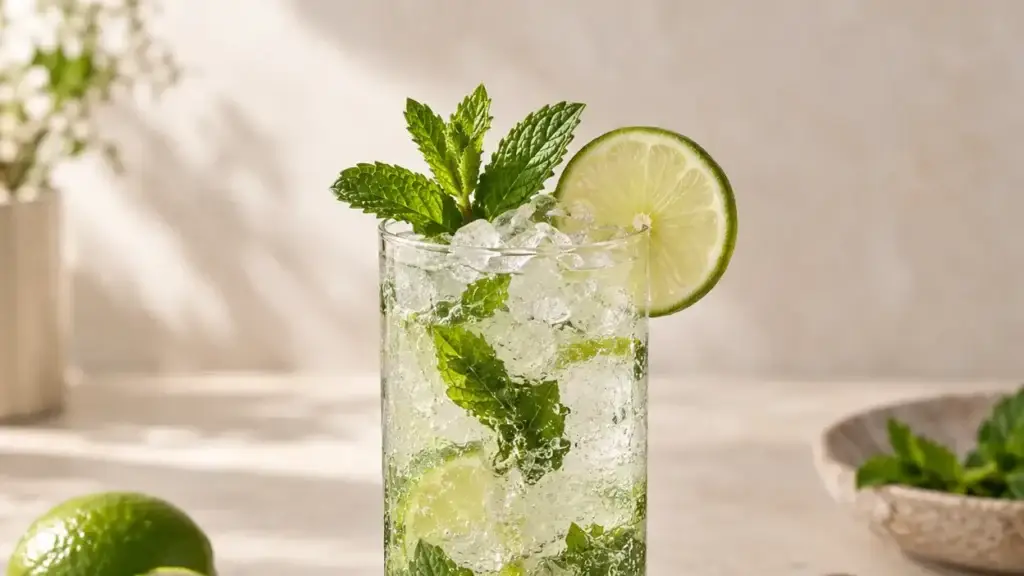
Virgin Mojito
Mint, lime, sugar and soda. The one mocktail that loses almost nothing without the rum, because the mint and lime were always…