
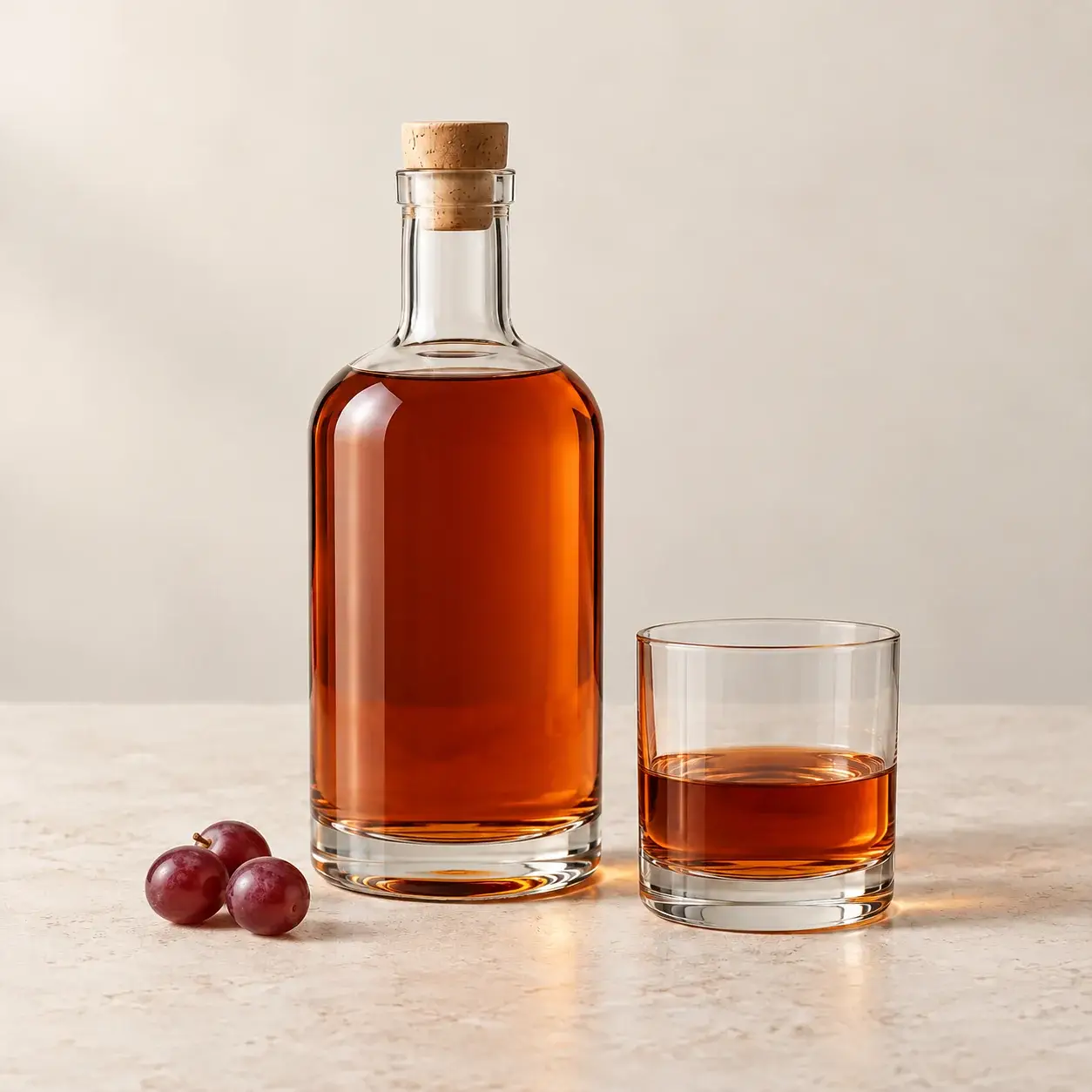
Pisco is unaged grape brandy from Peru and Chile — clear in the glass, intensely aromatic, and unlike any other spirit because the best of it is distilled to exactly its bottling strength and never sees water or wood again.
What is pisco?
Grape spirit, made to two different national standards. The distinction matters, because the two countries' rules diverge on the points that most affect how it tastes:
| Peruvian pisco | Chilean pisco | |
|---|---|---|
| Grapes | Eight permitted varieties only | Principally Muscat varieties |
| Distillation | Pot stills, distilled to proof | Column or pot; may be distilled higher |
| Water after distilling | Prohibited | Permitted |
| Oak ageing | Prohibited — rested in neutral vessels | Permitted |
| Bottling strength | 38-48% ABV | 30% and upward |
That "distilled to proof" rule is the heart of Peruvian pisco. The distiller must make their cuts so precisely that the spirit emerges at drinking strength — there is no diluting to 40% afterwards to fix a miscalculation. Nothing may be added at all.
Both countries claim pisco as a national spirit and the dispute is genuine and long-running. We describe both rather than adjudicating.
How it's made
Harvest the grapes, press them, ferment the must into a dry wine, and distil it — in Peru, in copper pot stills called falcas or alembics, in a single pass, with the distiller cutting to land at final strength.
Then rest it, but never in wood. Peruvian regulations require a minimum rest of three months in vessels that will not alter the spirit — glass, stainless steel, or traditional clay botijas. The point is to let the spirit settle without picking up any flavour it did not arrive with.
That is the opposite philosophy to Cognac, which is also grape brandy. Cognac's character is substantially the barrel; pisco's character is entirely the grape.
What it tastes like
Grape, but not like wine — more like the smell of a vineyard at harvest. Floral and perfumed in the aromatic varieties, with jasmine, orange blossom, muscat and lychee; earthier and more structured in the non-aromatic ones, with green apple, hay and a mineral finish.
It is drier than it smells. The aromatics suggest sweetness that never arrives, which is exactly why it works against lime and egg white.
Because nothing was added and nothing was aged, pisco is unusually transparent about its own quality. There is no oak to cover a rough cut.
Styles worth knowing
Peruvian labels tell you the grape and the method, and both change the drink:
| Term | Means | In a drink |
|---|---|---|
| Puro | A single grape variety | Focused; Quebranta puro is the Pisco Sour standard |
| Acholado | A blend of varieties | Rounder and more complex; excellent all-rounder |
| Mosto Verde | Distilled from partially fermented must | Richer and silkier; expensive, best sipped |
| Quebranta | Non-aromatic, the workhorse grape | Structured; stands up to lime and egg |
| Italia / Torontel / Moscatel / Albilla | Aromatic varieties | Floral and perfumed; beautiful in a Chilcano |
| Negra Criolla / Mollar / Uvina | The remaining non-aromatic grapes | Earthier, less common |
Which bottle to buy
Buy a Peruvian acholado, or a Quebranta puro, at 40% or above. Acholado is the most versatile — blended for balance, good in everything from a Sour to a highball. Quebranta is the traditional Pisco Sour grape and gives the drink more backbone.
Do not start with a Mosto Verde. It is the finest expression of the category and it is wasted under lime juice and egg white — buy one later and drink it neat.
Check the ABV. Pisco at the low end of the range thins out noticeably in a shaken drink, and since nothing was added to the bottle, the number on the label is exactly what came off the still.
Using it in drinks
Pisco wants citrus, and it wants texture. The Pisco Sour — pisco, lime, sugar, egg white and a dash of Angostura on the foam — is the drink the spirit exists for, and the dry shake is what makes it work. The Chilcano is pisco, ginger ale and lime over ice, and it is the easiest great highball in this directory.
It also substitutes beautifully into gin and vodka drinks where the floral character is welcome — a pisco Collins, a pisco Gimlet, a pisco Negroni with an aromatic bottling.
Two practical notes. The egg white in a Sour is doing real work: it rounds the lime and carries the aromatics, and the dry shake before you add ice is non-negotiable if you want a stable foam. And because pisco is aromatic rather than sweet, it generally wants slightly more syrup than the same recipe would with a rum or a whiskey.
Substitutes
Cognac or another grape brandy is the closest relation, but the oak makes it a markedly different drink — darker and rounder. Blanco tequila is a surprisingly good swap in citrus drinks, sharing the vegetal-mineral quality. Grappa is also unaged grape spirit, though sharper and more rustic. Gin works in a Sour if you want botanicals in place of florals. Vodka will carry the structure and lose everything interesting.
Chilean and Peruvian pisco substitute for each other, with the caveat that an oaked Chilean pisco will give a different, softer Sour.
Storage
Upright, cool, out of direct light. Unaged spirit with nothing added is very stable, and an open bottle will hold up for years. The one caution is that pisco's appeal is almost entirely aromatic, and aromatics are volatile — a bottle with two fingers left for a year will have lost some of its perfume. Decant to a smaller bottle if you are working through something special slowly.
Questions
Is pisco a brandy? Yes — it is grape brandy. It tastes nothing like Cognac because it is never aged in oak, which removes the vanilla and dried fruit people associate with brandy and leaves the grape.
What is the difference between Peruvian and Chilean pisco? Peru permits eight specified grapes, requires pot distillation to final strength, and forbids both added water and oak. Chile permits dilution and oak ageing. The resulting spirits are genuinely different, and both countries claim the name.
Lime or lemon in a Pisco Sour? The IBA spec says lemon. Peruvian practice uses limón, a small sharp citrus much closer to a key lime. Lime is the better approximation for most people.
Why does my Pisco Sour foam collapse? No dry shake, old eggs, or a greasy shaker. Shake without ice first to build the foam, then shake again with ice.
Can pisco be aged? Peruvian pisco cannot be aged in wood — only rested in neutral vessels. Chilean rules allow oak, so aged Chilean pisco does exist.
Pisco cocktails.
3 recipes
Chilcano
Chilcano is made with pisco, lime, Amargo Chuncho bitters and ginger ale in a built highball, chilled for serving.
Pisco Punch
This Pisco Punch shakes pisco, pineapple gum syrup and fresh lemon into a bright, pineapple-flavored sour served up with a lemon wheel.
Pisco Sour
Pisco, lime, sugar and egg white under a dash of bitters. Peru's national drink, and the best argument anywhere for the dry…