
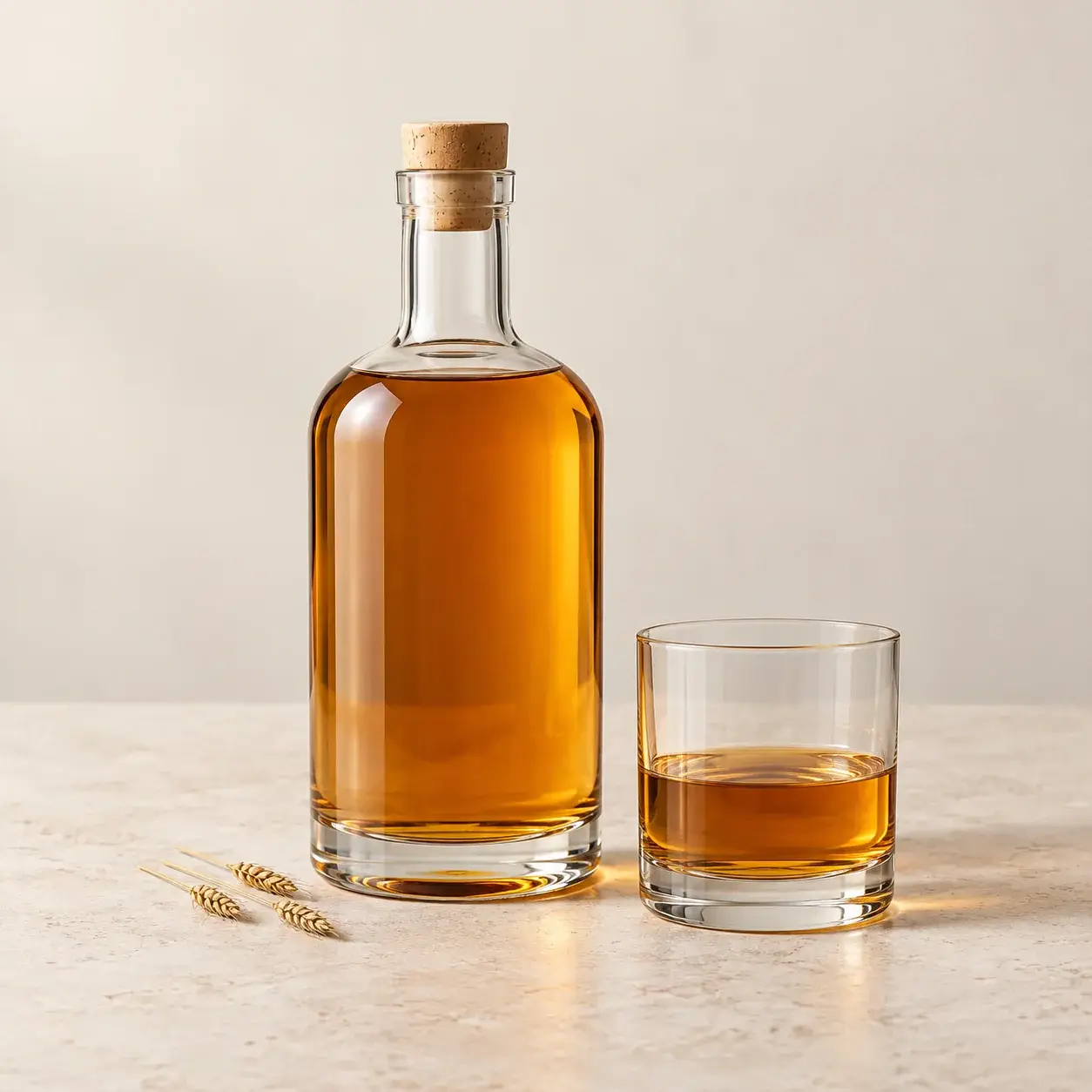
Tennessee whiskey is bourbon with one extra step: before the new spirit goes into its barrel it drips through several feet of sugar-maple charcoal, which takes a day or more and strips out some of the heavier congeners. The producers insist that step makes it not bourbon at all. The law says it must be made in Tennessee and must do that one thing, and the result is a whiskey that is a little smoother and a little sweeter than its Kentucky cousin, and that sells in enormous quantity.
What is Tennessee whiskey?
A straight whiskey made in Tennessee that meets every requirement of bourbon — at least 51% corn, distilled to no more than 80% ABV, aged in new charred oak, nothing added — and is additionally filtered through maple charcoal before ageing, a step called the Lincoln County Process after the county where it was first used. Tennessee wrote that definition into state law in 2013 at the urging of the largest producer; one small distillery, Prichard's, was exempted because it had never used the process.
Two distilleries make nearly all of it: Jack Daniel's at Lynchburg, the best-selling American whiskey in the world, and George Dickel at Cascade Hollow, which spells its product "whisky" in the Scottish manner. A third, Uncle Nearest, launched in 2017 and is named for Nathan "Nearest" Green, the enslaved distiller who taught Jack Daniel the charcoal method — a history the Daniel's company acknowledged publicly in 2016.
How it's made
As bourbon is: a corn-heavy mash with rye and malted barley, sour-mash fermentation, distillation in a column still and a doubler. Then the difference. Sugar-maple wood is burned into charcoal, packed ten feet deep into vats, and the new-make whiskey is dripped through it — slowly, over days at Jack Daniel's — before going into new charred oak barrels. Dickel chills the spirit first and uses a shallower bed. The charcoal removes some fatty acids and harsher compounds; the producers say it "mellows," and tasters generally agree it does. Ageing follows for four years or more.
What it tastes like
Bourbon's vanilla, caramel and corn sweetness, with a softer, slightly smokier, sometimes faintly charcoal-and-banana edge and less of the raw-grain bite of a young Kentucky whiskey. Dickel is lighter and more floral; Jack Daniel's is rounder and sweeter. The single-barrel and higher-proof expressions from both have far more depth than the standard black-label bottles and are worth the step up.
Styles worth knowing
| Style | What it is | In a drink |
|---|---|---|
| Standard (Old No. 7, Dickel No. 8) | 40–45%, the volume product | Whiskey and cola, Lynchburg Lemonade, highballs |
| Single barrel / barrel proof | Richer, stronger | Old Fashioned, Manhattan, Whiskey Sour |
| Tennessee rye | Rye mash through the charcoal | Rye cocktails with a softer edge |
| Flavoured (honey, apple, cinnamon) | Liqueurs, not whiskey | Shots |
| Bottled-in-bond Tennessee | 100 proof, single season | Stirred drinks |
Which bottle to buy
A single-barrel or bottled-in-bond Tennessee whiskey for cocktails. The standard bottles are built for cola and work there; for an Old Fashioned or a sour the higher-proof expressions have the backbone the drink needs, and they cost little more. Avoid the flavoured line for anything on this site.
Using it in drinks
Tennessee whiskey goes wherever bourbon goes. The Whiskey Sour and the Old Fashioned take it well, with a slightly softer result than on bourbon. Its own drink is the Lynchburg Lemonade — Jack Daniel's, triple sec, lemon and lemon-lime soda, created in Huntsville, Alabama in 1980 and the subject of a famous lawsuit — and the whiskey-and-cola highball that accounts for most of what is sold. A Whiskey Highball on a single-barrel Tennessee is better than the cola version and nearly as easy.
Substitutes
Bourbon, in every recipe, with a touch more grain character. A wheated bourbon is the closest in softness. Canadian whisky for a highball. For a cola drink, honestly, anything brown.
Storage
Upright, cool, dark; indefinitely stable once open. Nothing fragile.
Questions
Is Tennessee whiskey bourbon? It meets every federal requirement for bourbon and could legally be labelled as such. The producers choose not to, and Tennessee law defines it as its own category because of the charcoal filtering.
What is the Lincoln County Process? Filtering new whiskey through maple charcoal before it goes into the barrel. Named for the county where Jack Daniel's was originally located; the distillery is now in Moore County, carved out of it.
Who was Nearest Green? An enslaved, later free, master distiller in Lynchburg who taught Jack Daniel to make whiskey and became his first master distiller. His story was publicly acknowledged by the company in 2016, and a whiskey brand now bears his name.
Can I use it in a Manhattan? Yes, especially a single-barrel. It makes a softer, sweeter Manhattan than rye, closer to a bourbon one.
Tennessee Whiskey cocktails.
1 recipe