
How to Stir a Cocktail
Stirring is the quieter half of mixing and the one people get wrong by rushing. It exists to do two things shaking cannot: chill a drink while keeping it perfectly clear, and dilute it slowly enough that you can stop at exactly the right point. Every great spirit-forward drink depends on it.

The short answer
Build the drink in a mixing glass, fill it with large, hard ice, and stir smoothly for 30 to 45 seconds, about 40 revolutions, until the outside of the glass is frosted and your hand is cold. Strain into a chilled glass. Stir anything made only of spirits, fortified wine and bitters.
What stirring does, and what it avoids
A stirred drink ends up at around minus two degrees Celsius with roughly twenty per cent of its volume added as water from the melting ice. That is less dilution than a shake and it arrives gradually, which is the point: with a drink that is nothing but strong ingredients, the water is the only thing standing between you and a glass of cold spirit, so you want to control it to the second.
What stirring avoids is air. Aeration clouds a drink, lightens its body and dulls the aromatic oils in gin and the dried-fruit depth in a good sweet vermouth. A stirred Manhattan is dark, glossy and heavy in the mouth. The same drink shaken is paler, foamier on top and noticeably thinner, with ice shards in it.
The method, properly
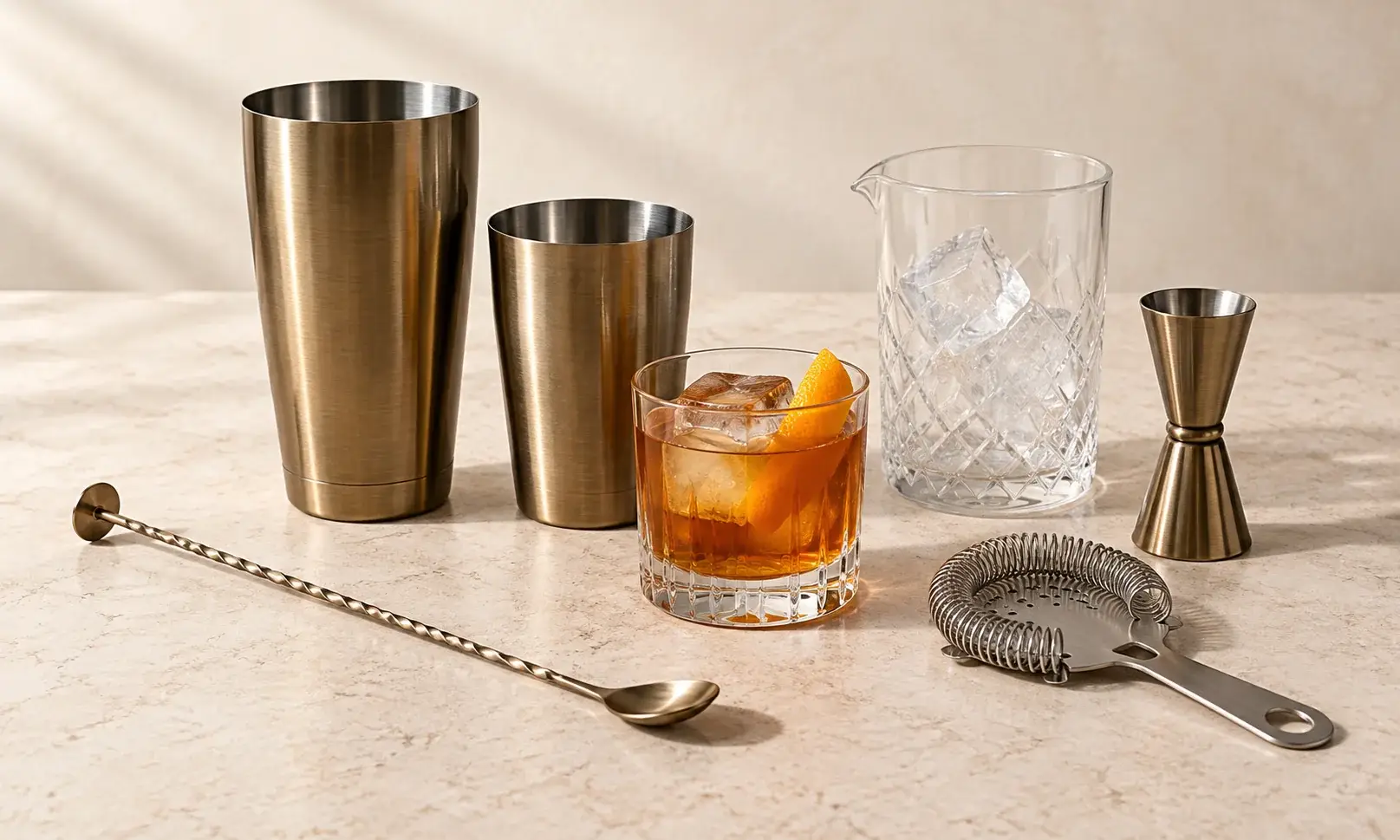
Use a mixing glass if you have one and a pint glass if you do not. Add the ingredients first and the ice last, filling the glass right up: more ice means less surface melt per cube and better control.
Hold the barspoon loosely between your middle and ring fingers, keep the back of the bowl against the inside wall of the glass, and let the spoon travel around the wall rather than churning through the middle. The ice should rotate as one mass. If you hear cubes cracking against each other you are stirring too hard, and you will get shards and fast dilution.
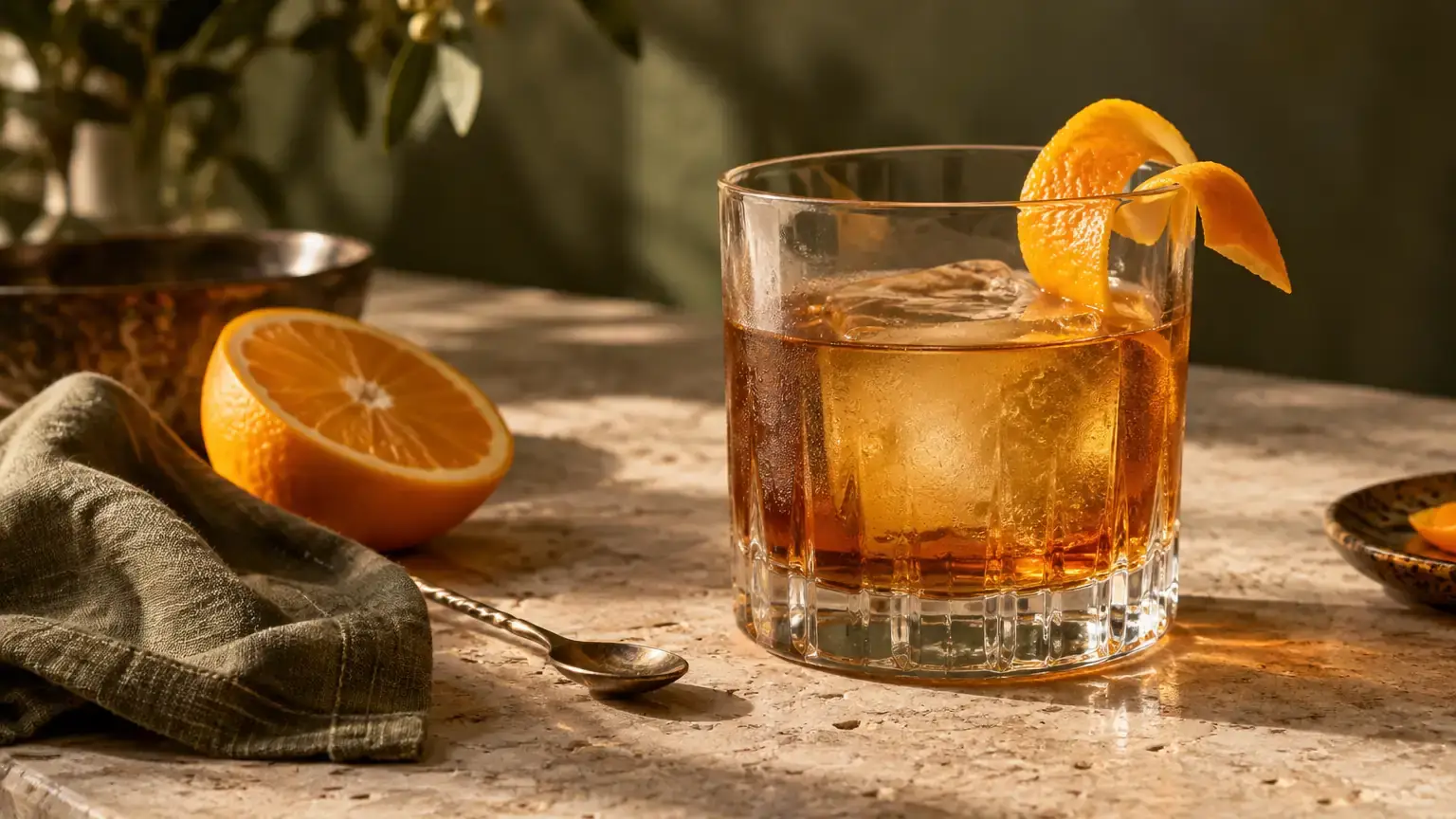
Thirty seconds is the floor, forty-five is comfortable, and a minute is fine if your ice is big and cold. Stop when the glass has frosted. Then strain through a julep or Hawthorne strainer into a chilled coupe or over one large cube in a rocks glass.
Ice, and why size decides everything
Stirring rewards big ice. One-inch cubes have far more surface area per volume than two-inch cubes, so they melt faster and you hit your target dilution before the drink is properly cold. Cloudy, hollow, freezer-tray ice is worse again, and ice that has been sitting out has a wet film on it that goes straight into the glass.
Use the largest, hardest, driest cubes you have, and keep the serving ice separate from the mixing ice. For the full argument, see ice and dilution.
Which drinks get stirred
The test is simple: no juice, no egg, no dairy, no cream liqueur, no thick syrup. That gives you the Martini family and the Old Fashioned family, and most of what people mean by a classic cocktail.
The Martini, the Manhattan, the Negroni, the Boulevardier, the Old Fashioned, the Sazerac, the Vieux Carré, the Hanky Panky, the Gibson: all stirred, all ruined by a shaker. A Bloody Mary is the odd one out, neither shaken nor stirred but rolled gently between two tins so the tomato juice keeps its body.
The three faults
Stirring for ten seconds. The commonest error by a distance. The drink is cold on the outside and undiluted in the middle, and it tastes sharp and alcoholic. Count the seconds until you can judge by the frost.
Churning. Stabbing the spoon up and down breaks the ice and aerates the drink, which is the thing you chose stirring to avoid.
A warm glass. A drink stirred to perfection and poured into a room-temperature coupe gains two or three degrees instantly. Keep glasses in the freezer, or fill them with ice and water while you stir and tip them out at the last moment.
Questions
How long should I stir a Martini? Forty-five seconds with good ice. Longer than most people think.
Can I stir a drink in the shaker tin? Yes, metal chills faster than glass; you just cannot see the frost line, so judge by feel and time.
How many revolutions? Roughly 40. Counting revolutions is a useful crutch until stirring by feel becomes automatic.
Shaken or stirred, really? Stirred, for anything spirit-only. The famous line belongs to a character, not a bartender.
Do I need a mixing glass? No. A pint glass works. A proper one with a weighted base and a spout is a pleasure, not a necessity.
Make a better
Negroni.
Find the full ingredients, measurements and method in the recipe.
Small details. Better drinks.
Your next great drink
could already be on your shelf.
Choose your bottles and mixers. Find your next pour.