
Scotch and Soda
Scotch whisky and soda water over ice. The highball as the British drank it — invented with the soda siphon and never improved by anything added to it.
Built to the standard modern spec; not yet tested in our kitchen. How we test.
The recipe.
Scaling adjusts quantities only. Prepare shaken drinks in individual portions.
Let’s make a good drink.
Fill a highball glass with large, hard ice.
Add the scotch and stir briefly to chill it.
Pour the cold soda slowly down the side of the glass.
Stir once from the bottom, and add a lemon twist if you like.
A thoughtful finish
- Cold is everything. A chilled glass, hard ice, soda straight from the fridge; a warm Scotch and soda is a sad thing.
- Two to one soda to whisky is the English standard; the Japanese go three or four to one with a lighter blend. Both are right.
- Do not stir after the soda goes in. One lift of the spoon.
Common mistakes
- Soft, half-melted ice, which flattens the drink in minutes.
- A heavily peated or sherried malt unless you want it; the soda magnifies the whisky's character.
- Flat soda from a bottle opened yesterday.
A few good questions.
Which scotch?
A blend is the classic and the best value; a light single malt makes a luxurious version. Save the heavily peated bottles for drinking neat.
What ratio?
One to two whisky to soda for a drink that tastes of whisky; one to three or four for a long, light one.
Is this the same as a Whisky Highball?
Yes. 'Highball' is the American name from the 1890s; the Japanese highball is the same drink made with great care.
Lemon or not?
Optional. A twist expressed over the top adds aroma; a wedge squeezed in makes it a different, more American drink.
Variations
- Whiskey Highball — The Japanese-style serve.
- Whiskey Mac — Scotch and ginger wine.
- Rusty Nail — Scotch and Drambuie.
- Gin and Tonic — The gin highball.
Where it comes from
c. 1890s · England and Scotland
Contested. More than one origin is claimed for this drink. We show the competing accounts rather than pick one.
Whisky and soda was the English gentleman’s drink of the late Victorian era, made possible by the soda siphon and promoted by the blended-Scotch houses — Tommy Dewar is said to have introduced it to New York in the 1890s, and the American ‘highball’ of the same decade is the same drink under a new name, which several New York bartenders claimed. It replaced brandy and soda when phylloxera destroyed the Cognac vineyards and Scotch filled the gap. There is no recipe to speak of; the quality is in the whisky, the soda and the ice, and the Japanese highball is this drink taken seriously.
Sources
- David Wondrich, Imbibe!, 2015 (book)
- Dewar's company history, 1892 (archive)
- Difford's Guide, Scotch and Soda, 2015 (reference)
Strength. About 1.43 US standard drinks at an estimated 12.5% ABV, estimated from the ingredients and technique, not measured. What that means.
A little character in every sip.
A keeper?
Save this drink for your next cocktail hour.
Saved in this browser.The next great drink
might already be on your shelf.
Choose your bottles and mixers. Discover what you can make.
Your next sip.
More Scotch Whisky drinks ↗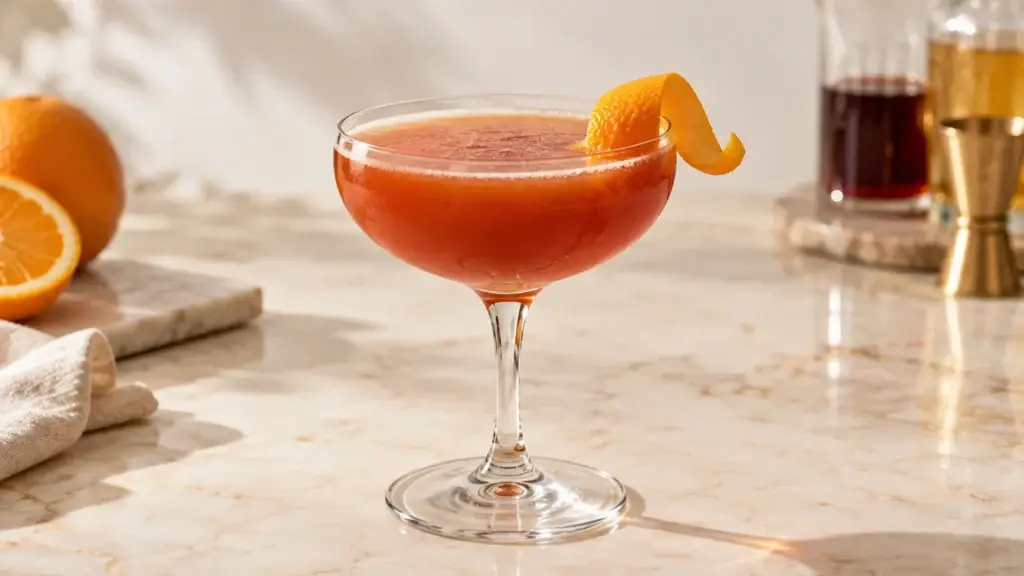
Blood and Sand
Scotch, cherry liqueur, sweet vermouth and orange juice in equal parts. A strange-sounding drink that works, and the only classic built on…
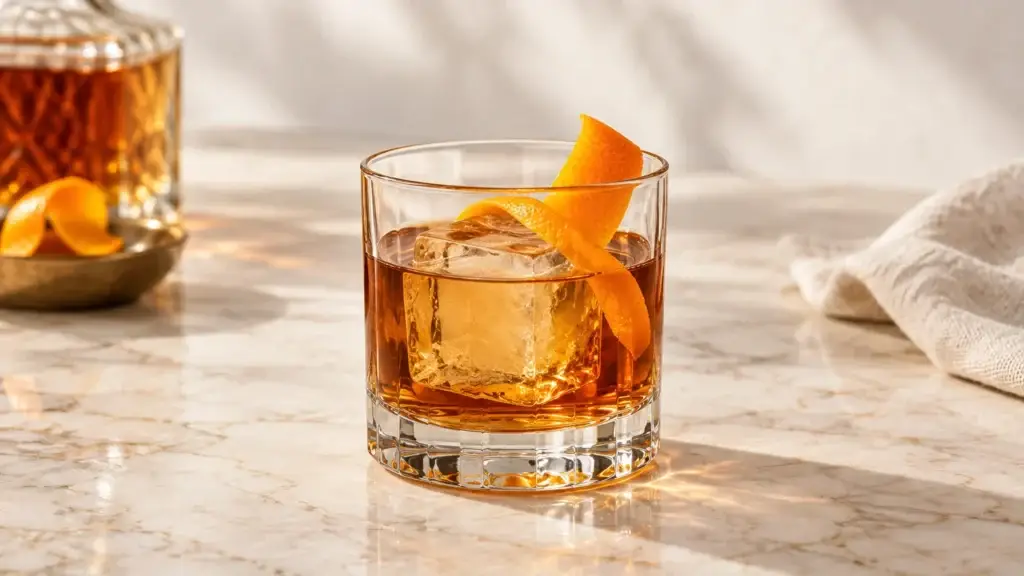
Godfather
Scotch and amaretto over ice. Two ingredients, a 1970s pedigree, and a name borrowed from a film — sweeter than a whisky…
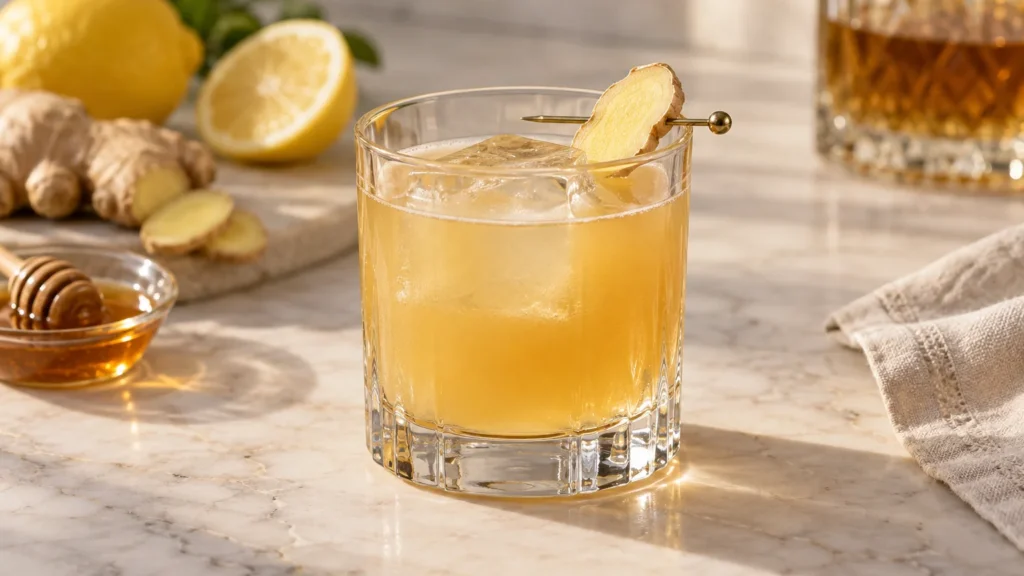
Penicillin
Blended Scotch, honey, ginger and lemon under a float of Islay. The drink that settled the argument about whether Scotch belongs in…