
Blanco Tequila cocktails.
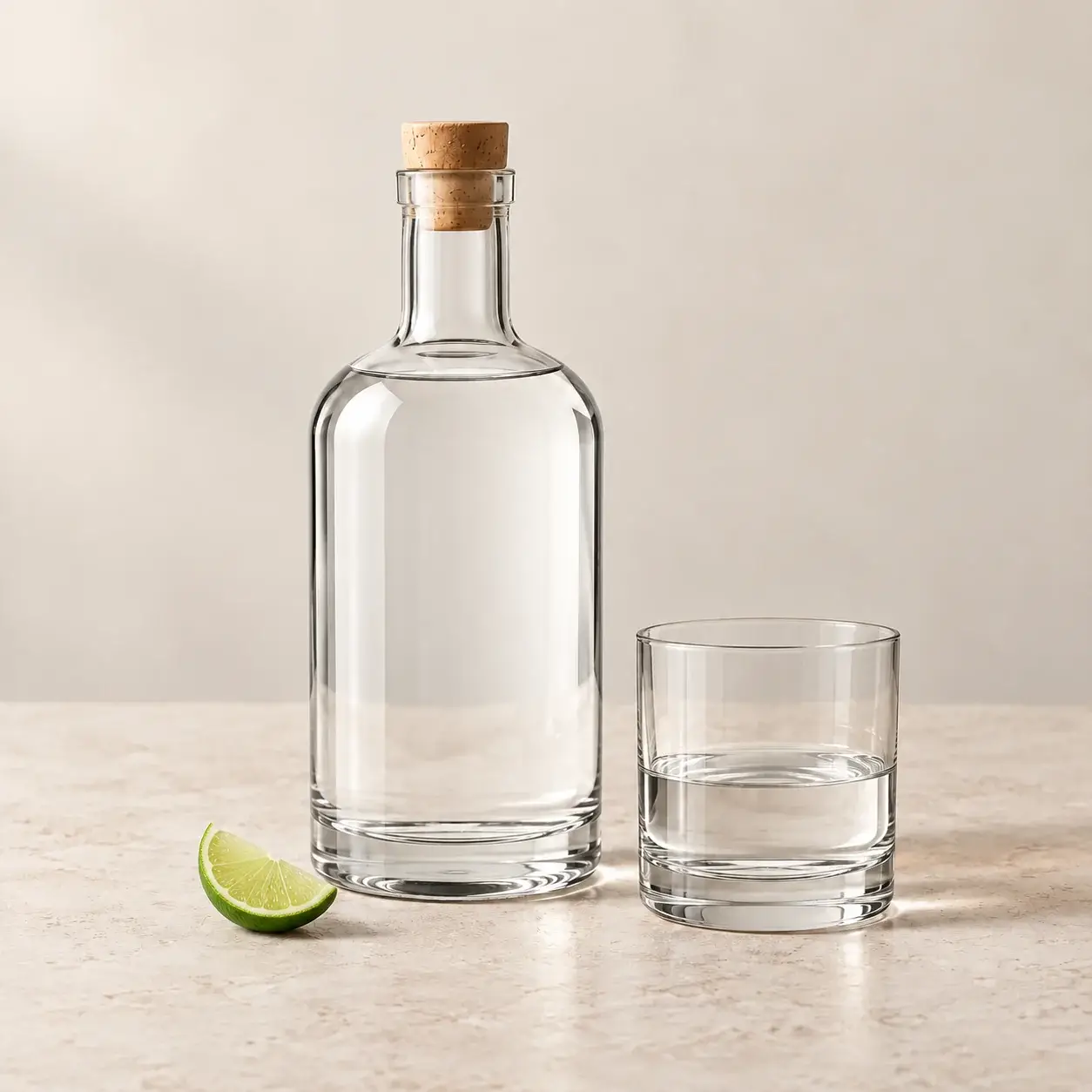
Blanco is tequila straight off the still — unaged, clear, and the purest expression of cooked agave you can buy. It is the tequila almost every cocktail is built around, and the one where the difference between 100% agave and a cheap mixto is most brutally obvious, because there is no oak to hide behind.
What is blanco tequila?
Under the Mexican standard that governs tequila, blanco (also plata, silver, white) is tequila that is either bottled immediately after distillation or rested for less than 60 days in stainless steel or neutral oak. No colour, no oak character, nothing added.
Two neighbouring label terms are not the same thing and are worth untangling:
- Joven / gold — blanco that has been blended with aged tequila, or more commonly a mixto coloured with caramel to look aged. "Gold tequila" is almost always the second kind.
- Cristalino — the reverse of blanco: an aged tequila charcoal-filtered back to clear. It looks like blanco and tastes like an añejo with the edges sanded off.
The single most important phrase on a blanco label is "100% de agave". Without it the bottle may be up to 49% sugar from other sources, and in an unaged spirit that difference is the whole flavour.
How it's made
Blue Weber agave is harvested after roughly six to eight years, trimmed to the piña, and cooked — in brick ovens over a day or two, or in a pressurised autoclave in hours. The cooked agave is crushed, the juice fermented, and the wash distilled twice in copper or stainless pot stills, or in a column.
Then nothing happens, which is the point. A blanco is diluted to strength with water and bottled. Everything you taste is the agave, the cook, the yeast and the still — which is why blanco varies more between producers than any aged class does.
The cooking method is the quality fork. Slow brick-oven cooking caramelises the agave gently; the fast industrial route, especially the diffuser (which strips sugars from raw agave with hot water and acid before any cooking), produces a thinner, sweeter, less agave-tasting spirit. Diffuser use is not disclosed on the label, but the tell is a blanco that tastes of vanilla and very little else.
What it tastes like
Cooked agave — a baked, faintly sweet vegetal note somewhere between sweet potato and roasted pineapple — with black pepper, citrus peel, wet stone and sometimes a green, grassy edge. The Highlands (Los Altos) tend to produce fruitier, more floral blancos; the Lowlands around the town of Tequila give earthier, more peppery ones.
A good blanco finishes clean and dry. If it burns or tastes sweet and flat, it is probably not 100% agave.
Styles worth knowing
| Style | What changes | In a drink |
|---|---|---|
| Blanco, 100% agave | The standard | Margarita, Paloma, Ranch Water — nearly everything |
| Highland blanco | Fruitier, more floral | Citrus-forward sours and spritzes |
| Lowland blanco | Earthier, peppery, mineral | Savoury drinks; a tequila Negroni |
| Still-strength / high proof | 45–55% ABV, undiluted | Survives heavy ice and long drinks |
| Joven / gold mixto | Caramel-coloured, up to 49% other sugar | Avoid for anything you care about |
| Cristalino | Aged, then filtered clear | A sipper; wasted under lime |
Which bottle to buy
Buy a 100% agave blanco at 40% or more from a producer that cooks in ovens rather than a diffuser. Reviews and the better producers' own websites will say which. It need not be expensive — some of the best cocktail blancos are mid-priced — but the bottom shelf is where the mixtos and diffuser tequilas live.
Avoid "gold" tequila entirely. It is the category that gave tequila its reputation, and it is not what any recipe on this site means by tequila.
If you drink a lot of Margaritas, consider a blanco bottled at 45% or above. The extra strength holds up against lime and shaking in a way standard 40% does not.
Using it in drinks
Blanco is the tequila of the Margarita, the Paloma, the Ranch Water and the Tommy's Margarita. Its brightness is what those drinks are built around, and a reposado makes all of them rounder and duller.
It also makes an excellent base for anything that would otherwise use gin or vodka with lime — a tequila Collins, a tequila Gimlet — and it is the right choice for a mezcal split base, three parts blanco to one part mezcal.
Agave syrup is its natural sweetener and is sweeter than simple syrup by volume: use about two-thirds as much.
Substitutes
Mezcal is the closest swap and adds smoke — sometimes an improvement. White rum or a cachaça carries lime drinks with a different sweetness. Pisco shares the unaged-and-aromatic character. Gin works in a Paloma or a Collins. A reposado will do in an emergency but makes every drink softer and oakier than intended.
Storage
Upright, cool, away from light. Unaged spirit with nothing added is very stable, and an open bottle will keep for years. Blanco's aromatics are more volatile than an aged tequila's, so a nearly empty bottle left for a long time loses some of its top notes — decant into a smaller bottle if you are nursing something good.
Questions
Is blanco the same as silver or plata? Yes. All three mean unaged tequila; the word on the label is a producer's choice.
Is blanco lower quality than añejo? No. It is a different thing. Blanco shows the agave; añejo shows the barrel. Most cocktails want blanco, and many of the best tequilas made are blancos.
Why does blanco tequila burn? Usually because it is a mixto, or was made in a diffuser, or both. A well-made 100% agave blanco is peppery but not harsh.
What is the difference between blanco and cristalino? Cristalino is aged tequila filtered clear; blanco was never aged. They look identical and taste nothing alike.
Nothing here yet.
Recipes are being added continuously. Try the full directory while this one fills out.
Browse all recipes ↗