
Blended Scotch cocktails.
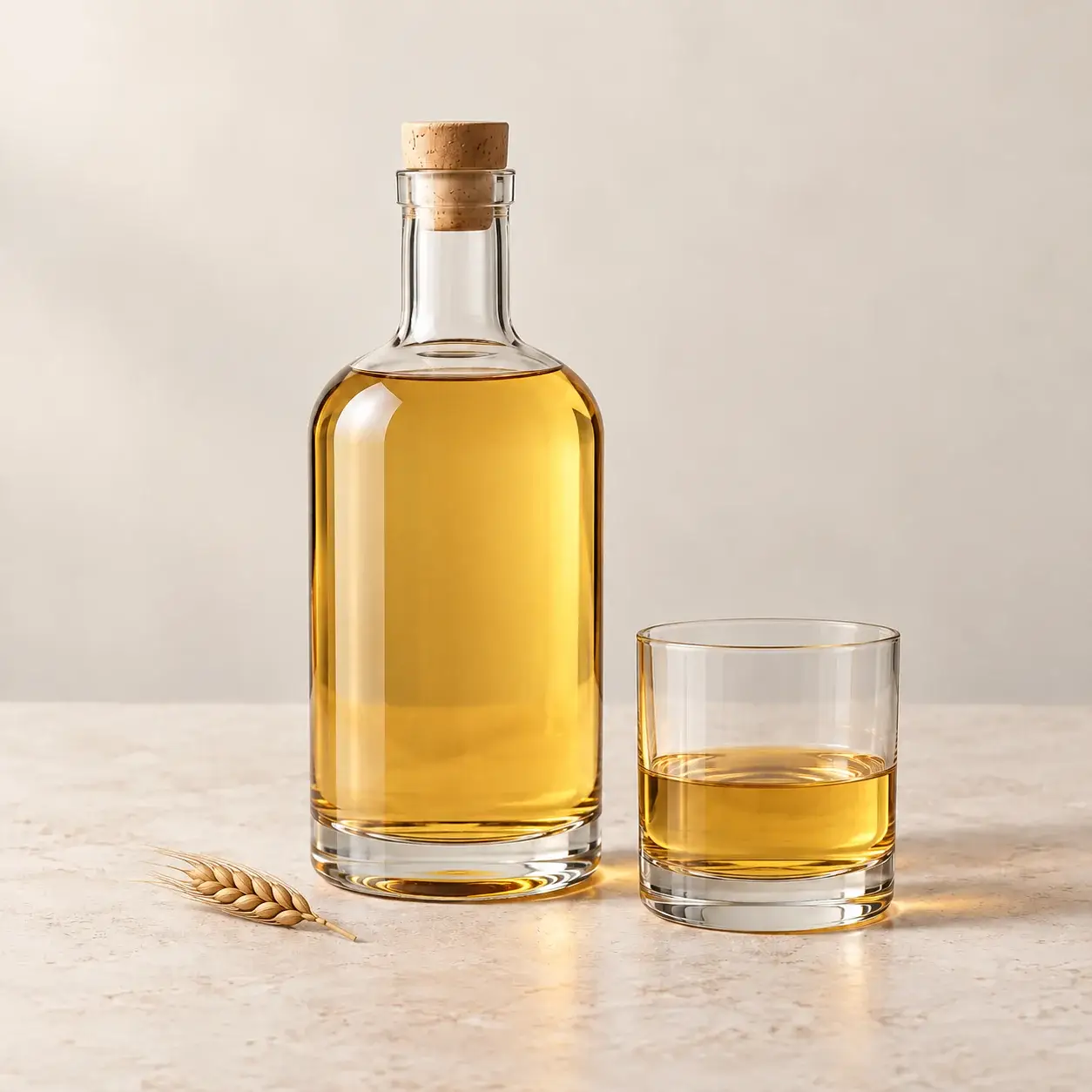
Blended Scotch is what most of the world means by "Scotch" — a marriage of malt and grain whiskies from many distilleries, built for consistency and smoothness. It is around 90% of all Scotch sold, it is what every classic scotch cocktail was written for, and the single-malt snobbery that grew up in the 1990s has done it an injustice. For a Rob Roy or a Penicillin, a good blend is the correct choice, not the compromise.
What is blended scotch?
A mix of one or more single malt whiskies with one or more single grain whiskies, all made in Scotland and aged at least three years in oak. The malt brings flavour; the grain — usually wheat or corn, distilled in a column still — brings lightness and body and keeps the price down. A typical blend is 20 to 40% malt, drawn from dozens of distilleries, assembled by a master blender to a house style that does not change from year to year.
Two related categories confuse people. Blended malt is a mix of single malts only, with no grain. Blended grain is grain whiskies only. "Blended Scotch" with no qualifier is the malt-plus-grain product.
The blend was the invention that made Scotch a world drink: Andrew Usher and his contemporaries in 1860s Edinburgh found that mixing fiery Highland malts with soft grain spirit produced something the English would drink, and the great houses — Walker, Dewar, Buchanan, Chivas — were built on it.
How it's made
The component whiskies are made and aged separately: malts in pot stills, grains in columns, all in oak for a minimum of three years and usually longer. The blender then selects and combines them — a few dozen malts, a few grains — to match the house recipe, and the blend is often married in cask for some months before bottling, usually at 40%. An age statement on a blend refers to its youngest component. Most mainstream blends carry no age statement and are built from whiskies of three to eight years; premium blends go to 12, 18 and beyond.
What it tastes like
Softer and rounder than a single malt: cereal, honey, vanilla, orchard fruit, a little oak and, depending on the house, a thread of peat smoke. Standard blends are gentle and easy; 12-year blends add depth and a longer finish; the smoky blends carry Islay or island malt in the recipe and show it. The point is balance — a blend should taste of nothing in particular and everything at once.
Styles worth knowing
| Style | What changes | In a drink |
|---|---|---|
| Standard blend, no age statement | Light, young, inexpensive | Highballs, Whisky Mac, Scotch and Soda |
| 12-year blend | Richer, more malt, longer finish | Rob Roy, Bobby Burns, Blood and Sand, Penicillin base |
| Smoky blend | Island or Islay malt in the recipe | Penicillin, a smoky Old Fashioned |
| Blended malt | No grain; closer to a single malt | Sipping; stirred drinks where you want more weight |
| Premium and luxury blends (18+) | Old components, high price | Neat; wasted in a cocktail |
Which bottle to buy
A 12-year blend for stirred drinks and a standard blend for highballs. The 12-years from the big houses are among the best value in whisky, and they are what good bars stir with. A lightly smoky blend is worth owning if you make Penicillins. Leave the 18-year and older for drinking neat.
Using it in drinks
Blended scotch is the base of the whole scotch-cocktail canon: the Rob Roy (scotch Manhattan), the Bobby Burns (with Bénédictine), the Blood and Sand (with cherry liqueur, vermouth and orange), the Scotch Sour, the Whisky Mac (with ginger wine), the Rusty Nail (with Drambuie) and the Penicillin, where it is the body under the Islay float. The Japanese-style Whisky Highball was built on blends and still suits them best.
Where a recipe says "scotch" without qualification, it means a blend.
Substitutes
A gentle single malt — Speyside or Lowland — swaps in with more character and more cost. Irish whiskey is the nearest in softness. Japanese blended whisky was modelled on Scotch and is a near-direct swap. Bourbon turns a Rob Roy into a Manhattan, which is not a failure but is a different drink.
Storage
Upright, cool, dark; indefinitely stable once open. Blends are built to be consistent and do not change noticeably in the bottle over years.
Questions
Is blended scotch worse than single malt? No — different. A single malt shows one distillery's character; a blend is built for balance. Many blends contain malts from distilleries whose own bottlings cost far more.
What is the difference between blended scotch and blended malt? Grain whisky. Blended scotch contains it; blended malt is single malts only.
Which blend for a Rob Roy? A 12-year. Enough malt to stand up to the vermouth, and no smoke unless you want it.
Does the age statement matter on a blend? It tells you the youngest whisky in it. A 12-year blend is noticeably richer than a no-age-statement one, and for stirred drinks it is worth the difference.
Nothing here yet.
Recipes are being added continuously. Try the full directory while this one fills out.
Browse all recipes ↗