
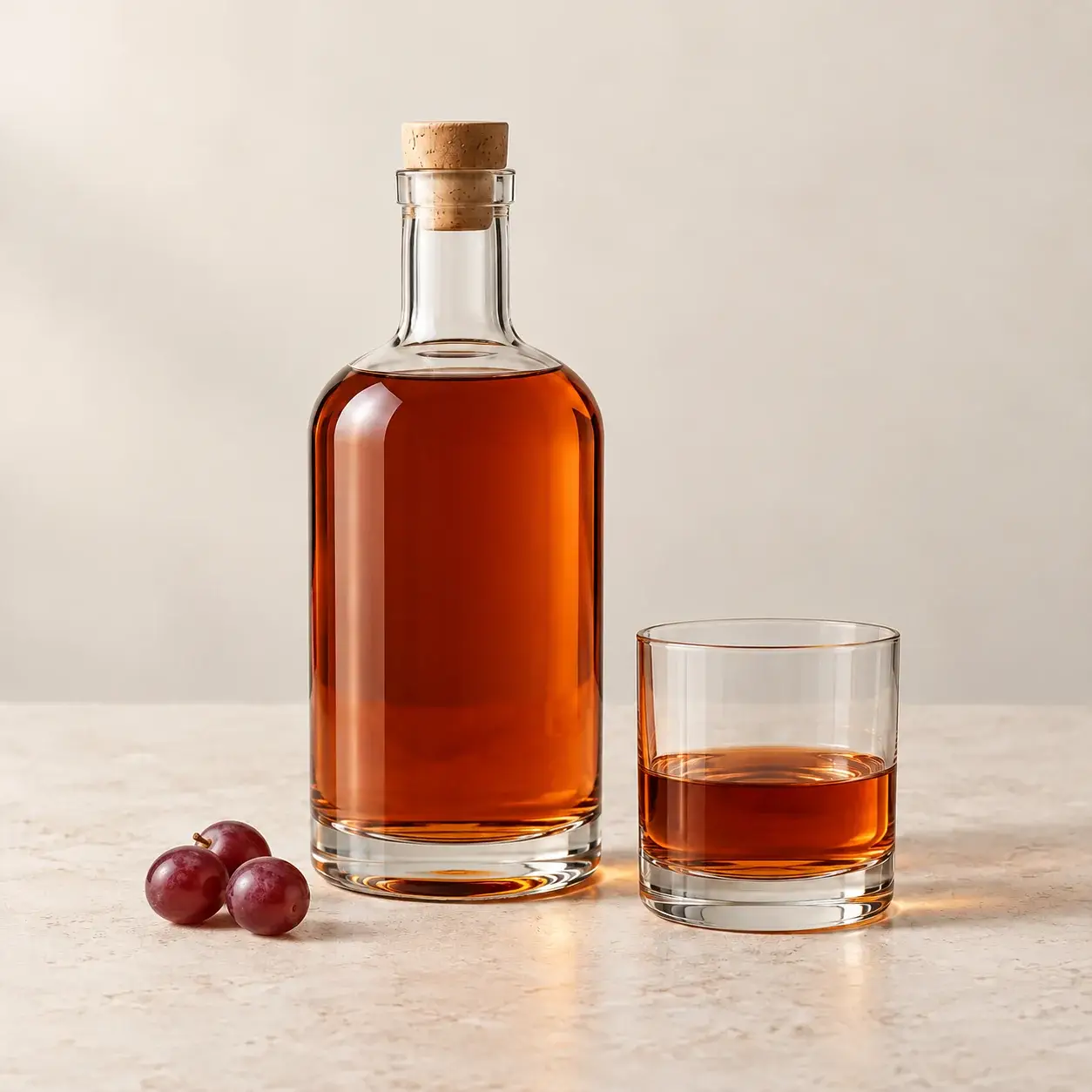
Brandy is distilled fruit — grapes unless the label says otherwise. It was the default base spirit of nineteenth-century cocktail making, and it lost that position to American whiskey for a reason that had nothing to do with taste: an insect ate the French vineyards.
What is brandy?
Brandy is spirit distilled from fermented fruit. The word comes from the Dutch brandewijn — burnt wine — which describes the process exactly: wine, heated and distilled.
Unqualified, "brandy" means grape brandy. Anything made from other fruit must say so. The legal floors are modest:
- United States: minimum 40% ABV, distilled from fruit. Brandy under four years old must be labelled as such.
- European Union: brandy or Weinbrand must be at least 36% ABV and made from wine spirit.
Above those floors sit the regional appellations that actually tell you something — Cognac, Armagnac, Brandy de Jerez, Calvados — each with its own rules about region, grape or fruit, still type and minimum ageing. A bottle labelled only "brandy" is making almost no promises. One naming a region is making checkable ones.
How it's made
Ferment the fruit, distil it, age it in oak. The variables that matter:
The fruit. Grape brandy is usually made from deliberately thin, high-acid, low-sugar wine — unpleasant to drink, ideal to distil, because acidity carries aroma through a still.
The still. Pot stills work in batches and keep more character — this is Cognac's method, run twice. Column stills run continuously and give a lighter spirit; Armagnac traditionally uses a single pass through a continuous column still, which leaves it more robust and oilier than Cognac despite being distilled only once.
The wood. French oak for Cognac and Armagnac. Spanish brandy is aged in a solera — a cascade of sherry casks, drawn from the oldest tier and topped from the next — which makes it sweeter and more raisined than anything French.
What it tastes like
Grape, apricot, vanilla and oak spice when young; dried fig, orange peel, walnut, leather and tobacco with age. Older grape brandies develop rancio, a savoury, slightly mushroomy note that reads as a flaw to newcomers and is considered a mark of quality.
Fruit brandies taste strikingly of their fruit — a good Calvados is unmistakably apple, kirsch is unmistakably cherry — but drier than you expect, because all the sugar fermented out. A kirsch that tastes sweet has had sugar added.
Grape brandy generally reads sweeter than it is, which is why it holds up against lemon so well.
Styles worth knowing
| Style | Origin and fruit | In a drink |
|---|---|---|
| Cognac | France, grape, double pot-distilled | The benchmark; VS or VSOP for mixing |
| Armagnac | France, grape, single column pass | More rustic and powerful; excellent and underpriced |
| Brandy de Jerez | Spain, grape, solera-aged | Sweet and raisined; cut the syrup in a recipe |
| American brandy | Mostly California, grape | Varies widely; good value for mixing |
| Calvados | Normandy, apple (and pear) | Apple-forward; superb in a Jack Rose |
| Pisco | Peru and Chile, grape, unaged | Bright and floral; a different drink entirely |
| Grappa / marc | Italy and France, grape pomace | Sharp and rustic; a digestivo more than a mixer |
| Kirsch, slivovitz, poire | Cherry, plum, pear | Dry fruit eaux-de-vie; dashes, not ounces |
The age codes — VS (2 years), VSOP (4), Napoléon (6), XO (10) — are legally defined for Cognac and broadly adopted elsewhere, but outside the French appellations they carry no guaranteed minimum.
Which bottle to buy
Buy a VS or VSOP Cognac, or an Armagnac, and mix with it. Armagnac in particular is the value play in this category — it is held in lower esteem than Cognac for historical rather than qualitative reasons, and a good one costs noticeably less than its equivalent.
Do not mix with XO. Everything you paid the premium for disappears under lemon and orange liqueur. Keep an old bottle for drinking neat and a young one for the shaker.
If you want a second bottle, make it Calvados. It unlocks a small but excellent set of drinks — the Jack Rose, the Corpse Reviver No. 1, the Widow's Kiss — that nothing else will make.
Avoid bottom-shelf unspecified "brandy", which is often heavily sweetened and caramel-coloured and will make everything taste the same.
Using it in drinks
Brandy is a sour spirit first. The Sidecar — brandy, orange liqueur, lemon — is the template, and the Brandy Crusta is its more elaborate ancestor. The Vieux Carré splits the base between Cognac and rye.
It is also the right spirit for anything warm, creamy or egg-based: Brandy Alexander, egg nog, hot punches, Tom and Jerry. Its dried-fruit register meets cream and nutmeg in a way whiskey does not.
Worth knowing for the history: the Mint Julep and the Sazerac were both originally brandy drinks. Phylloxera, a vine louse that destroyed French vineyards from the 1860s, collapsed Cognac supply and American rye and bourbon took the slot in bars worldwide. If an old cocktail book calls for brandy where you expect whiskey, that is why — and trying the original is usually worthwhile.
Substitutes
Within the category, Cognac, Armagnac and American grape brandy substitute for each other freely; Spanish brandy works but is sweeter, so pull back the syrup. Outside it, bourbon is the usual swap and makes the drink rounder and more vanilla-driven, while aged rum is closer to brandy's dried-fruit profile than whiskey is and is often the better choice. Pisco suits bright, citrus-forward recipes. For Calvados specifically there is no substitute — apple is the whole point.
Storage
Upright, cool, away from direct light. Brandy stops developing the instant it leaves the cask, so an old bottle is as old as its bottling date and no older. Once opened the last third softens over a year or two as it oxidises; some people prefer it that way. Store upright rather than on its side — prolonged contact between high-proof spirit and cork degrades the cork.
Questions
Is all brandy Cognac? No. Cognac is brandy made in one defined French region to a strict set of rules. Brandy is the whole category of fruit-distilled spirit, of which Cognac is one small and prestigious part.
What is the difference between Cognac and Armagnac? Region, still and character. Cognac is double-distilled in pot stills and tends to be more refined and floral; Armagnac is traditionally distilled once through a continuous column still and is richer, oilier and more rustic. Armagnac is generally better value.
Is pisco a brandy? Yes — it is unaged grape brandy from Peru and Chile. It tastes nothing like Cognac because it never sees oak, which is the whole point of it.
Should brandy be warmed in the hand? Gently, if you are drinking something old and complex, in a small tulip glass rather than a wide balloon. Over-warming pushes alcohol vapour up your nose and shuts down everything else. A balloon snifter over a flame is pure theatre.
Why do so many old cocktail recipes call for brandy? Because until the 1870s brandy was the world's default cocktail spirit. Phylloxera destroyed the supply and whiskey replaced it. The recipes outlived the shortage.
Brandy cocktails.
19 recipes
Star Cocktail
Star Cocktail is made with applejack, sweet vermouth, gum syrup and Peychaud’s bitters, stirred cold, served cold.
Brandy Flip
Brandy Flip is made with cognac, rich syrup and a whole egg shaken into a creamy textured cocktail, served cold.
Widows Kiss
Widows Kiss is made with Calvados, Bénédictine, yellow Chartreuse and bitters in an apple brandy drink, served cold.
Chilcano
Chilcano is made with pisco, lime, Amargo Chuncho bitters and ginger ale in a built highball, chilled for serving.
Pisco Punch
This Pisco Punch shakes pisco, pineapple gum syrup and fresh lemon into a bright, pineapple-flavored sour served up with a lemon wheel.
Jack Rose
Applejack, lemon and grenadine. A pink, apple-driven sour from the age when America drank apple brandy, and worth reviving.
Brandy Crusta
Cognac, maraschino, orange liqueur and lemon in a glass crusted with sugar and lined with a lemon peel. The drink that invented…
Pisco Sour
Pisco, lime, sugar and egg white under a dash of bitters. Peru's national drink, and the best argument anywhere for the dry…
Sidecar
Cognac, orange liqueur and lemon. The brandy sour that every other brandy sour is measured against.