
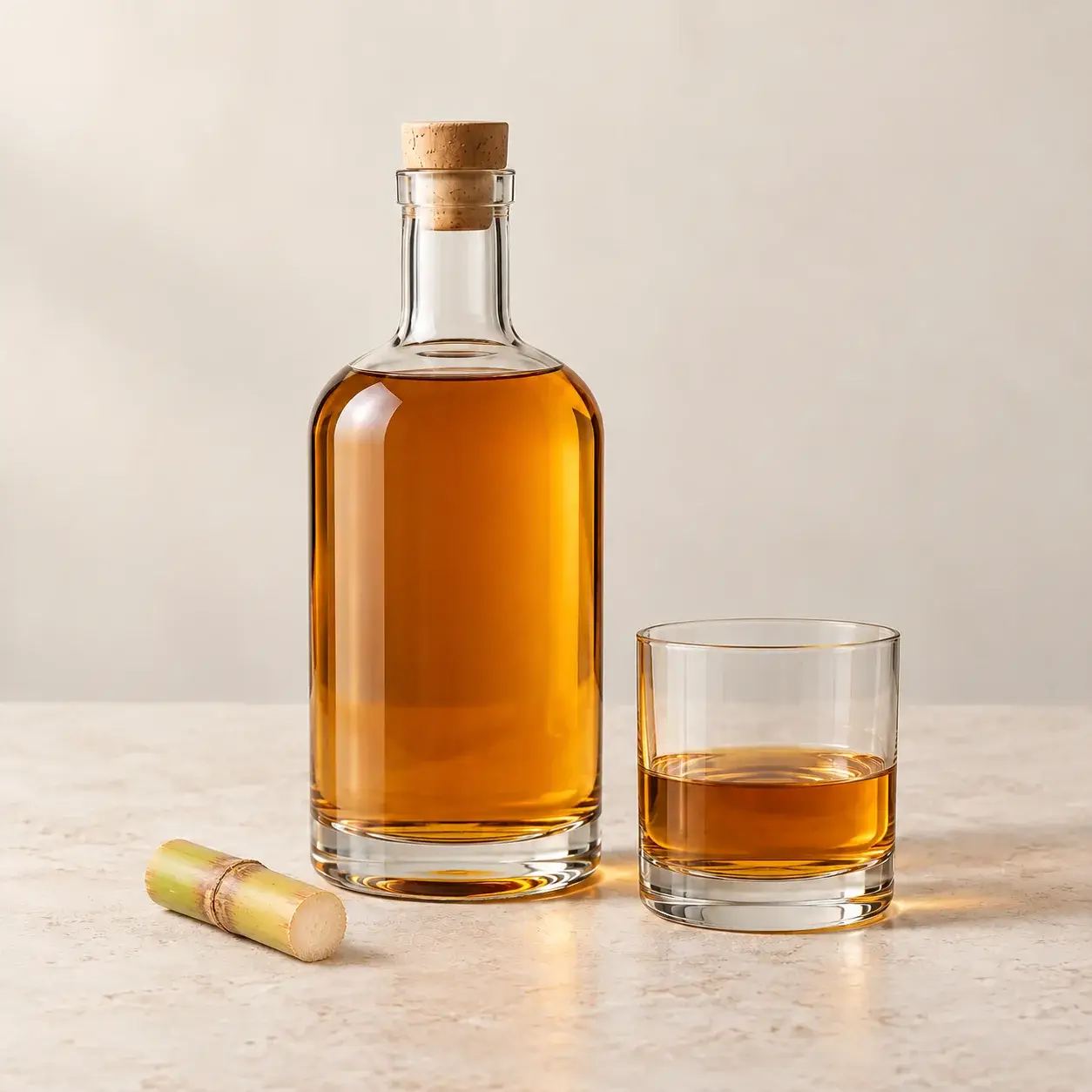
Cachaça is Brazil's national spirit, distilled from fresh sugarcane juice rather than molasses, and the engine of the Caipirinha. It is older than rum, made in enormous quantity, and almost entirely drunk at home — which is why the few bottles that reach the rest of the world give such an incomplete picture of it.
What is cachaça?
Under Brazilian law cachaça is a spirit of 38 to 48% ABV distilled from fermented sugarcane juice, made in Brazil, with up to six grams of sugar per litre permitted. That definition matters in two ways. It must be cane juice — which puts it beside rhum agricole and apart from most rum — and it must be Brazilian, which since 2013 the United States recognises as a distinct category rather than labelling it "Brazilian rum".
Production dates to the sugar plantations of the 1500s, which makes cachaça the oldest distilled spirit in the Americas. Brazil makes well over a billion litres a year; a few percent of that is exported.
How it's made
Sugarcane is cut and crushed within a day or so of harvest — the juice spoils fast — and fermented, traditionally with wild yeasts and sometimes with a starter of cornmeal or rice bran, into a cane wine of around 7 to 10%. Fermentation is short, a day or two, and leaves a lot of the grassy, vegetal character in the wash.
Then the fork. Industrial cachaça is column-distilled continuously in large plants, mostly in São Paulo state, and is light, clean and cheap. Artisanal cachaça — alambique — is pot-distilled in copper by thousands of small producers, Minas Gerais above all, with heads and tails cut by hand, and is richer, funkier and far more varied.
Unaged cachaça is rested briefly in neutral vats and bottled. Aged cachaça may sit in oak, but the distinctive Brazilian practice is ageing in native woods — amburana, jequitibá, bálsamo, castanheira — each of which adds its own colour and flavour, from amburana's cinnamon-vanilla to bálsamo's green herbal edge. By law, envelhecida on the label means at least half the blend spent a year in a cask of 700 litres or less.
What it tastes like
Fresh cut grass, green banana, sugarcane juice, a mineral and sometimes faintly sulphurous edge, and a heat that in good examples is clean rather than harsh. Industrial bottles are simpler and sweeter; artisanal ones have more fruit and funk. Wood-aged cachaça can taste of anything from cinnamon toast to cut herbs, depending on the tree.
Against rhum agricole, cachaça is usually rounder and less dry; against molasses rum it is far greener and lighter in body.
Styles worth knowing
| Style | What changes | In a drink |
|---|---|---|
| Industrial, unaged (branca) | Column still, light, inexpensive | A workable Caipirinha; nothing more |
| Artisanal, unaged (prata) | Pot still, grassy, fuller | The Caipirinha worth making |
| Aged in amburana | Cinnamon, vanilla, tonka | Old Fashioned-style stirred drinks |
| Aged in oak (ouro / envelhecida) | Rounder, caramel, closer to rum | Rum recipes, sipping |
| Aged in bálsamo or jequitibá | Herbal, delicate, pale | A sipper; interesting in a Negroni variant |
Which bottle to buy
Buy an unaged artisanal (pot-still) cachaça at 40% or above for the Caipirinha. The big industrial brands make a serviceable drink, but the first time you make a Caipirinha with a good alambique bottle the point of the drink becomes obvious. For a second bottle, an amburana-aged cachaça is unlike anything else on the shelf and is worth owning for stirred drinks alone.
Look for "alambique", "artesanal" or a named producer and region (Salinas, Paraty) on the label. Avoid anything with a flavour in the name.
Using it in drinks
The Caipirinha — cachaça, muddled lime, sugar — is the drink, and it needs nothing else. From there: a Batida is cachaça shaken with fruit purée and condensed milk; a Rabo de Galo stirs it with Cynar and sweet vermouth, an all-Brazilian Negroni cousin; and cachaça swaps straight into any daiquiri, sour or mojito template for a greener, fresher version.
Aged cachaça in native wood makes a remarkable Old Fashioned, and an amburana cachaça in a Manhattan template is one of the better things you can do with a bottle of sweet vermouth.
Substitutes
Rhum agricole is the closest — same raw material, usually drier and stronger. A good white rum makes a different, rounder Caipirinha that is still a nice drink. Blanco tequila shares the vegetal brightness. Pisco works in shaken fruit drinks. Nothing else really replaces an amburana-aged bottle.
Storage
Upright, cool, dark. Unaged cachaça is very stable; wood-aged bottles slowly lose their top notes once opened, over a year or more. Keep it out of the freezer — the Caipirinha gets its cold from the ice you muddle it on.
Questions
Is cachaça rum? Legally no, since it has its own definition in Brazil and the US. Technically it is a cane-juice spirit, like rhum agricole. Practically, it behaves like a greener, lighter white rum.
How do you pronounce it? Ka-SHAH-sa.
Why does cheap cachaça taste harsh? Fast fermentation and continuous distillation leave it thin and hot. Pot-distilled bottles cut the heads and tails and taste cleaner despite being more flavourful.
Can I use it in a Mojito or Daiquiri? Yes. Both are excellent, and the Daiquiri in particular shows off a good artisanal bottle.
Cachaca cocktails.
1 recipe