
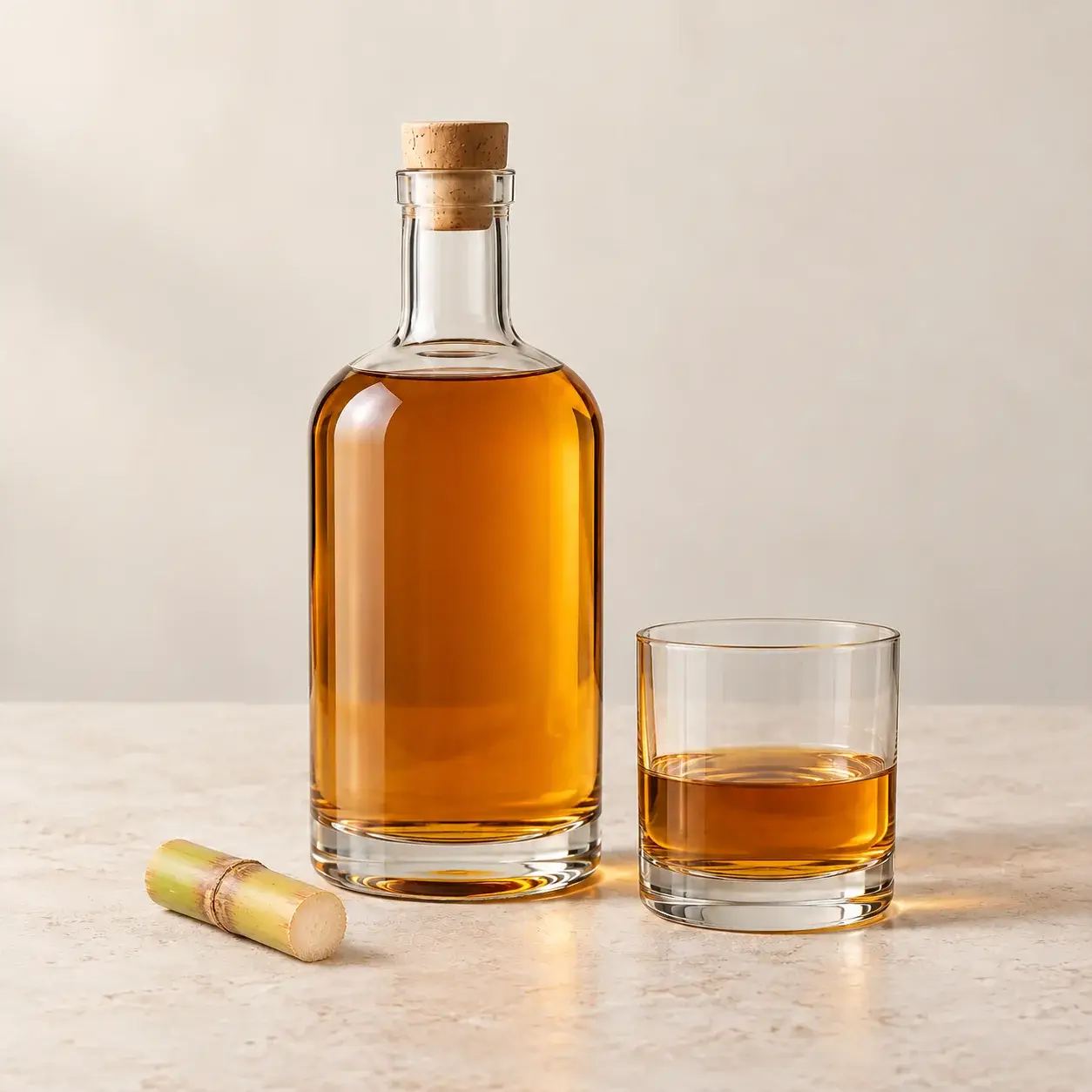
Rhum agricole is rum made from fresh sugarcane juice rather than molasses, mostly in the French Caribbean and above all in Martinique, where it has the only appellation of origin in the rum world. It is grassy, dry, vegetal and intense, as far from a sweet dark rum as it is possible to get, and it is the base of the Ti' Punch — the simplest and most serious drink in the Antilles.
What is rhum agricole?
Rum distilled from the fermented juice of freshly pressed sugarcane. Most rum is made from molasses, the syrup left after sugar is crystallised out; agricole skips the sugar factory and distils the cane itself, which has to happen within hours of harvest. The word means "agricultural" — rum from the farm rather than the refinery — and the style grew up in Martinique and Guadeloupe in the late 1800s when the sugar trade collapsed and planters distilled their cane instead.
Martinique's AOC Rhum Agricole Martinique, granted in 1996, sets the rules: named cane varieties, no irrigation, fermentation under 72 hours, distillation in a single column still to 65 to 75%, and defined ageing classes. Guadeloupe, Marie-Galante, Réunion and Haiti (where the related clairin is made) produce agricole outside the AOC. Cachaça, from Brazil, is the other great cane-juice spirit and is a cousin rather than the same thing.
How it's made
Cane is cut and crushed the same day, and the juice — vesou — is fermented with cultured or wild yeasts for one to three days into a cane wine of around 4 to 6%. It is distilled in a colonne créole, a small copper column still that leaves a great deal of character in the spirit, to around 70%. Blanc is rested in steel for a few months and bottled at 50 to 55%, sometimes 40. Élevé sous bois spends at least a year in oak; vieux at least three, in casks of 650 litres or less; hors d'âge and vintage bottlings go much longer.
What it tastes like
Blanc: fresh-cut grass, green cane, lime zest, olive, a mineral and slightly peppery edge, and a dry, almost austere finish — nothing like a white molasses rum. Vieux: the grass softens into hay and dried fruit, with oak, vanilla, tobacco and spice, and the best old Martinique rhums drink like a fine cognac that grew up on a farm. The strength is high and the texture oily.
Styles worth knowing
| Style | What it is | In a drink |
|---|---|---|
| Blanc, 50–55% | Unaged, grassy, strong | Ti' Punch, Daiquiri, Mai Tai split |
| Blanc, 40% | Softer entry version | Mojito, long drinks |
| Élevé sous bois / ambré | 1–2 years oak; pale gold | Ti' Punch vieux, Old Fashioned |
| Vieux / VSOP / XO | 3, 4, 6+ years | Neat; a luxurious stirred drink |
| Clairin (Haiti) | Wild, pot-stilled cane-juice spirit | Ti' Punch; the funkiest version |
Which bottle to buy
A Martinique AOC blanc at 50%. It is the drink the Ti' Punch wants, the right half of a Mai Tai split, and the best illustration of what agricole is. A vieux is the second bottle, for sipping and stirring. The 40% blancs are easier to drink neat but weaker in a cocktail; buy the 50 and add water yourself.
Using it in drinks
The Ti' Punch — rhum blanc, a disc of lime peel with a little flesh, a spoon of cane syrup, built in a small glass with no ice or a little — is the island drink, traditionally served with the bottle and the lime so that each person prepares their own; the saying is chacun prépare sa propre mort, each prepares their own death. A Daiquiri on agricole is drier and greener; a Mojito on it is sharper and better. The modern Mai Tai splits agricole with Jamaican rum, which is where most bartenders first meet it. An Old Fashioned on an aged agricole is superb.
Cane syrup, not simple syrup, is its natural sweetener.
Substitutes
Cachaça is the closest: same raw material, usually rounder and lower in proof. Clairin is wilder and works in the same roles. A blanco tequila shares the vegetal, peppery brightness in a lime drink. A dry white rum at high proof carries the structure without the grass. Dark molasses rum does not substitute; it is the opposite thing.
Storage
Upright, cool, dark. Blanc at 50% is indefinitely stable but loses some of its grassy top notes in a bottle left nearly empty for a year or more; aged rhum behaves like any aged spirit. Nothing to refrigerate.
Questions
What is the difference between rhum agricole and rum? The raw material. Agricole is distilled from fresh cane juice; most rum is distilled from molasses. Agricole tastes grassy and dry; molasses rum tastes of caramel and brown sugar.
Is it the same as cachaça? Close cousins: both are cane-juice spirits. Agricole is French Caribbean, column-distilled under strict rules and usually drier and stronger; cachaça is Brazilian and more varied.
Why is it so strong? Tradition and the AOC: 50% is the standard bottling strength for blanc in Martinique, and the Ti' Punch is built around it with no ice. Add water if you want it gentler.
What is a Ti' Punch? Rhum agricole blanc, lime and cane syrup, built in the glass. "Ti'" is Creole for petit. It is the national drink of Martinique and Guadeloupe.
Rhum Agricole cocktails.
1 recipe