
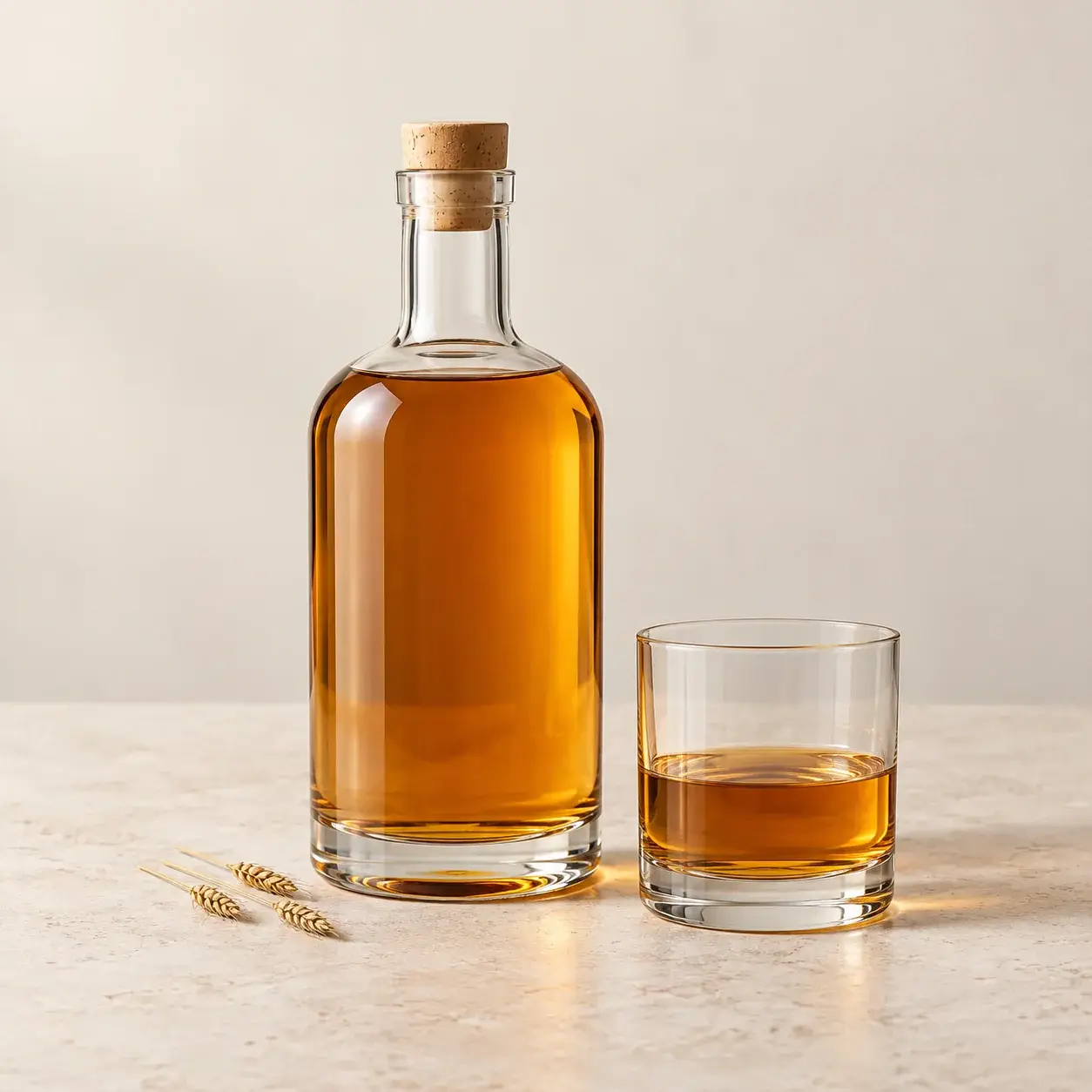
Irish whiskey is grain spirit made and matured in Ireland for at least three years. It is lighter and softer than Scotch or bourbon, which is both its reputation and its genuine character — and it has one style, single pot still, that exists nowhere else in the world.
What is Irish whiskey?
Irish whiskey is defined by the Irish Whiskey Act and a technical file registered as an EU geographical indication. The requirements:
- Distilled and matured on the island of Ireland — the Republic or Northern Ireland
- Made from a mash of cereals, including malted barley, saccharified by the malt's own enzymes
- Distilled to less than 94.8% ABV, so the spirit retains the character of the raw material
- Matured in wooden casks of no more than 700 litres for at least three years
- Bottled at no less than 40% ABV
- Nothing added but water and plain caramel colouring
Four legal categories, and the fourth is the interesting one:
| Category | Means |
|---|---|
| Single Malt | 100% malted barley, pot stills, one distillery |
| Single Grain | Other cereals permitted, column still, one distillery |
| Single Pot Still | A mash of at least 30% malted and 30% unmalted barley, up to 5% other cereals, pot-distilled at one distillery |
| Blended | A blend of two or more of the above; most of the market |
Triple distillation is not a legal requirement. It is common, it is strongly associated with Irish whiskey, and it is a large part of why the style is so light — but plenty of Irish whiskey is distilled twice.
How it's made
Mash the grain, ferment, distil — in pot stills for malt and pot still whiskey, in column stills for grain whiskey — then fill into oak, overwhelmingly ex-bourbon barrels, with sherry, port and wine casks used for richer expressions. Mature in Ireland's mild, damp climate, where evaporation runs low and maturation is slow.
The unmalted barley in single pot still whiskey is the thing to understand. Its origin is a tax dodge: a nineteenth-century British levy on malted grain gave Irish distillers a reason to throw raw barley into the mash. The result was a happy accident — raw barley contributes an oily, creamy texture and a distinctive spicy, almost green note that nothing else produces. The tax is long gone and distillers kept doing it on purpose.
Peat is rare. A handful of distilleries make peated Irish whiskey deliberately, but the default is unpeated, which is the clearest point of separation from Scotch.
What it tastes like
Soft, rounded, honeyed. Orchard fruit — apple, pear — cereal sweetness, vanilla from ex-bourbon oak, sometimes a floral lift. Less smoke than Scotch by default, less sweet vanilla and corn than bourbon, less rye spice than rye.
Single pot still whiskey breaks the pattern: it is noticeably fuller and oilier, with a peppery, cloves-and-green-barley spice and a thick texture that coats the mouth. If someone tells you Irish whiskey is bland, pour them a single pot still.
Styles worth knowing
| Style | What changes | In a drink |
|---|---|---|
| Blended | Pot still or malt plus grain whiskey | The everyday mixer; light and forgiving |
| Single pot still | Unmalted barley in the mash | Oily and spicy; stands up in a stirred drink |
| Single malt | All malted barley, pot stills | Closer to Speyside Scotch; good in sours |
| Single grain | Column-distilled, often corn | Very light; disappears into long drinks |
| Sherry- or port-finished | Second maturation in fortified-wine casks | Dried fruit and depth; excellent in a Manhattan variant |
| Peated | Peat-dried malt — the exception, not the rule | A rinse or a split base, like Islay |
Which bottle to buy
For mixing, a mid-priced blended Irish whiskey is the right answer — it is designed to be smooth and consistent, and it is what the classic Irish drinks were built on. Expensive single malts get lost under lemon, honey and cream.
Then buy a single pot still as your second bottle, and drink most of it neat. It is the only genuinely unique thing in the category and it is the bottle that will change your mind about Irish whiskey if you think it is the soft option.
Look for bottlings at 43–46% if you can find them. The 40% standard is fine neat but thins out noticeably once you add citrus and ice.
Using it in drinks
Irish whiskey's softness makes it the right spirit where the base needs to support rather than dominate. Irish Coffee is the obvious one, and it works precisely because the whiskey sits politely under coffee, sugar and cream — a heavily peated Scotch would wreck it.
It makes an excellent, gentler Whiskey Sour, and a very good Manhattan variant called the Emerald, swapping Irish whiskey for rye. The Tipperary pairs it with sweet vermouth and green Chartreuse.
Because it is light, it also takes well to long drinks — ginger ale, soda, or a highball with good ice — where bourbon would be too sweet and Scotch too assertive.
One adjustment: Irish whiskey brings less sugar than bourbon, so a recipe written for bourbon may want slightly more syrup.
Substitutes
Blended Scotch is the closest swap and makes everything a little drier and more assertive. Bourbon works but adds vanilla and corn sweetness — pull the syrup back. Canadian whisky is close in weight and function. Japanese whisky substitutes well, especially the lighter blends. For single pot still specifically there is no real substitute; nothing else has that unmalted-barley texture.
Storage
Upright, cool, out of direct sunlight, which fades colour and dulls aroma. Irish whiskey does not age in the bottle. Once opened, oxidation is slow but real — the last third of a bottle will soften over a year or two. Decant something special into a smaller bottle if you are drinking it slowly, to cut down the air.
Questions
Why is it spelled whiskey with an e? Ireland and the United States generally use whiskey; Scotland, Canada and Japan use whisky. It is a convention of origin. A few Irish distilleries have historically used the shorter spelling, so it is not quite absolute.
Is Irish whiskey always triple distilled? No. It is common and it contributes to the light style, but the law does not require it and several distilleries distil twice.
Is it smoother than Scotch? Generally lighter and less smoky, which many people experience as smoother. "Smooth" is not a quality measure, though — a single pot still Irish whiskey is far more assertive than a gentle Lowland Scotch.
What is single pot still whiskey? A uniquely Irish style made from a mash of both malted and unmalted barley, pot-distilled at a single distillery. The unmalted barley gives it an oily body and a green, peppery spice found nowhere else.
Can I use it in a Manhattan? Yes — it makes a softer, fruitier drink sometimes called an Emerald. A sherry-finished Irish whiskey is particularly good in it.
Irish Whiskey cocktails.
2 recipes
Tipperary
The Tipperary stirs Irish whiskey, sweet vermouth, green Chartreuse and aromatic bitters into a herbal cocktail finished with orange.
Irish Coffee
Hot coffee, Irish whiskey, sugar and a collar of unwhipped cream you drink straight through. Made right, it is a dessert and…