
Jamaican Rum cocktails.
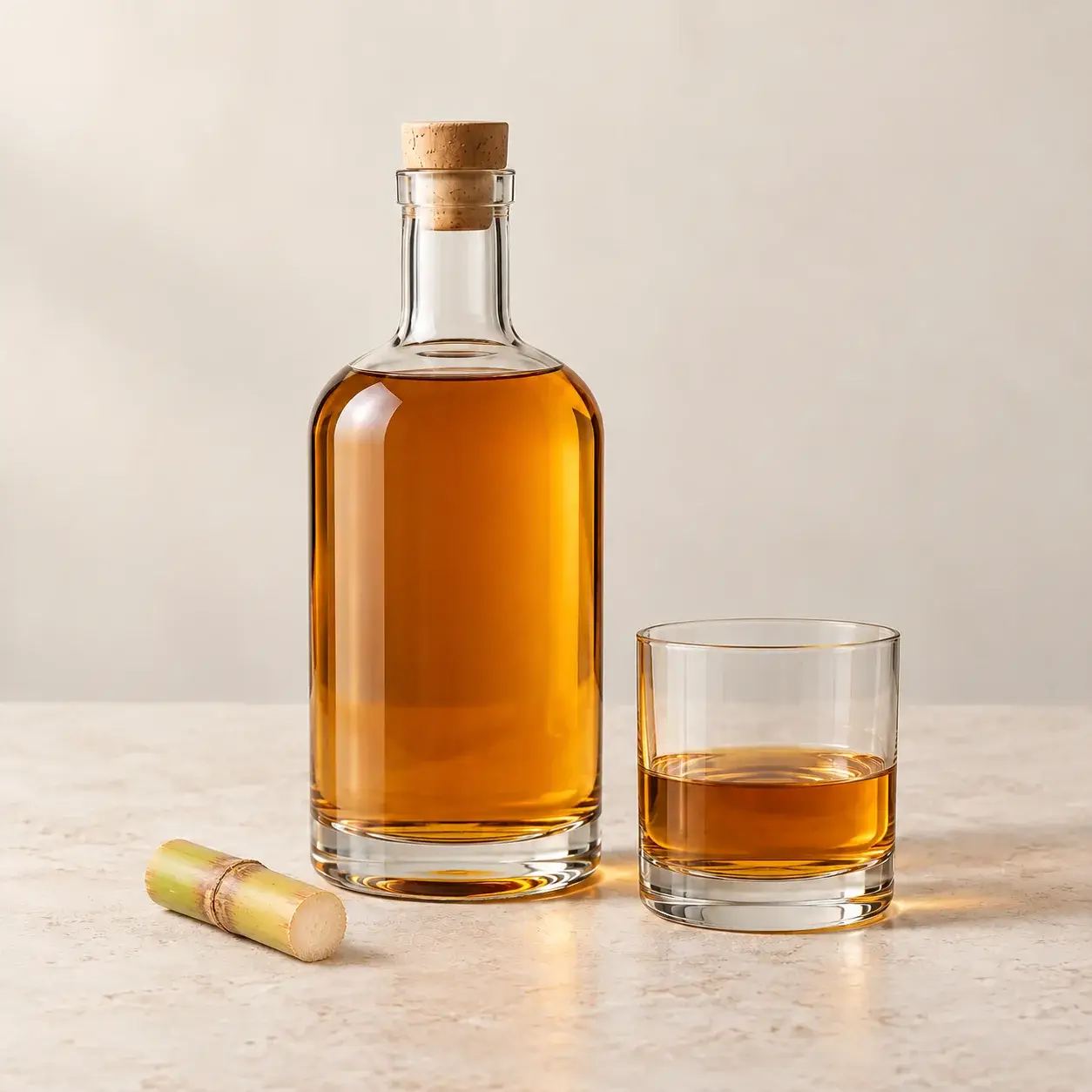
Jamaican rum is the loud one: pot-distilled, fermented for days or weeks, and so dense with fruity esters that bartenders have a word for the effect — hogo, from the French haut goût, high flavour. A quarter-ounce changes a drink; two ounces defines one. The Mai Tai, the Zombie and the Jamaican rum punch do not work without it, and most tiki is built on it.
What is Jamaican rum?
Rum made in Jamaica under the island's geographical indication (registered 2016): from molasses, fermented and distilled on the island, aged there in oak if aged at all, with no added flavouring and no sugar. Jamaica's distinction is style rather than rule. Its distilleries make the most heavily flavoured rums in the world by long fermentation with wild yeasts and by the use of dunder — the leftover stillage from the previous distillation — and sometimes a muck pit, an aged pile of fermenting residue, to seed the wash with acids that become esters in the still.
Six distilleries operate today — Appleton, Hampden, Worthy Park, Long Pond, Clarendon (Monymusk) and New Yarmouth — and they classify their rums by ester count into traditional marques, from light "Plummer" and "Wedderburn" styles to "continental" rums of extreme intensity, once made for blending into German rum-flavoured products.
How it's made
Molasses is diluted and fermented — for a day or two in the lighter styles, for one to three weeks in the heavy ones — often with dunder and sometimes with muck added to the wash. The wash is distilled in copper pot stills, traditionally the double-retort pot still that is almost unique to Jamaica, which concentrates the esters; some distilleries also run columns for lighter marques. The spirit is aged in ex-bourbon casks in the tropical heat, which matures it two to three times faster than in Scotland, or bottled unaged as white overproof.
What it tastes like
Overripe banana, pineapple, mango, black olive brine, nail varnish, molasses, and in the heaviest styles something like rotting fruit and glue — which sounds unpleasant and in a drink is thrilling. Aged Jamaican rum adds vanilla, oak and dried fruit around the funk. The light marques are closer to a conventional golden rum with a fruity edge; the high-ester ones are among the most intense spirits made anywhere.
Styles worth knowing
| Style | What it is | In a drink |
|---|---|---|
| Light to medium ester, aged (Appleton style) | Fruity, balanced, oak-aged | Rum Old Fashioned, Mai Tai, rum punch |
| High ester, aged (Hampden, Worthy Park, Smith & Cross) | Intense funk, pot still, often navy strength | Mai Tai split base, Zombie, Jet Pilot |
| White overproof (Wray & Nephew, Rum Fire) | Unaged, 63%, pungent | Nuclear Daiquiri, a dash in any daiquiri |
| Dark Jamaican blends (Myers's style) | Coloured, softer, molasses-forward | Planter's Punch, Dark and Stormy |
| Continental / DOK marques | Extreme esters; a seasoning | A few drops in a drink |
Which bottle to buy
Two bottles: an aged medium-ester Jamaican for general use, and a high-ester navy-strength blend for tiki. The first is a fine sipping rum and a dependable Mai Tai base; the second is the ingredient that makes a Zombie and a Jet Pilot taste as they should. A white overproof is the third purchase if you make a lot of daiquiris or rum punch. Avoid spiced or flavoured anything.
Using it in drinks
The Mai Tai is the showcase — Trader Vic's original used a 17-year Jamaican, and the modern standard splits Jamaican and Martinique rums. The Zombie and the Jet Pilot lean on it for fruit; the Bitter Mai Tai pairs it with Campari. Jamaican rum punch — one of sour, two of sweet, three of strong, four of weak — is the island's own serve. A Rum Old Fashioned on an aged Jamaican is one of the great stirred drinks, and a Rum Sour on it is a different and better drink than on a light rum.
Used as a seasoning — a quarter-ounce in a drink built on another rum — it adds fruit and depth without taking over. See overproof rum for the high-strength bottlings.
Substitutes
Nothing else has the funk. For body in a Mai Tai, a rhum agricole or a Demerara rum stands in with a different character. For a rum punch, any aged Caribbean rum makes a good drink that is not quite this one. A Batavia arrack shares the pot-still funk and is the nearest substitute in the heaviest roles.
Storage
Upright, cool, dark; indefinitely stable. The high-ester rums are, if anything, more stable than most spirits. Nothing to refrigerate.
Questions
What is hogo? Bartenders' slang, from the French haut goût, for the intense fruity, funky aroma of high-ester Jamaican rum. It is the quality that makes the rum distinctive.
What does ester count mean? A measure of the fruity aromatic compounds in the rum, in grams per hundred litres of pure alcohol. Jamaican marques range from under 100 to over 1,500; most rums elsewhere sit below 50.
Is all Jamaican rum funky? No. The best-known aged brand is a balanced, medium-ester rum that most drinkers would not call funky. The high-ester styles are the island's specialty but not its only product.
What is a double-retort still? A pot still with two chambers between the pot and the condenser, each holding spirit from a previous run, which the vapour passes through. It concentrates flavour and strength in one pass and is characteristic of Jamaica.
Nothing here yet.
Recipes are being added continuously. Try the full directory while this one fills out.
Browse all recipes ↗