
How to Shake a Cocktail
Shaking is not stirring with more enthusiasm. It is a different process with a different result: colder, more dilute, aerated, and slightly cloudy. Those four things are exactly what a drink with juice, egg or cream needs, and exactly what a Martini does not. Almost every fault in a shaken drink comes from shaking too gently, too briefly, or with too little ice.
The short answer
Fill the small tin with as much ice as it will hold. Shake hard for 12 to 15 seconds, until the outside of the tin is painful to hold. Strain at once. Shake anything with citrus, juice, egg, cream, or a thick syrup in it; stir everything that is only spirits, vermouth and bitters.
That is most of it. The rest of this explains the why, because the why is what lets you fix a drink that came out wrong.
What shaking actually does
Four things happen at once in the tin, and all four matter.
It chills. A shaken drink leaves the tin at roughly minus three to zero degrees Celsius. Cold is not a garnish: it mutes sweetness and alcohol burn and sharpens the impression of acidity, which is why a Daiquiri that has gone warm tastes both sweeter and harsher than the same drink cold.
It dilutes. Melting ice adds water, usually a quarter of the finished volume. That water is an ingredient. A drink shaken for five seconds is under-diluted and tastes hot and tight; one shaken with wet, half-melted ice is over-diluted and tastes flat.
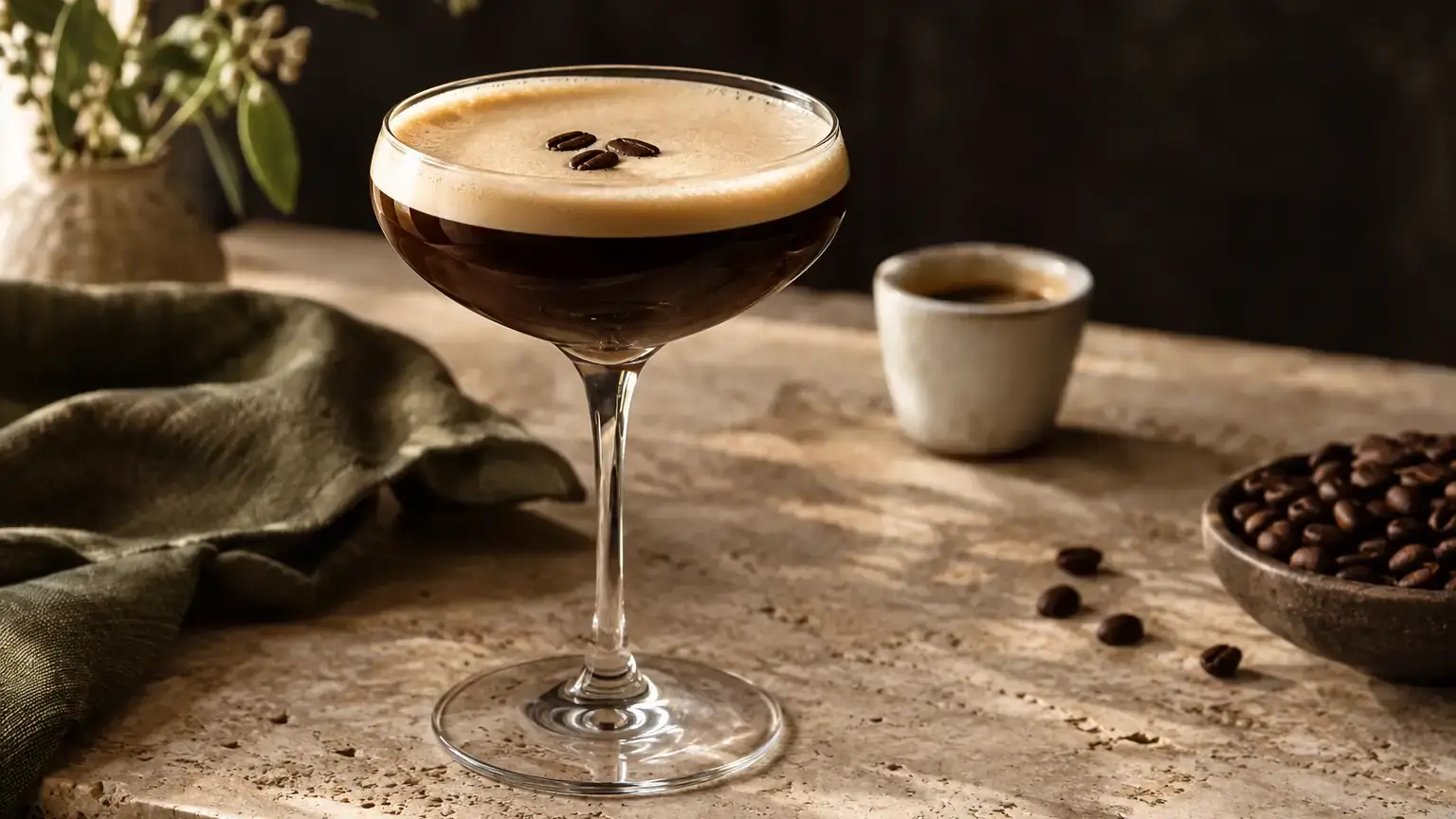
It aerates. Forcing air into the liquid is what gives a shaken sour its soft texture and its pale, slightly opaque look, and what builds the head on a Clover Club or an Espresso Martini.
It integrates. Juice, syrup and egg are heavier and thicker than spirit and will not combine properly by stirring.
How hard, and for how long
Harder and shorter beats gentler and longer. Hold the tins at an angle over your shoulder, not vertically in front of your face, and drive the ice from end to end of the tin rather than rattling it side to side. The sound you want is a steady, heavy clatter, not a light rattle.
Twelve to fifteen seconds is right for a standard sour with fresh ice. Signals that you are there: the tin frosts over, the clatter softens as the ice breaks down, and your hands hurt. A drink with egg white needs longer, and a drink with cream longer still.
Ice quantity matters as much as time. A tin half-full of ice gives the cubes room to tumble without colliding, which melts them fast and dilutes badly. Fill it. Large, hard, dry cubes straight from the freezer are what you want; see ice and dilution for why.
The dry shake, and when to use it
Egg white and aquafaba need to be emulsified before they are chilled, because cold makes protein sluggish. So you shake twice: once with no ice at all for ten or fifteen seconds to build the foam (the dry shake), then again with ice to chill and dilute.
The reverse order, called a reverse dry shake, works even better: shake with ice first, strain the liquid off into the other tin, discard the ice, and shake the cold liquid on its own. The foam is denser because it is not being torn apart by ice. Either way, the Whiskey Sour, the Pisco Sour and the Ramos Gin Fizz all want it.
Straining: single, double, and dirty
A Hawthorne strainer held against the tin keeps the ice back. That is enough for a drink served over fresh ice.
For a drink served up in a coupe, strain through a fine mesh strainer as well, so that ice shards, citrus pulp, egg foam bubbles and any muddled fruit stay behind. This is the double strain, and it is the difference between a drink that looks finished and one that looks homemade.
The exception is the dirty dump, where a drink shaken with crushed ice goes into the glass ice and all, as in a Mojito or a smash. Never reuse the ice you shook with for the drink itself: it is wet, broken and will keep diluting.
Which drinks get shaken
If it contains citrus juice, any other fruit juice, egg, dairy, coconut cream or a heavy syrup, shake it. That covers the entire sour family, the fizzes, the Collinses before the soda goes in, and the tiki canon: the Margarita, the Sidecar, the Last Word, the Jungle Bird, the Paper Plane.
If it is spirits, fortified wine and bitters only, stir it: the Martini, the Manhattan, the Negroni, the Old Fashioned, the Boulevardier. Shaking those makes them cloudy and bruised-looking, over-aerated and slightly thin, with ice shards floating on top. There are 237 shaken drinks and 151 stirred ones in this directory, and almost none of them are ambiguous.
Questions
Boston tins or a cobbler shaker? Two-piece Boston tins, every time. The three-piece cobbler shaker’s built-in strainer is slow, and the cap freezes on mid-service.
Why is my shaken drink watery? Not enough ice, wet ice, or too long a shake. Fill the tin with hard, dry cubes and stop at fifteen seconds.
Why are there ice chips floating in it? You single-strained a drink served up. Double-strain anything going into a coupe.
Can I shake a Negroni? You can, and it will be cold, pale and frothy rather than clear and weighty. Stir it.
Does shaking “bruise” gin? No. That is a myth; gin has nothing to bruise. What shaking does is aerate and cloud the drink, which is the real reason a Martini is stirred.
Make a better
Espresso Martini.
Find the full ingredients, measurements and method in the recipe.
Small details. Better drinks.


Your next great drink
could already be on your shelf.
Choose your bottles and mixers. Find your next pour.