
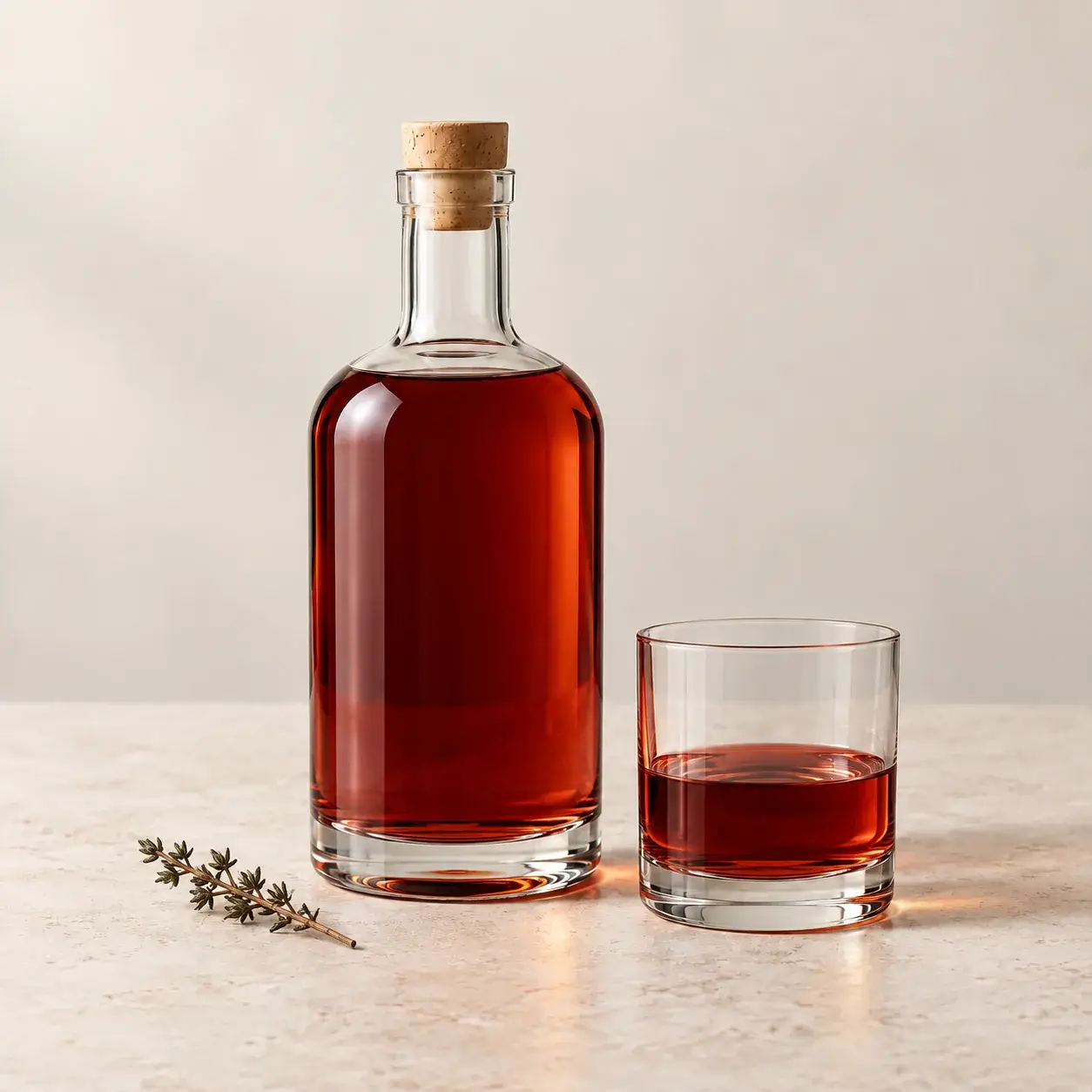
Vermouth is aromatised, fortified wine — and the most important fact about it is that it is wine. At 15–18% ABV it oxidises like wine, which means an open bottle has a life measured in weeks. A tired bottle of vermouth is the most common reason a Martini or a Manhattan disappoints.
What is vermouth?
Wine, fortified with grape spirit and flavoured with botanicals, one of which is compulsory. Under EU rules vermouth must be:
- At least 75% wine by volume
- Flavoured with species of Artemisia — wormwood — which is non-negotiable and gives the drink its name, via the German Wermut
- Fortified to between 14.5% and 22% ABV; most sit at 15–18%
That is the whole definition. Everything else — colour, sweetness, which forty other botanicals — is the producer's choice, which is why the category spans bone-dry and saline at one end to cocoa-and-vanilla rich at the other.
Vermouth di Torino is a protected designation requiring production in Piedmont with Italian wine, and it is a genuine quality signal.
How it's made
Start with a fairly neutral base wine, almost always white — including for the red-brown sweet styles, whose colour comes from caramel rather than red grapes. Infuse or macerate the botanicals: wormwood first, then some combination of gentian, cinchona, chamomile, cardamom, cinnamon, clove, vanilla, bitter orange peel, saffron, rhubarb, elderflower and alpine herbs. Recipes run to several dozen ingredients and are generally secret.
Fortify with grape spirit, which arrests fermentation and stabilises the wine; sweeten to the target level; chill, filter and bottle.
The fortification is what lets vermouth exist at all — unfortified aromatised wine would spoil within days. But fortifying to 17% is not fortifying to 40%, and that is the crux of the whole category: vermouth is far more perishable than any spirit on your shelf, and it needs to be treated accordingly.
The styles, and where to read more
The EU defines the sweetness terms, and the gaps between them are real:
| Label term | Sugar per litre |
|---|---|
| Extra dry | under 30 g |
| Dry | under 50 g |
| Semi-dry | under 90 g |
| Semi-sweet | 90–130 g |
| Sweet | 130 g and above |
In practice the bar stocks four:
| Style | Character | Use | Full page |
|---|---|---|---|
| Sweet / rosso | Caramel-coloured, bittersweet, cocoa and orange | Manhattan, Negroni, Americano | Sweet vermouth |
| Dry | Pale, crisp, saline, herbal | Martini, Bamboo, 50/50 | Dry vermouth |
| Bianco / blanc | Pale but sweet, floral and vanilla-led | Spritzes, over ice, Martinez variants | — |
| Rosé / rosato | Between rosso and bianco | Spritzes, lighter stirred drinks | — |
The trap: bianco is not a pale dry vermouth. It is sweet. Substituting it for dry vermouth in a Martini makes a noticeably sweeter, more floral drink.
What it tastes like
All vermouth shares a bitter-herbal backbone from the wormwood. Sweet vermouth adds dried cherry, fig, orange peel, cocoa, vanilla and clove over it. Dry vermouth adds green apple, white flowers, chamomile, lemon pith and often a distinct saline or mineral edge.
Good vermouth tastes like something you would happily drink on its own over ice with a twist — which is the easiest test of whether yours is still alive. Oxidised vermouth tastes flat, dusty and sherry-like, with the bitterness replaced by a dull sourness. It will not make you ill; it will make every drink you put it in taste tired.
Which bottle to buy
Buy the smallest bottle you can find. This is the most useful advice on the page. A 375ml bottle you finish in three weeks makes better drinks than a litre that goes stale at the two-month mark, even though the litre looked like better value.
Own one sweet and one dry and you cover an enormous share of the classic canon — Martini, Manhattan, Negroni, Martinez, Vesper, Bamboo, Americano, Rob Roy.
Check the date on the shelf before you buy. Vermouth that has sat under supermarket lighting for two years is already compromised, and nothing you do afterwards will recover it.
Using it in drinks
Vermouth is a modifier that often behaves like a base — frequently a third or more of the glass, so its condition matters enormously. The Manhattan, the Martini, the Negroni and the Americano all live or die on it.
Ratios are a matter of taste, not law. A modern dry Martini runs 5:1 or 6:1 gin to vermouth; a 2:1 or even 50/50 Martini is historically closer to the original and is a more flavourful drink. If your Martini tastes thin and harsh, try more vermouth rather than less — the near-vermouth-free Martini is a twentieth-century drift, not a standard.
Vermouth also brings sugar and acidity, so a recipe using it rarely needs added syrup. And since it is only 15–18% ABV, swapping it for a spirit in the same slot changes the strength of the drink substantially.
Chilled on its own with soda and a twist, it is an excellent low-alcohol aperitif — and the best way to assess a new bottle.
Substitutes
Sherry is the best substitute in both directions: fino or manzanilla for dry vermouth, oloroso for sweet. Similar strength, similar structural role, and sherry keeps rather better. Madeira and Marsala both work for sweet vermouth. Amaro — Averna in particular — substitutes in stirred drinks and makes a darker, more bitter result; cut the sugar elsewhere. Lillet Blanc is sweeter and rounder but usable. Dry white wine with a dash of orange bitters is a passable emergency dry vermouth.
Nothing non-wine-based substitutes well, because the wine acidity is doing half the work.
Storage
This is the section that matters most. Refrigerate vermouth the moment you open it, and treat it as a wine.
- Dry, open and refrigerated: about three to four weeks at its best
- Sweet, open and refrigerated: about a month, declining after
- Either, at room temperature: noticeably tired within a week or two
- Unopened: a year or two, upright, cool, away from light
The enemy is the volume of air in the bottle, not elapsed time as such, so decanting into a smaller bottle as the level drops genuinely helps. A vacuum stopper helps too. If you make a Martini only occasionally, buy small and accept the higher unit price — it is cheaper than pouring away two-thirds of a litre.
Questions
Does vermouth go bad? Yes. It is fortified wine at roughly 17% ABV, not a spirit, and it oxidises. Refrigerated it lasts three to four weeks; on a shelf at room temperature it is past its best within a week or two.
Should vermouth be kept in the fridge? Always, once opened. Unopened it is fine upright in a cool dark cupboard.
Why does my Martini or Manhattan taste dull? Almost always the vermouth. Pour a little neat — if it tastes flat, dusty or sour rather than aromatic and bittersweet, that is your answer.
Is sweet vermouth made from red wine? Usually not. Most is made from a neutral white base and coloured with caramel.
Does vermouth really contain wormwood? Yes — it is legally required. Thujone levels are regulated and far below the quantities in absinthe folklore.
What is the difference between vermouth and other aromatised wines? The compulsory wormwood. Quinquinas are bittered with cinchona, americanos with gentian; Lillet and Cocchi Americano are aromatised wines but not vermouth.
Vermouth cocktails.
1 recipe